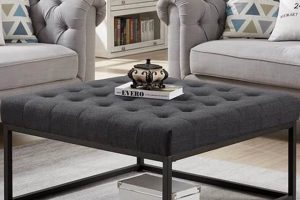
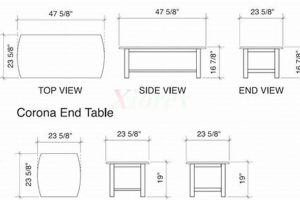
The typical vertical dimension of a coffee table, measured from the floor to its upper surface, generally falls within a range of 16 to 18 inches. This elevation is designed to complement the seating height of most sofas and armchairs, facilitating convenient access for placing beverages, books, or decorative items. A coffee table serves as a central furniture piece in a living room or seating area, offering both functional and aesthetic value.
Selecting an appropriate height for this furniture piece is crucial for ergonomic comfort and overall room harmony. A surface that is too low can require excessive bending, while one that is too high can feel intrusive. Historically, the evolution of coffee tables reflects changing social customs and design trends, moving from primarily ornamental pieces to more functional and integral components of contemporary living spaces. Proper height contributes to ease of use and enhances the visual appeal of the room.
Understanding these considerations is essential for making informed choices when purchasing or designing a coffee table that effectively meets the needs of a specific living space.
Height Selection Strategies for Coffee Tables
The selection of the coffee table’s height requires careful consideration to ensure optimal functionality and aesthetic integration within a given space. The following tips provide guidance for making informed decisions.
Tip 1: Measure Seating Height: The primary consideration involves assessing the height of the seating surrounding the intended location of the coffee table. The tabletop surface should ideally be level with or no more than two inches lower than the average seat height.
Tip 2: Consider Room Size: In smaller rooms, a lower coffee table can help create a sense of spaciousness by maximizing the visible vertical space. Conversely, larger rooms can accommodate taller tables without disrupting the visual flow.
Tip 3: Evaluate Intended Use: If the coffee table is frequently used for dining or work purposes, a slightly higher surface may be more appropriate. A height closer to that of a side table can provide improved ergonomics for these activities.
Tip 4: Account for Personal Preference: Individual comfort levels and aesthetic preferences play a significant role in the optimal height selection. Consider how the height of the table will affect daily routines and activities.
Tip 5: Analyze Table Style: The design style of the table itself can influence the perceived height. Tables with thick tops or substantial bases may appear taller than those with minimalist designs, even if the actual height is identical.
Tip 6: Visualize Placement: Before making a purchase, simulate the placement of the coffee table in the intended space to assess its visual impact and functionality. Use temporary objects or measurements to represent the table’s dimensions.
Adherence to these strategies will contribute to the selection of a coffee table height that is both visually appealing and practically functional, enhancing the overall living space.
With a properly chosen height, the selected furniture can offer seamless integration to the area.
1. Ergonomic Comfort

Ergonomic comfort is directly influenced by the vertical dimension of a coffee table. A surface positioned too low necessitates excessive bending, leading to discomfort and potential strain, particularly during extended use. Conversely, a surface positioned too high can feel intrusive and impede natural movement while seated. The standard dimension aims to mitigate these issues by providing a reach that aligns with the natural resting position of arms while seated on a typical sofa or chair. The goal is to ensure that individuals can easily access items on the table without undue physical exertion.
The practical significance of understanding this relationship is evident in residential and commercial settings. In a home, a properly sized coffee table promotes relaxation and ease of use. Consider a scenario where individuals are engaging in activities such as reading, working, or consuming beverages. The appropriate table height supports these actions by minimizing the need to lean forward or reach awkwardly. In commercial environments, such as waiting rooms or lobbies, attention to ergonomic factors can contribute to a more positive user experience. A comfortable and accessible surface can enhance the perception of the space and reflect a thoughtful approach to user well-being.
In summary, ergonomic comfort is a critical component of coffee table design, directly tied to the standard dimension. The design standard ensures that users can interact with the surface without compromising posture or inducing physical strain. Addressing this relationship is essential for creating functional and comfortable environments across a range of settings.
2. Seating Proximity

The distance between seating and a coffee table significantly influences the perceived utility and comfort of the furniture arrangement. Optimal spacing ensures ease of access to the table surface while maintaining a comfortable conversational distance among seated individuals. The typical dimension accounts for these spatial considerations.
- Reach and Accessibility
The distance from the seating to the table dictates the ease with which individuals can reach items placed on the surface. If the table is too far, it requires leaning forward, disrupting posture and hindering comfortable conversation. The established vertical dimension is calibrated to accommodate a comfortable reach distance from standard sofa and armchair depths.
- Conversational Space
Excessively close proximity between seating and the table can constrict the conversational space, creating a feeling of confinement. Conversely, too much distance can isolate individuals, making it difficult to engage in group discussions. A moderate separation, facilitated by the appropriate table surface, fosters a balanced and inviting environment conducive to interaction.
- Traffic Flow
The placement of the table in relation to the seating arrangement also impacts the overall traffic flow within the room. Adequate space around the table allows for easy movement and prevents obstruction. The dimension should complement the spatial dynamics of the room, ensuring that it does not impede circulation patterns.
- Visual Balance
The spatial relationship between the seating and the table contributes to the overall visual balance of the room. A well-proportioned table creates a sense of harmony and cohesiveness, enhancing the aesthetic appeal of the space. Choosing an appropriate dimension ensures that the table integrates seamlessly with the surrounding furniture.
By carefully considering the proximity between seating and the coffee table, designers and homeowners can create functional and aesthetically pleasing spaces that promote comfort, conversation, and ease of movement. The importance of correct dimensions in enhancing overall user satisfaction cannot be overstated.
3. Room Dimensions
Room dimensions exert a considerable influence on the selection of a suitable coffee table height. The relationship is governed by principles of spatial proportion and visual harmony. In smaller rooms, a standard-height coffee table may overwhelm the space, creating a sense of congestion. A lower profile, conversely, can enhance the perception of spaciousness by minimizing visual obstruction. In larger rooms, a standard height might appear disproportionately small, lacking the necessary visual weight to anchor the seating arrangement. Therefore, room size functions as a critical parameter in determining the appropriate vertical dimension of the coffee table.
Practical examples illustrate this relationship. Consider a compact apartment living room measuring 10 feet by 12 feet. A coffee table adhering to the typical 16-18 inch height range may dominate the area, impeding traffic flow and creating a cluttered aesthetic. A table with a height of 14 inches or less would be more appropriate in such a context. Conversely, in a sprawling living room exceeding 20 feet by 25 feet, a standard-height table risks appearing insignificant. A taller option, perhaps in the 20-22 inch range, may be necessary to establish a visual focal point and balance the expansive dimensions of the room. These scenarios underscore the importance of adjusting furniture dimensions to suit the specific spatial characteristics of the environment.
In summary, the interconnectedness of room dimensions and the optimal coffee table height is a matter of spatial scale and visual equilibrium. Failure to account for room size can result in an imbalance that detracts from the overall aesthetic appeal and functionality of the space. The prudent selection of a table vertical dimension, tailored to the specific dimensions of the room, is therefore essential for achieving a harmonious and practical interior design.
4. Table Functionality

The elevation of a coffee table directly impacts its functionality, influencing its suitability for various tasks. The dimension is therefore not arbitrary; rather, it is determined by considering the intended uses of the table. A surface primarily intended for casual placement of beverages or decorative items may adhere more closely to the lower end of the dimensional range. Conversely, a surface frequently utilized for activities such as eating, working, or playing games may benefit from a slightly higher profile. The standard height serves as a compromise, seeking to accommodate a range of functions without compromising ergonomic comfort.
Consider the practical implications of deviating from established height norms. A table significantly below the standard poses challenges for individuals attempting to eat meals while seated on a sofa, necessitating excessive bending and leading to discomfort. Similarly, a table substantially exceeding the standard may obstruct views of the television or create an awkward barrier between seated individuals. The height is thus a critical determinant of the table’s versatility and usability. The design standard, if understood and adhered to, ensures that the surface integrates harmoniously into the living space, facilitating a diverse range of activities without introducing functional limitations.
In summary, the functionality of a coffee table is inextricably linked to its vertical dimension. The standard height represents a carefully considered balance point, designed to accommodate diverse needs while preserving ergonomic principles and aesthetic harmony. Understanding this relationship is essential for making informed decisions when selecting or designing a coffee table that effectively meets the demands of a specific living environment.
5. Aesthetic Harmony
The vertical dimension of a coffee table is an essential element in achieving aesthetic harmony within a living space. This dimension influences the visual balance and cohesiveness of the furniture arrangement, contributing significantly to the overall aesthetic appeal of the room. Deviation from established norms can disrupt this harmony, resulting in a visually jarring or unbalanced environment.
- Proportionality and Scale
The dimension of the coffee table should be proportionate to the size and style of the surrounding furniture, especially the seating. A table that is too tall or too short in relation to the sofa and chairs can create a visual imbalance. For instance, a low-slung, modern sofa may pair well with a lower coffee table, while a more traditional, high-backed sofa may require a taller table to maintain visual equilibrium. The table needs to be proportional to the surrounding furniture.
- Visual Flow and Space
The height affects how the eye moves through the space. A well-chosen vertical dimension allows for an unobstructed view across the room, contributing to a sense of spaciousness and openness. A table that is too high can act as a visual barrier, disrupting the flow and creating a feeling of confinement. Maintaining the vertical dimension facilitates space to make a living area look organized.
- Material and Finish
The perceived is also affected by its materials and finishes. A dark, solid wood table may appear heavier and more substantial, requiring a height that provides adequate visual grounding. Conversely, a glass-topped table with slender metal legs may appear lighter and more airy, allowing for a lower profile. Material matters on how it presents and fits in the designated space.
- Style Consistency
The dimension should align with the overall design style of the room. In a minimalist space, a sleek, low-profile table may enhance the clean lines and uncluttered aesthetic. In a more traditional setting, a table with decorative details and a more substantial vertical dimension can complement the ornate features of the surrounding decor. Consistency is key to maintain a certain style within a room, giving it a natural look.
By carefully considering these facets, one can select a coffee table that not only serves its functional purpose but also enhances the overall aesthetic harmony of the living space. The aim is to create a visually pleasing environment where each element, including the coffee table, contributes to a cohesive and balanced design.
6. User Accessibility

User accessibility, in the context of furniture design, refers to the ease with which individuals, regardless of age, physical ability, or other limitations, can interact with and utilize a given object. The standard dimension for a coffee table directly impacts this accessibility, influencing the comfort and convenience experienced by users.
- Reach and Posture
A coffee table’s height directly affects the user’s posture while seated. If the table is too low, individuals may need to bend excessively, causing discomfort and strain, particularly for those with mobility issues or back problems. A height that is too high, conversely, can obstruct the user’s line of sight and make it difficult to reach items on the surface. The standard dimension aims to mitigate these issues by providing a reach that is ergonomically suitable for a broad range of users, promoting good posture and reducing physical strain. For example, elderly users or those with limited mobility often find that a table adhering to the standard range allows them to comfortably place and retrieve items without excessive bending or reaching.
- Visual Accessibility
Beyond physical reach, the dimension also influences visual accessibility. A lower coffee table can improve sightlines across the room, creating a more open and inviting space. This is particularly important in smaller rooms where maintaining a sense of spaciousness is crucial. Moreover, the height should not obstruct the user’s view of a television or other focal points in the room. By adhering to the standard, designers can ensure that the coffee table enhances rather than detracts from the overall visual experience of the space.
- Mobility Considerations
The placement and dimension of a coffee table must also take into account the mobility needs of users, especially those who rely on wheelchairs or other assistive devices. A table that is too close to seating or that has an inadequate vertical clearance can impede movement and create barriers to accessibility. The standard dimension, when implemented thoughtfully, can help to create a more navigable space, allowing individuals with mobility challenges to move freely and interact comfortably with the furniture. Adequate space around the table for maneuverability is critical for these users.
- Task-Specific Adaptations
While the standard dimension provides a general guideline, specific user needs may necessitate adaptations. For example, if a coffee table is frequently used for activities such as working or eating, a slightly higher surface may be more appropriate. Conversely, if the table is primarily intended for decorative purposes, a lower profile may be preferred. The key is to consider the individual needs and preferences of the users and to make adjustments accordingly. The standard dimension serves as a starting point, but it should not be viewed as a rigid constraint. Consider a user who often works from the sofa; a slightly higher surface can provide a more comfortable work area.
In conclusion, the connection between user accessibility and the dimension of a coffee table is multifaceted, encompassing physical reach, visual accessibility, mobility considerations, and task-specific adaptations. A thoughtful approach to design ensures that the coffee table enhances the comfort, convenience, and overall experience of all users, regardless of their individual needs and abilities.
7. Design Styles
The established vertical dimension of a coffee table, while often cited as 16 to 18 inches, is not a rigid parameter but is subject to interpretation based on prevailing design styles. Different aesthetic movements and design philosophies incorporate varying vertical dimensions to achieve specific visual effects and functional attributes. Consequently, the apparent ‘standard’ is more of a guideline, adapted to the stylistic context of the interior space. For instance, mid-century modern design often features lower-profile coffee tables, sometimes falling below the 16-inch mark, to complement the low-slung furniture characteristic of the period. Conversely, certain traditional styles, particularly those incorporating ornate detailing or storage features, may necessitate taller tables, exceeding 18 inches to accommodate the design elements. The importance of design styles, therefore, lies in their capacity to modify and refine the standard elevation to achieve stylistic coherence and functional suitability.
The impact of design style on the dimension can be observed in practical applications. A minimalist interior, emphasizing clean lines and uncluttered spaces, often benefits from a coffee table with a lower vertical dimension to reinforce the sense of spaciousness and simplicity. In contrast, a bohemian-style living room, characterized by layered textiles, eclectic furniture, and a relaxed atmosphere, might incorporate a taller, more substantial coffee table to provide a focal point and anchor the seating arrangement. Similarly, industrial design aesthetics, with their emphasis on raw materials and utilitarian forms, may utilize coffee tables with adjustable heights or repurposed elements, further deviating from the conventional dimension. These examples demonstrate the pragmatic application of design principles in determining the coffee table’s appropriate elevation, taking into account both aesthetic considerations and functional requirements.
In summary, the connection between design styles and the dimension of a coffee table is not merely superficial but reflects a fundamental interplay between aesthetics and functionality. While the general recommendation provides a starting point, successful interior design necessitates a nuanced understanding of how different design styles can influence the selection of an appropriate table elevation. Challenges arise when attempting to integrate disparate styles or when functional needs conflict with aesthetic preferences. Ultimately, achieving aesthetic harmony requires careful consideration of the stylistic context, the spatial characteristics of the room, and the intended uses of the coffee table, ensuring that the selected elevation enhances both the visual appeal and the practical utility of the living space.
Frequently Asked Questions
This section addresses common inquiries regarding the typical elevation of coffee tables, providing clarity on their dimensions, implications, and selection considerations.
Question 1: What constitutes the generally accepted vertical dimension range for a coffee table?
The commonly accepted range for a coffee tables height falls between 16 and 18 inches. This range is intended to provide a comfortable and functional surface in relation to standard sofa and chair seating heights.
Question 2: How does seating height influence the selection of a coffee table dimension?
Seating height serves as a primary determinant in selecting the appropriate vertical dimension. Ideally, the tabletop surface should be level with, or no more than two inches below, the average seat height of the surrounding furniture to ensure ease of reach.
Question 3: What considerations are pertinent for smaller living spaces when selecting a coffee table elevation?
In smaller rooms, it is generally advisable to opt for a lower-profile coffee table. This strategy maximizes the visual vertical space, contributing to a sense of spaciousness and preventing the area from feeling overcrowded.
Question 4: What if a coffee table is intended primarily for dining or work purposes?
If the coffee table is to be frequently used for dining, laptop use, or other work-related activities, a slightly higher surface may be more ergonomically suitable. Heights approaching those of a side table may provide enhanced comfort.
Question 5: How do design styles affect the interpretation of “standard” coffee table height?
Design styles exert influence on vertical dimension. Mid-century modern may favor lower tables while traditional styles can incorporate taller designs. Style dictates dimension to achieve stylistic coherence.
Question 6: Should individual physical capabilities be considered when selecting a coffee table?
Individual physical capabilities warrant careful consideration. Select a height which enables ease of use for all residents in the household to avoid strain and improve accessibility.
The optimal decision will ensure that the dimension blends effectively with the overall design.
Further exploration of these topics will provide a more comprehensive understanding.
Conclusion
The preceding exploration clarifies that the typical vertical dimension for a coffee table, while frequently cited as 16 to 18 inches, represents a guideline rather than an immutable rule. The appropriate elevation is contingent upon several factors, including seating height, room dimensions, intended function, aesthetic style, and user accessibility. Understanding these interconnected elements is essential for selecting a surface that integrates harmoniously into a given living space.
Therefore, when considering what is the standard height of a coffee table, careful assessment of the context is paramount. Prioritize functionality, user needs, and existing design elements to ensure the selection enhances both the utility and aesthetic appeal of the interior. A well-chosen surface promotes comfort and contributes to an environment that is both visually pleasing and ergonomically sound, and as such is worth time in consideration.