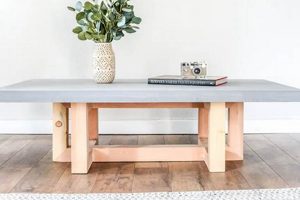
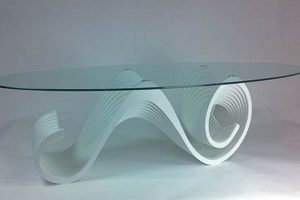
These furnishings serve a dual purpose within a living space, combining the functionality of a central surface with the comfort and aesthetic appeal of cushioned seating. Characterized by a supportive frame, often constructed of wood, and covered in fabric or leather, they offer a soft, inviting alternative to traditional hard-surface furnishings. Examples range from simple, rectangular forms to more elaborate designs incorporating tufting, nailhead trim, or hidden storage compartments.
The significance of such pieces lies in their versatility and ability to enhance the overall ambiance of a room. They provide a place to rest feet, display decorative items, or serve beverages and snacks. Historically, ottomans have evolved from simple footrests to multifaceted furnishings that reflect changing trends in interior design. The addition of upholstery elevates the ottoman’s function, transforming it into a focal point that contributes to the room’s comfort and style.
The subsequent sections will explore the various styles, materials, and considerations involved in selecting these adaptable pieces, along with guidance on incorporating them seamlessly into different design schemes. Attention will also be given to maintenance and care to ensure longevity and sustained visual appeal.
Essential Considerations for Selecting Upholstered Ottoman Coffee Tables
The following guidelines are intended to aid in the selection process, ensuring the chosen piece effectively complements the intended space and fulfills specific functional requirements.
Tip 1: Assess Spatial Dimensions. Prior to purchase, accurately measure the available floor area to ensure the selected piece fits comfortably without obstructing traffic flow or creating a sense of overcrowding. Consider the ottoman’s proximity to seating and other furniture to maintain visual harmony.
Tip 2: Evaluate Upholstery Material. The choice of fabric or leather should reflect the intended use and level of maintenance desired. Durable materials such as performance fabrics or treated leather are suitable for high-traffic areas or households with children and pets. Consider color and texture to complement existing dcor.
Tip 3: Determine Functional Requirements. Clarify whether the primary purpose is decorative, practical (e.g., footrest, surface for drinks), or storage-oriented. If storage is desired, select a model with a hinged top or drawers to maximize utility.
Tip 4: Consider Ottoman Height. The ottoman’s height should align with the surrounding seating to ensure comfortable foot placement. A height that is approximately equal to or slightly lower than the seat height of sofas or chairs is generally recommended.
Tip 5: Evaluate Construction Quality. Examine the frame construction, stitching, and overall finish to ensure durability and longevity. Solid wood frames and reinforced joints are indicative of higher quality craftsmanship. Inspect for even seams and secure button tufting, if applicable.
Tip 6: Prioritize Safety. If the ottoman will be used by children or individuals with mobility limitations, consider models with rounded edges and stable bases to minimize the risk of injury. Avoid ottomans with sharp corners or overly plush surfaces that may pose a tripping hazard.
Tip 7: Examine Weight Capacity. If the ottoman is intended for use as occasional seating, confirm its weight capacity meets the anticipated needs of potential users. Overloading the ottoman can compromise its structural integrity and shorten its lifespan.
Adhering to these considerations will facilitate the selection of an adaptable piece that seamlessly integrates into the living space, offering both aesthetic appeal and functional benefits.
The next stage will delve into care and maintenance to ensure longevity and sustained visual appeal.
1. Material Durability

Material durability is a paramount consideration when selecting these furnishings, directly influencing longevity and overall value. The ottoman’s primary function as both a surface and potential seating necessitates resilience against wear and tear, spills, and general use. The choice of upholstery dictates the long-term appearance and performance of the piece.
- Abrasion Resistance
Abrasion resistance refers to a material’s ability to withstand friction and rubbing without showing signs of wear, such as pilling or thinning. Fabrics with high abrasion resistance ratings, like tightly woven microfiber or performance fabrics, are suitable for these pieces that experience frequent contact. Inadequate abrasion resistance can lead to premature degradation of the upholstery, requiring costly repairs or replacement.
- Stain Resistance
Stain resistance is critical, given the potential for spills and accidents. Materials treated with stain-resistant finishes or inherently stain-resistant fibers, such as some synthetic blends, offer increased protection. The absence of stain resistance can result in permanent blemishes that detract from the ottoman’s aesthetic appeal and diminish its value. Leather, while generally durable, also requires specific care to prevent staining.
- Fade Resistance
Fade resistance is essential, especially if the ottoman will be placed in a location exposed to direct sunlight. Upholstery materials with good fade resistance will maintain their color and vibrancy over time, preventing discoloration and sun damage. Fabrics prone to fading can quickly appear worn and aged, even with minimal use. Solution-dyed acrylics and olefin are examples of materials known for their excellent fade resistance.
- Tear Strength
Tear strength indicates a material’s ability to resist tearing or ripping when subjected to stress. Stronger fabrics, such as canvas or heavy-duty synthetics, are less likely to tear or puncture, making them suitable for households with children or pets. Low tear strength can result in damage from sharp objects or accidental snags, compromising the structural integrity and appearance of the upholstery.
In summary, material durability is a multifaceted consideration involving abrasion, stain, and fade resistance, as well as tear strength. Selecting appropriate materials ensures that these furnishings maintain their appearance, functionality, and value over an extended period. The initial investment in durable upholstery is often offset by reduced maintenance costs and extended product lifespan. A carefully considered material choice ensures the furnishing serves its dual purpose effectively for years to come.
2. Frame Construction

Frame construction constitutes a critical element in the overall quality and longevity of upholstered ottoman coffee tables. The frame provides the structural support upon which the upholstery and cushioning are layered, directly impacting stability, weight capacity, and resistance to deformation over time. A robust frame ensures the ottoman maintains its shape and functionality under regular use.
- Wood Species Selection
The choice of wood species significantly affects the frame’s strength and resistance to warping or cracking. Hardwoods such as maple, oak, and birch offer superior durability compared to softwoods like pine. Kiln-dried lumber minimizes moisture content, reducing the likelihood of shrinkage or expansion that can compromise the frame’s integrity. The use of engineered wood products, like plywood or oriented strand board (OSB), provides cost-effective alternatives while still offering adequate structural support, provided they meet established industry standards for strength and stability.
- Joint Construction Techniques
The manner in which frame components are joined is crucial to its overall robustness. Dovetail joints, mortise-and-tenon joints, and dowel joints represent robust connection methods that distribute stress effectively. Screws and glue reinforce these joints, preventing movement and ensuring long-term stability. The use of staples or nails alone is generally indicative of lower-quality construction and may lead to joint failure over time. Corner blocks, typically made of wood, further reinforce frame corners, preventing racking and maintaining squareness.
- Internal Support Systems
Internal support systems, such as springs or webbing, contribute to the comfort and longevity of the upholstered surface. Eight-way hand-tied springs represent a premium construction method, distributing weight evenly and providing optimal support. Sinuous springs, also known as zig-zag springs, offer a more cost-effective alternative while still providing adequate support. Webbing, typically made of jute or polypropylene, forms a supportive base for the cushioning materials. The quality and density of the webbing influence the firmness and resilience of the seating surface.
- Leg Attachment and Support
The method of leg attachment directly impacts the ottoman’s stability and weight-bearing capacity. Legs securely attached with screws and corner blocks offer greater stability than those simply glued or stapled to the frame. The material and design of the legs also contribute to the overall aesthetic and structural integrity. Solid wood legs are generally more durable than hollow metal legs. The angle and placement of the legs should provide adequate support to prevent tipping or wobbling.
These facets of frame construction collectively determine the durability and lifespan of upholstered ottoman coffee tables. The careful selection of wood species, robust joint construction techniques, effective internal support systems, and secure leg attachment contribute to an ottoman that withstands regular use and maintains its structural integrity over time. Understanding these elements allows informed decisions, ensuring a product that meets both aesthetic preferences and functional requirements.
3. Upholstery Style

Upholstery style exerts a significant influence on the aesthetic appeal and functional characteristics of these furnishings. The selection of a specific upholstery style dictates the overall visual impact, level of comfort, and suitability for various interior design schemes.
- Fabric Type and Texture
The selection of fabric type and texture directly impacts the tactile experience and visual interest. Smooth fabrics, such as velvet or microfiber, impart a luxurious feel, while textured fabrics, like linen or tweed, introduce depth and character. Fabric choice influences durability, stain resistance, and ease of maintenance, affecting the long-term practicality. For example, a tightly woven performance fabric proves more resistant to wear and tear in high-traffic areas than delicate silk.
- Color and Pattern
Color and pattern significantly contribute to the ottoman’s aesthetic integration within a room. Neutral colors, such as beige or gray, provide versatility and blend seamlessly with diverse dcor styles. Bold colors or intricate patterns serve as focal points, adding visual interest and personality. For instance, a geometric-patterned ottoman can inject a contemporary vibe into a minimalist space, while a solid-colored piece complements a more traditional setting.
- Tufting and Detailing
Tufting and detailing enhance the aesthetic complexity and perceived value of the ottoman. Button tufting, channel tufting, and diamond tufting create visual texture and depth, adding a touch of elegance. Nailhead trim, piping, and contrast stitching further enhance the design, accentuating the ottoman’s shape and form. The presence or absence of such details can significantly alter the ottoman’s visual impact, ranging from understated sophistication to ornate opulence.
- Seam Construction and Stitching
The quality of seam construction and stitching affects both the durability and visual appeal of the upholstery. Tight, even seams indicate superior craftsmanship and prevent fabric fraying or unraveling. Decorative stitching, such as topstitching or double stitching, adds visual interest and reinforces seam strength. Inconsistent or poorly executed stitching detracts from the overall aesthetic and compromises the upholstery’s longevity.
The interplay between fabric choice, color and pattern, tufting and detailing, and seam construction collectively defines the upholstery style. A well-considered upholstery style elevates the aesthetic appeal, enhances the comfort, and ensures integration with the intended interior design scheme. These selections determine suitability for high-traffic environments or serving as focal design points, summarizing the design choices that create distinct impacts.
4. Size Appropriateness
Size appropriateness is a critical determinant of the functionality and aesthetic integration of upholstered ottoman coffee tables within a given space. The dimensions of the ottoman must correlate proportionally with the surrounding furniture, primarily the seating area, to maintain visual harmony and ensure ergonomic comfort. An ottoman that is excessively large can overwhelm a smaller space, obstructing traffic flow and creating a sense of imbalance. Conversely, an ottoman that is too small may appear insignificant and fail to provide adequate surface area for its intended purposes, such as serving as a footrest or holding beverages. Therefore, careful consideration of the ottoman’s dimensions relative to the room’s overall size and the scale of the surrounding furniture is essential for successful integration.
For instance, in a compact living room featuring a loveseat and a small armchair, a large, square ottoman could easily dominate the space. A more appropriate selection would be a smaller, rectangular ottoman or a pair of smaller, round ottomans. These smaller pieces would provide adequate footrest space and a surface for drinks without overwhelming the room. Conversely, in a large, open-concept living area with a sectional sofa, a smaller ottoman might appear lost and insignificant. In this case, a larger, rectangular ottoman that spans a significant portion of the sectional’s length would provide a more visually balanced and functionally effective solution. The height of the ottoman in relation to the seat height of the surrounding chairs and sofas is also an important factor, as a significant height disparity can lead to discomfort and awkwardness.
In conclusion, size appropriateness directly impacts the usability and visual impact of upholstered ottoman coffee tables. Choosing an ottoman with dimensions that are proportionate to the room’s size and the scale of the surrounding furniture is crucial for creating a harmonious and functional living space. Neglecting this aspect can result in an ottoman that is either visually overwhelming or functionally inadequate, detracting from the overall aesthetic and usability of the room. This integration supports design schemes and maximizes space utilization.
5. Storage Functionality
Storage functionality constitutes a significant value proposition in upholstered ottoman coffee tables, enhancing their utility beyond surface area and seating. This integrated storage addresses spatial limitations prevalent in contemporary living environments, offering concealed compartments for various items.
- Internal Compartment Dimensions
The internal compartment dimensions dictate the types and quantities of items that can be accommodated. Larger compartments are suitable for storing blankets, pillows, or board games, while smaller compartments may be more appropriate for remote controls, magazines, or smaller electronics. Inadequate compartment dimensions limit the storage capacity and diminish the overall utility of the ottoman. Real-world examples include ottomans with divided compartments to segregate items and those with removable trays for easy access and organization. The implications are significant for maximizing space efficiency in compact living areas.
- Lid Mechanisms and Access
The lid mechanism and access design influence the ease of use and functionality of the storage compartment. Hinged lids provide convenient access, while lift-off lids offer unimpeded access but require a separate surface for placement. Soft-close hinges prevent slamming and enhance safety. The access point’s design, whether a full-width opening or a smaller portal, affects the ease of retrieving larger items. Examples include ottomans with gas-spring hinges for smooth, controlled lid operation and those with split lids for accessing only a portion of the storage compartment at a time. These design considerations contribute to the user experience and overall practicality.
- Weight Capacity and Support
The weight capacity and support structure of the storage compartment are critical for ensuring its long-term durability and functionality. The base of the compartment must be capable of supporting the weight of the stored items without sagging or collapsing. Reinforcements, such as solid wood panels or metal supports, enhance the weight-bearing capacity. The weight capacity influences the types of items that can be safely stored. Overloading the compartment can lead to structural damage and compromise the ottoman’s stability. Examples include ottomans with reinforced bottoms and those with weight capacity ratings clearly indicated by the manufacturer.
- Material and Construction of Storage Space
The selection of material and the construction method for storage are essential factors. The material should be durable enough to withstand frequent use and resist damage from the items stored within. The materials must be resistant to moisture, pests, and general wear. Constructed material includes wood, canvas, or other resistant upholstery material. Examples include solid wood base with resistant lining fabric for easy cleaning.
These facets of storage functionality, including compartment dimensions, lid mechanisms, weight capacity, and material construction, collectively determine the utility and practicality of upholstered ottoman coffee tables with integrated storage. Optimizing these aspects enhances the ottoman’s value as a space-saving solution and contributes to the overall organization and functionality of the living space. Well-designed storage transforms the ottoman from a mere decorative piece into a multifunctional asset, addressing the needs of modern living.
6. Aesthetic Harmony
Aesthetic harmony represents a critical attribute in the selection and placement of upholstered ottoman coffee tables within interior design. This concept encompasses the cohesive interplay of visual elements color, form, texture, and scale to create a unified and pleasing composition. The ottoman, as a central furnishing within the living space, exerts a significant influence on the room’s overall aesthetic; its design either complements or detracts from the existing dcor. Consequently, achieving aesthetic harmony necessitates careful consideration of the ottoman’s visual characteristics in relation to the surrounding furniture and architectural features.
The upholstered ottoman coffee table serves as both a functional surface and a visual anchor, necessitating a design that resonates with the room’s prevailing style. For instance, a minimalist living room with sleek lines and neutral color palettes benefits from an ottoman upholstered in a similar understated fabric, perhaps a light gray linen or a smooth leather. Conversely, a bohemian-inspired space with eclectic patterns and textures can accommodate a more visually striking ottoman, featuring bold colors, intricate embroidery, or a mix of contrasting fabrics. The ottoman’s shape and size should also align with the proportions of the surrounding furniture. A large, square ottoman might overwhelm a small seating area, while a diminutive, round ottoman could appear lost in a larger, more expansive space. Instances of disharmony often arise when the ottoman’s style clashes with the room’s overall theme, such as placing a modern, geometric ottoman in a traditionally styled living room. Practical application lies in curating a consistent design theme that reflects the occupants aesthetic preference, achieved through conscious selection that aligns with the established environment.
In summary, aesthetic harmony serves as a fundamental principle in the effective integration of upholstered ottoman coffee tables within interior spaces. Adhering to this principle ensures that the ottoman complements the surrounding furniture and architectural elements, contributing to a visually pleasing and cohesive environment. Challenges in achieving aesthetic harmony stem from varying subjective preferences, and evolving design trends. Understanding the principles of composition and color theory provides a framework for making informed decisions that result in visually appealing and functional living spaces. The goal is to promote the integration of the ottoman as part of a broader theme.
Frequently Asked Questions
The following questions address common inquiries and misconceptions surrounding upholstered ottoman coffee tables, providing concise and informative answers based on industry standards and best practices.
Question 1: What is the typical lifespan of an upholstered ottoman coffee table?
The lifespan varies based on material quality, construction methods, and usage intensity. High-quality units constructed with solid wood frames and durable upholstery, subjected to normal wear, can last 7-10 years. Lower-quality options or units experiencing heavy use may exhibit signs of wear within 3-5 years.
Question 2: How does one properly clean and maintain an upholstered ottoman coffee table?
Cleaning methods depend on the upholstery material. Generally, regular vacuuming removes surface debris. For stains, consult the manufacturer’s instructions. Spot cleaning with a mild detergent and water is often suitable for fabric upholstery, while leather requires specialized cleaning products. Avoid harsh chemicals, which can damage the upholstery.
Question 3: Are upholstered ottoman coffee tables suitable for households with pets?
Suitability depends on the pet’s behavior and the ottoman’s upholstery. Durable, stain-resistant fabrics, such as microfiber or treated leather, are more resistant to pet-related damage. Regular grooming and protective covers can further minimize wear and tear.
Question 4: What are the primary advantages of an upholstered ottoman coffee table compared to a traditional coffee table?
Upholstered ottomans offer increased versatility. They function as a footrest, seating option, and surface area. The soft surface presents a safer alternative in households with young children. However, they may require more frequent cleaning and are less resistant to spills than hard-surface coffee tables.
Question 5: How does one determine the appropriate size and height of an upholstered ottoman coffee table for a living room?
The ottoman’s size should be proportional to the surrounding seating. The height should be approximately equal to or slightly lower than the seat height of the sofas and chairs. A general guideline is to leave at least 18 inches of space between the ottoman and other furniture to facilitate movement.
Question 6: What factors influence the price range of upholstered ottoman coffee tables?
Price is determined by factors including material quality (e.g., leather vs. synthetic fabric), frame construction (e.g., solid wood vs. engineered wood), brand reputation, and added features (e.g., storage compartments, tufting). Customization options also contribute to price variations.
In summation, the lifespan, maintenance requirements, suitability for pets, functional advantages, size considerations, and pricing factors all significantly influence the selection and ownership of upholstered ottoman coffee tables. Understanding these aspects enables informed purchasing decisions.
The following article section will focus on where to purchase and provide real-world examples.
Conclusion
This exploration of upholstered ottoman coffee tables has illuminated their multifaceted nature, encompassing aspects from material durability and frame construction to aesthetic harmony and storage functionality. The assessment has underscored the importance of informed decision-making, emphasizing the consideration of spatial dimensions, upholstery material, and functional requirements. The comprehensive analysis has further clarified their practical benefits and potential drawbacks compared to conventional furnishings.
The judicious selection of upholstered ottoman coffee tables promises to enhance the utility and visual appeal of living spaces. However, prospective buyers must weigh these advantages against individual needs and budgetary constraints. Future developments in material science and design innovation may further refine these versatile furnishings, solidifying their place in contemporary interior design. Therefore, continuous evaluation and understanding of product attributes remain paramount for maximizing the investment and long-term satisfaction.