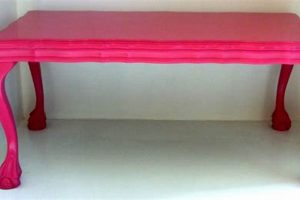
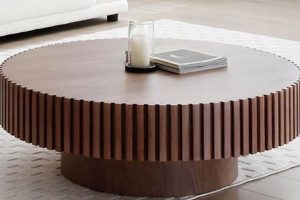
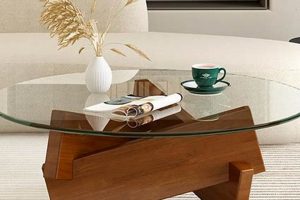
A furnishing element typically found in living rooms, characterized by a substantial, single piece of wood serving as its primary surface. These pieces often retain the natural edges and imperfections of the original tree from which they were sourced, presenting a rustic and organic aesthetic. An example would be a thick section of walnut, carefully sanded and sealed, supported by metal legs to provide a functional surface for drinks, books, or decorative items.
The appeal of using these furnishings lies in their unique character and the inherent connection to nature they bring into a space. They offer a sense of warmth and individuality, acting as a focal point due to their distinctive grain patterns and natural variations. Historically, the use of solid wood in furniture design reflects a appreciation for craftsmanship and a desire to incorporate natural elements into interior spaces, providing durability and aesthetic longevity.
The following sections will delve into the selection criteria, the process of sourcing suitable materials, various finishing techniques, and the diverse styles of bases that complement these striking furniture pieces, offering a comprehensive understanding of their creation and integration into diverse interior designs.
Tips for Selecting a Durable and Aesthetically Pleasing Coffee Table
The following guidelines are intended to assist in the selection process, ensuring the chosen furnishing meets both aesthetic preferences and functional requirements for long-term use. Careful consideration of these points will contribute to a satisfying and enduring investment.
Tip 1: Species Selection. Opt for hardwoods like walnut, oak, or maple. These provide superior durability and resistance to wear and tear compared to softer woods. For instance, a table made from kiln-dried walnut will resist warping and cracking, maintaining its structural integrity over time.
Tip 2: Moisture Content. Verify the wood has been properly dried to a moisture content appropriate for the intended environment. Excessive moisture can lead to warping, cracking, or fungal growth. An ideal moisture content is typically between 6-8% for indoor use, ensuring dimensional stability.
Tip 3: Surface Finish. Select a durable finish that protects the wood from spills, scratches, and UV damage. Options include polyurethane, lacquer, or penetrating oils. A catalyzed varnish, for example, offers excellent protection against water rings and scratches, extending the table’s lifespan.
Tip 4: Edge Treatment. Consider the edge treatment for both safety and aesthetic purposes. Live edges offer a natural, rustic look, but should be properly sanded and sealed to prevent splinters. A beveled or rounded edge provides a more refined appearance and reduces the risk of injury.
Tip 5: Base Design and Stability. Ensure the base is sturdy and well-proportioned to the slab’s size and weight. Metal legs, for example, should be of sufficient gauge steel and securely attached to the wood. A wobbly or unstable base compromises both safety and usability.
Tip 6: Grain Pattern and Character. Examine the grain pattern and natural imperfections for aesthetic appeal. Features such as knots, burls, or spalting can add character but should be stable and not prone to further cracking. A consistent and visually appealing grain enhances the table’s overall aesthetic value.
Tip 7: Slab Thickness. A thicker slab typically indicates greater durability and stability. Slabs less than 2 inches thick may be prone to warping or cracking, especially with larger dimensions. A minimum thickness of 3 inches is generally recommended for larger tables.
Selecting a furnishing that aligns with these considerations will contribute to its longevity, aesthetic appeal, and overall satisfaction. The investment in a quality piece, selected with these factors in mind, will provide years of functional use and visual enjoyment.
The subsequent sections will explore various design considerations and styling techniques to integrate a high-quality furnishing into a variety of interior spaces, maximizing its impact and complementing the overall design aesthetic.
1. Material Sourcing

The selection of raw materials profoundly affects the quality, aesthetic, and sustainability of a wooden slab coffee table. The species of wood chosen dictates the table’s durability, resistance to environmental factors, and the character of its grain. For instance, using black walnut, known for its rich color and density, necessitates sourcing from sustainable forests to minimize environmental impact. Conversely, opting for a less durable, readily available wood may reduce upfront costs, but potentially compromises the longevity of the finished piece. The origin of the wood, therefore, is not merely a detail, but a foundational element that shapes the entire lifecycle of the table.
The method of acquisition is also crucial. Sourcing from reputable lumberyards or mills that adhere to responsible forestry practices ensures that the wood is legally harvested and that replanting efforts are in place. This approach contrasts sharply with sourcing from unregulated sources, where illegal logging can contribute to deforestation and habitat destruction. Furthermore, the process by which the wood is processed, including drying techniques and milling practices, affects the stability and workability of the slab. Kiln-dried lumber, for example, is less prone to warping and cracking compared to air-dried wood, resulting in a more stable and long-lasting coffee table.
In conclusion, the implications of material sourcing extend far beyond the visual appeal of the finished furniture piece. Responsible sourcing from reputable suppliers, selection of appropriate wood species, and adherence to sustainable practices are essential for creating a wooden slab coffee table that is both aesthetically pleasing and environmentally responsible. Ultimately, understanding the origins and processing of the materials contributes to the value and lasting quality of the product, while mitigating negative environmental impact.
2. Edge Detail
The treatment of the perimeter, often referred to as the edge detail, significantly defines the aesthetic character and functional utility of a wooden slab coffee table. It is a primary design element that influences not only the visual appeal but also the tactile experience and overall safety of the piece.
- Live Edge Presentation
A live edge retains the natural contours of the tree from which the slab was sourced. This approach showcases the organic form of the wood, creating a rustic and visually striking table. However, a live edge requires careful sanding and sealing to prevent splintering and ensure a smooth, safe surface. The inherent irregularity can also present challenges in terms of table placement and the compatibility with certain interior styles.
- Chamfered Edge Application
A chamfered edge involves beveling the sharp corner of the slab, resulting in a softened profile. This detail provides a more refined and contemporary aesthetic, while also mitigating the risk of injury from sharp corners. Chamfering can be applied at various angles and depths, allowing for subtle variations in design. For instance, a slight chamfer can offer a minimalist look, while a more pronounced chamfer can create a bolder visual statement.
- Rounded Edge Configuration
Rounding the edge of a wooden slab provides a smooth, tactile surface and eliminates any sharp points. This approach is often preferred in environments where safety is a primary concern, such as households with young children. The rounded edge also offers a comfortable surface for leaning or resting objects, enhancing the overall usability of the coffee table. The degree of rounding can vary from a gentle curve to a full bullnose profile, each influencing the table’s perceived style.
- Square Edge Treatment
A square edge presents a clean, modern aesthetic with sharp, defined lines. This treatment is often paired with contemporary or minimalist interior designs. However, a square edge can be less forgiving in terms of imperfections, requiring precise milling and finishing to achieve a flawless appearance. Furthermore, square edges are more susceptible to chipping and damage compared to rounded or chamfered edges, necessitating greater care during use and handling.
In summary, the selection of an edge detail for a wooden slab coffee table is a critical design decision that impacts both the aesthetic and functional characteristics of the piece. Each approach, from the raw appeal of a live edge to the precise lines of a square edge, offers distinct advantages and considerations. Therefore, careful evaluation of the intended use, desired aesthetic, and environmental context is essential to achieving a harmonious and enduring design.
3. Support Structure
The structural base directly influences the stability, longevity, and aesthetic harmony of a wooden slab coffee table. The substantial weight and inherent irregularities of a solid wood slab necessitate a robust and well-engineered support system. Failure to adequately support the slab can result in sagging, warping, or catastrophic failure, rendering the table unusable. For instance, a thick walnut slab placed on slender, inadequately braced metal legs may exhibit deflection over time, compromising both its appearance and structural integrity. Conversely, a properly designed base distributes the load evenly, preventing stress concentrations and ensuring the table remains level and stable.
Materials selection for the support structure plays a pivotal role. Steel, known for its high strength-to-weight ratio, is frequently employed, offering both durability and a contemporary aesthetic. Wood, while offering a cohesive look, requires careful species selection and joinery techniques to ensure sufficient strength and resistance to environmental changes. An example would be pairing a redwood slab with a base constructed of equally durable redwood, employing mortise and tenon joints for optimal stability. Furthermore, the geometry of the base impacts its performance; a wider stance provides greater stability, while strategically placed cross-bracing enhances rigidity and prevents racking. The design must consider both the static load of the slab and the dynamic loads imposed by everyday use.
In summary, the support structure is not merely an ancillary component, but an integral element that determines the overall performance and lifespan of a wooden slab coffee table. A well-designed and constructed base ensures stability, prevents structural failure, and contributes to the aesthetic appeal of the piece. Careful consideration of materials, geometry, and load distribution is paramount to creating a table that is both functional and visually compelling, offering years of reliable use. The robustness and design of the support will directly dictate the success or failure of the entire furniture piece.
4. Wood Finishing

The application of protective coatings to a wooden slab coffee table represents a critical stage in its fabrication, influencing its durability, aesthetic character, and resistance to environmental factors. The selected finish not only enhances the wood’s natural beauty but also shields it from moisture, scratches, and UV damage, thereby extending its lifespan.
- Polyurethane Application
Polyurethane finishes are synthetic resins that form a durable, protective layer on the wood surface. Their resistance to water and abrasion makes them suitable for high-use surfaces such as coffee tables. An example is a two-part catalyzed polyurethane, which offers superior durability compared to water-based polyurethanes. However, polyurethanes can sometimes impart a plastic-like appearance, potentially detracting from the natural aesthetic of the wood slab.
- Oil-Based Finishes (e.g., Tung Oil)
Oil-based finishes penetrate the wood fibers, enhancing the grain pattern and providing a natural, low-luster appearance. Tung oil, for example, polymerizes within the wood, offering moderate protection against moisture and scratches. These finishes require multiple coats and regular maintenance, as they are less durable than synthetic options. The advantage lies in their ability to highlight the wood’s inherent character and provide a tactile, natural feel.
- Varnish Application
Varnishes, typically composed of resins, drying oils, and solvents, create a hard, transparent film on the wood surface. Spar varnish, often used for marine applications, offers exceptional resistance to water and UV radiation. Applying spar varnish to a coffee table intended for outdoor use would significantly extend its lifespan. However, varnishes can be prone to cracking and yellowing over time, requiring periodic refinishing.
- Wax Application
Wax finishes, such as beeswax or carnauba wax, provide a minimal protective layer while imparting a soft sheen to the wood. Wax is often used as a topcoat over other finishes to enhance their luster and tactile qualities. However, wax offers limited protection against moisture and scratches, necessitating frequent reapplication. Its primary role is to enhance the aesthetic appearance rather than provide robust protection.
The selection of an appropriate finish for a wooden slab coffee table depends on a variety of factors, including the intended use environment, desired aesthetic, and maintenance requirements. Durable finishes like polyurethane and varnish offer greater protection but may sacrifice some of the wood’s natural character. Conversely, oil-based and wax finishes enhance the wood’s beauty but require more frequent upkeep. The optimal choice represents a balance between protection, aesthetics, and practicality, ensuring the longevity and visual appeal of the finished product.
5. Size Proportion

The size proportion of a wooden slab coffee table is a critical determinant of its functionality and aesthetic integration within a given space. An improperly sized table can disrupt the visual harmony of a room and impede its usability. The dimensions of the slablength, width, and thicknessmust be carefully considered in relation to the size of the seating area, the height of the surrounding furniture, and the overall scale of the room. For example, a coffee table that is too large can overwhelm a small living room, making it feel cramped and impeding movement. Conversely, a table that is too small will appear insignificant and fail to provide adequate surface area for its intended purpose. The ideal proportion is one that complements the existing furniture and enhances the room’s overall balance.
The height of the coffee table, in particular, warrants careful consideration. A table that is significantly lower than the seat height of the surrounding sofas and chairs can be awkward to use, requiring occupants to bend excessively to reach items placed on its surface. Conversely, a table that is too high can obstruct sightlines and create a barrier within the seating area. A general guideline is to select a coffee table that is approximately the same height as the seat cushions or slightly lower, facilitating comfortable use and maintaining visual continuity. Furthermore, the thickness of the slab influences its perceived weight and visual impact. A very thick slab may appear overly bulky in a small space, while a thinner slab may seem insubstantial in a larger room. Balancing the slab’s thickness with its other dimensions is crucial for achieving visual harmony.
In summary, the size proportion of a wooden slab coffee table is a fundamental design consideration that directly affects its functionality and aesthetic integration. Careful attention to the table’s dimensions, height, and thickness, in relation to the surrounding furniture and room size, is essential for creating a cohesive and functional living space. Ignoring these principles can result in a table that is visually jarring, impractical to use, or both. Ultimately, the goal is to select a table that complements its surroundings, enhances the room’s overall aesthetic, and provides a comfortable and functional surface for everyday use.
6. Grain Orientation

Grain orientation, pertaining to the alignment and direction of wood fibers within a wooden slab, significantly influences the structural integrity and aesthetic appeal of a coffee table crafted from such a material. The orientation affects several key properties, including strength, stability, and susceptibility to warping or cracking. A slab where the grain runs primarily parallel to the longest dimension generally exhibits greater resistance to bending forces along that axis. Conversely, a slab with irregular or cross-grain patterns may be more prone to stress concentrations and subsequent structural failure under load. For instance, a coffee table crafted from a slab with pronounced end-grain exposed on the surface is aesthetically distinctive but requires careful consideration of its support structure to mitigate potential splitting along the grain lines. Therefore, understanding and strategically managing grain orientation is paramount in ensuring the longevity and stability of the furniture piece.
Consider the case of a live-edge coffee table. The natural undulations of the tree’s outer perimeter often result in varying grain directions within the slab. Crafting a table from such a piece demands meticulous assessment to identify areas where the grain might be particularly vulnerable to stress. Reinforcement techniques, such as butterfly joints or epoxy resin fills, may be necessary to stabilize these weaker sections and prevent future damage. Furthermore, the chosen finish can accentuate or mitigate the visual impact of the grain pattern. A clear finish highlights the natural beauty of the wood, while a tinted stain can even out variations in color and grain, creating a more uniform appearance. Ultimately, responsible utilization of a wooden slab with varied grain patterns necessitates a compromise between aesthetic preferences and structural considerations.
In conclusion, proper assessment and management of grain orientation represent a crucial aspect of crafting durable and visually appealing wooden slab coffee tables. Neglecting this factor can lead to structural instability, premature failure, and diminished aesthetic value. Conversely, a thorough understanding of grain behavior enables craftsmen to leverage the natural characteristics of the wood, creating unique and long-lasting furniture pieces that showcase the inherent beauty of the material. The challenge lies in balancing aesthetic aspirations with structural realities, ensuring that the final product is both visually compelling and functionally sound.
7. Aesthetic Integration

The successful incorporation of a wooden slab coffee table into an interior design scheme hinges upon its aesthetic integration. This integration necessitates a careful consideration of existing design elements to ensure the coffee table complements rather than clashes with the surrounding environment. A rustic slab with a pronounced live edge, for instance, might find harmonious placement within a bohemian or farmhouse-style living room, its natural character enhancing the overall ambiance. Conversely, placing such a piece within a minimalist, modern setting could create visual discord, disrupting the clean lines and understated aesthetic. Aesthetic integration is not merely about matching colors or styles, but about creating a cohesive visual narrative where each element contributes to a unified and pleasing whole.
Achieving aesthetic integration often involves tailoring the coffee table’s design to the specific context. This may include selecting a particular wood species whose color and grain pattern align with existing flooring or furniture. The choice of base materials, such as steel, iron, or wood, can further enhance integration. A metal base with a matte finish can complement industrial-style interiors, while a wooden base can reinforce a traditional or rustic aesthetic. Furthermore, the coffee table’s dimensions must be proportional to the surrounding furniture and room size to maintain visual balance. A large slab in a small space can overwhelm the area, while a diminutive table in a large room can appear insignificant. The impact of neglecting this element is evident in spaces where mismatched furniture creates a sense of visual clutter and disharmony, detracting from the room’s intended purpose and ambiance.
In summary, aesthetic integration is a critical component of successfully incorporating a wooden slab coffee table into any interior design. It requires careful consideration of existing design elements, thoughtful selection of materials and finishes, and precise attention to proportion and scale. By prioritizing aesthetic integration, one can ensure that the coffee table enhances the overall visual narrative of the space, creating a cohesive and harmonious environment that is both aesthetically pleasing and functionally sound. The challenge lies in balancing the unique character of the slab with the broader design context, ultimately crafting a space where each element works in concert to achieve a unified and impactful aesthetic statement.
Frequently Asked Questions About Wooden Slab Coffee Tables
This section addresses common inquiries regarding wooden slab coffee tables, providing concise and informative answers to aid in informed decision-making.
Question 1: What wood species are best suited for a wooden slab coffee table?
Hardwoods such as walnut, oak, maple, and cherry are generally preferred due to their durability and resistance to wear. Softer woods may be suitable for purely decorative applications, but hardwoods provide superior longevity for functional furniture pieces.
Question 2: How does slab thickness affect the stability and longevity?
Greater slab thickness generally corresponds to increased stability and resistance to warping. Slabs with a minimum thickness of 2-3 inches are typically recommended for coffee tables intended for regular use.
Question 3: What are the advantages and disadvantages of a live edge versus a straight edge?
A live edge preserves the natural contour of the tree, offering a rustic aesthetic but potentially requiring more specialized finishing and posing challenges with edge protection. Straight edges offer a cleaner, more contemporary look and are easier to maintain but lack the unique character of a live edge.
Question 4: How can potential cracking in a wooden slab be addressed?
Minor cracks can often be stabilized with epoxy resin fills. Larger cracks or splits may require the installation of butterfly joints or other reinforcement methods to prevent further propagation.
Question 5: What type of finish is most appropriate for protecting a wooden slab coffee table?
Durable finishes such as polyurethane, varnish, or penetrating oils provide varying degrees of protection against moisture, scratches, and UV damage. The choice depends on the desired aesthetic and the intended use of the table.
Question 6: How should a wooden slab coffee table be maintained to preserve its appearance and structural integrity?
Regular dusting and occasional cleaning with a wood-specific cleaner are recommended. Avoid prolonged exposure to direct sunlight or excessive moisture. Periodically reapply the finish as needed to maintain protection.
These answers provide a foundational understanding of key considerations related to wooden slab coffee tables. Further research and consultation with experienced woodworkers are encouraged for specific projects or applications.
The following section will delve into the market trends and purchasing considerations associated with these distinct furniture pieces.
Conclusion
The preceding exploration has illuminated the multifaceted aspects of the furnishing, from material sourcing and edge detailing to support structures, wood finishing, size proportion, grain orientation, and aesthetic integration. Each element contributes significantly to the final product’s stability, longevity, and visual impact. Understanding these factors is paramount for selecting or commissioning a piece that effectively meets both functional requirements and aesthetic preferences. The decisions made regarding these aspects collectively define the furnishing’s value and its ability to serve as a lasting component of the interior landscape.
Therefore, when considering a purchase of a “wooden slab coffee table”, deliberate assessment of these design and construction principles is crucial. A well-informed approach ensures an investment in a furniture piece that provides enduring value and aesthetic satisfaction, harmoniously blending natural materials with functional design. The long-term success of its integration into any space hinges on this thoughtful and discerning process.