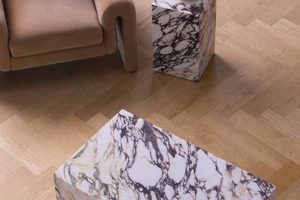
This furniture piece integrates a surface crafted from geological formations, such as marble, granite, or slate, with a supporting structure to create a functional surface for placement of beverages, books, and decorative objects within a living space. For instance, a rectangular slab of polished travertine resting on a metal frame serves as a focal point in a contemporary living room.
The incorporation of elements derived directly from the earth offers durability, unique aesthetic qualities, and a connection to natural environments. Its presence can enhance a room’s visual appeal, conveying permanence and sophistication. Historically, materials of this nature have been prized for their strength and beauty, finding use in architectural design and fine art for centuries, thereby adding an element of timelessness to modern interiors.
The following sections will delve into the specific types of geological materials used in these pieces, examining their inherent characteristics, ideal placement within the home, and essential maintenance practices to ensure longevity and continued aesthetic value.
Guidance on Natural Stone Coffee Table Selection and Care
Optimal utilization and preservation of these pieces require careful consideration of material properties and environmental factors. Adherence to the following guidelines will contribute to the longevity and enduring aesthetic appeal.
Tip 1: Material Selection Based on Usage: Granite and quartzite offer superior resistance to staining and scratching, making them appropriate for high-traffic areas or households with children and pets. Marble, while aesthetically pleasing, is more porous and susceptible to damage.
Tip 2: Sealing for Protection: Application of a quality sealant is imperative, especially for materials such as marble and limestone. This process creates a barrier against spills and prevents absorption of liquids, minimizing the risk of stains. Regular resealing, typically every 1-2 years, is recommended.
Tip 3: Immediate Spill Response: Promptly address spills of acidic substances like wine, citrus juice, or vinegar. Blot the area immediately with a clean, absorbent cloth. Avoid wiping, which can spread the liquid and exacerbate potential staining.
Tip 4: Proper Cleaning Techniques: Refrain from using abrasive cleaners or harsh chemicals. Opt for pH-neutral cleaners specifically designed for the geological material in question. A mixture of warm water and mild dish soap is generally a safe and effective alternative.
Tip 5: Heat Protection: Employ coasters and trivets to shield the surface from hot dishes and beverages. Prolonged exposure to heat can cause thermal shock, leading to cracking or discoloration, particularly in certain types of geological formations.
Tip 6: Weight Considerations: Assess the load-bearing capacity of the floor before placing a substantial geological piece. Reinforcement may be necessary to prevent structural damage. The weight should be distributed evenly.
Tip 7: Professional Restoration: For deep scratches, stubborn stains, or other significant damage, seek the expertise of a professional geological surface restoration service. Attempting DIY repairs can potentially worsen the situation.
Diligent adherence to these recommendations fosters the preservation of the piece’s intrinsic qualities, thereby ensuring lasting beauty and functionality. Prudent selection, coupled with attentive maintenance, maximizes the value and enjoyment derived from the furnishing.
The subsequent section will address various design considerations and stylistic integration of these pieces within diverse interior spaces.
1. Material Durability

Material durability represents a primary determinant of the longevity and aesthetic preservation of a geological surface designed for placement within a living space. The inherent resistance to scratching, staining, and impact directly influences its suitability for daily use. Specifically, geological formations characterized by high mineral hardness, such as granite and quartzite, demonstrate superior resistance to abrasion from common household items, thereby minimizing visible wear over time. The selection of a less durable material, such as marble, in a high-traffic area, conversely, may result in noticeable etching from acidic substances and potential chipping from accidental impacts.
The practical significance of material durability extends to maintenance requirements and long-term cost considerations. Surfaces exhibiting high resistance necessitate less frequent sealing and specialized cleaning, translating to reduced upkeep efforts and expenses. For instance, a geological top constructed from sealed slate requires only routine dusting and occasional cleaning with pH-neutral solutions. Conversely, a marble top, owing to its higher porosity and susceptibility to staining, necessitates immediate spill cleanup and regular application of protective sealants to mitigate potential damage. Instances of irreversible staining or significant surface damage on less durable tops often necessitate professional restoration or even replacement, incurring substantial costs.
In conclusion, material durability represents a critical consideration in the selection of geological surface furnishings. Careful evaluation of the intended use, anticipated wear and tear, and maintenance capabilities ensures an informed decision that optimizes longevity, aesthetic preservation, and cost-effectiveness. The long-term value derived from a geological surface directly correlates with its inherent resistance to the rigors of daily use, emphasizing the practical importance of prioritizing durability when making a selection.
2. Aesthetic Variation

The aesthetic variation inherent in geological formations directly influences the selection and integration of tops within interior design schemes. As no two slabs of natural stone are exactly alike, variations in veining, color, and texture create a unique visual signature. This characteristic allows for a high degree of customization to complement diverse aesthetic preferences, ranging from minimalist modern to traditional rustic. For example, a stark white Carrara marble displays delicate grey veining, lending itself to a classic, elegant setting, while a dark, heavily veined granite piece can serve as a dramatic focal point in a more contemporary space. The selection of geological material, therefore, is intrinsically linked to the desired aesthetic outcome.
The practical significance of understanding the range of aesthetic variations lies in its ability to enhance the overall harmony and visual appeal of a room. Consider the contrast between a honed limestone surface, characterized by its soft, matte finish and subtle color variations, and a highly polished black granite, which provides a sleek, reflective surface and a bold visual statement. The informed selection of either material will result in a differing aesthetic impression. Moreover, the geological source, cutting method, and finishing techniques employed during fabrication can further contribute to the aesthetic variation. A slab cut against the grain may display more prominent veining, while a bookmatched pairing presents a symmetrical pattern that can create visual interest.
In summary, the diverse aesthetic variations present in tops derived from natural stone constitute a key determinant in their selection and application. Recognizing the interplay between material characteristics, design preferences, and finishing techniques empowers informed decisions, enabling the creation of harmonious and visually appealing interior spaces. The effective utilization of this aesthetic variation enhances the overall design narrative, reinforcing the piece’s role as a functional and artistic element within the home. The integration of geological elements brings a touch of the Earth’s artistry into interior design.
3. Weight Considerations
The structural integrity of the supporting floor and the manageability of the piece itself are critically linked to weight. Understanding the weight implications is essential before acquisition.
- Floor Load Capacity
The mass of geological slabs, especially those composed of dense materials such as granite or marble, can exert significant pressure per square foot. Residential floors, particularly in older structures or apartments, possess defined load-bearing limits. Exceeding these limits can result in structural damage, including deflection, cracking, or, in extreme cases, collapse. Prior to placing a heavy geological furnishing, a structural engineer should assess the floor’s capacity, especially if the geological piece is exceptionally large or weighty. Failure to do so may lead to costly repairs and potential safety hazards.
- Maneuverability and Placement
The substantial weight of these pieces impacts their ease of movement and placement within a room. Transporting and positioning a heavy geological furnishing requires specialized equipment and personnel to prevent injury or damage to the surrounding environment. Furthermore, once positioned, relocation may prove difficult or impossible without professional assistance. The implication is that the initial placement decision should be made with careful consideration of long-term aesthetic and functional needs. Consider also the placement and distance to the wall to ensure proper support.
- Frame and Base Stability
The supporting frame or base must be engineered to withstand the considerable weight of the geological surface. Substandard frames can buckle or fail under the load, resulting in instability and potential damage to the geological surface itself. Designs incorporating reinforced steel frames or robust wooden supports are essential to ensure long-term stability and prevent structural compromise. The frame’s design should also distribute the weight evenly across the supporting surface to minimize stress points. Consider designs that prioritize the balance between aesthetics and structural functionality.
- Material Density and Volume
The specific type of geological material, combined with its dimensions, directly correlates with its overall weight. A large slab of low-density limestone will weigh considerably less than an equivalent volume of high-density granite. This variance necessitates a careful assessment of the material’s inherent properties when planning for transport, placement, and long-term support. Knowledge of the material’s density allows for accurate weight estimations and facilitates informed decisions regarding floor load capacity and frame design. Choosing the material according to room specifications can prevent unexpected problems.
These facets highlight the importance of accounting for the weight implications of geological surfaces. Careful planning and assessment are crucial for ensuring structural safety, ease of handling, and long-term stability, ultimately preserving the value and functionality. These insights will ensure a seamless fit between the geological element and the space in which it resides.
4. Maintenance Needs

The longevity and aesthetic preservation of a geological surface used as a central furnishing within a living space are inextricably linked to its maintenance requirements. The porous nature of many geological materials, such as marble and limestone, renders them susceptible to staining, etching, and the absorption of liquids, necessitating diligent and specific maintenance protocols. Failure to address these inherent vulnerabilities results in irreversible damage, diminished aesthetic appeal, and decreased value of the furnishing. For instance, neglecting to promptly clean spilled acidic liquids, such as lemon juice or wine, from a marble surface leads to etching, a permanent dulling of the finish that necessitates professional restoration. Proper cleaning techniques, the application of protective sealants, and the utilization of appropriate cleaning agents constitute essential components of routine maintenance, mitigating the risk of damage and preserving the surface’s original beauty. Regular dusting with a microfiber cloth and immediate cleaning of spills are fundamental, serving as preventative measures against long-term degradation.
Variations in geological composition dictate differing maintenance needs. Granite, characterized by its dense, non-porous structure, exhibits greater resistance to staining and scratching than softer materials such as travertine. Consequently, granite surfaces require less frequent sealing and are more amenable to cleaning with general-purpose cleaners. However, even granite benefits from periodic sealing to further enhance its stain resistance and protect against potential damage from harsh chemicals. Marble and limestone, conversely, demand specialized care due to their inherent porosity. These materials necessitate frequent sealing with penetrating sealers to prevent the absorption of liquids and the formation of stains. The selection of appropriate cleaning agents is also critical; abrasive cleaners and acidic solutions can damage the surface, leading to etching and discoloration. Mild, pH-neutral cleaners specifically formulated for natural stone are recommended for routine cleaning. In high-traffic areas or households with children and pets, increased vigilance and more frequent cleaning are required to maintain the surface’s integrity. Specific attention should be given to areas around the piece where items or spills are prone to occur.
In conclusion, the maintenance needs of a geological surface directly impact its durability, aesthetic appeal, and long-term value. An understanding of the material’s inherent properties, coupled with the implementation of appropriate cleaning and sealing protocols, is crucial for preserving its beauty and functionality. Neglecting these needs leads to irreversible damage and diminished value, underscoring the importance of proactive and informed maintenance practices. Regular inspection, immediate attention to spills, and the use of appropriate cleaning agents are essential components of a comprehensive maintenance strategy. By prioritizing diligent maintenance, homeowners can ensure the lasting beauty and enjoyment of their geological surfaces.
5. Surface Porosity

Surface porosity, a fundamental characteristic of geological materials, significantly influences the selection, maintenance, and longevity of a surface integrated as a central furnishing within a living space. The degree to which a material allows the absorption of liquids and other substances directly impacts its susceptibility to staining, etching, and degradation, thereby affecting its suitability for use in a domestic setting.
- Absorption Rate and Stain Susceptibility
The absorption rate, determined by the size and density of pores on the material’s surface, dictates the speed and extent to which liquids penetrate the stone. Highly porous materials, such as certain types of limestone and travertine, exhibit rapid absorption rates, rendering them particularly vulnerable to staining from common household spills like coffee, wine, or oil. Conversely, materials with low porosity, such as granite, offer greater resistance to staining due to their tighter pore structure. Understanding the absorption rate is crucial for selecting an appropriate sealant and implementing effective stain prevention measures. Failure to mitigate the effects of high porosity results in unsightly stains that diminish the aesthetic appeal and value of the furnishing.
- Sealing Imperatives and Protection Mechanisms
The application of a sealant serves as a primary defense against the detrimental effects of surface porosity. Sealants, typically penetrating or surface-coating polymers, create a barrier that impedes the ingress of liquids and contaminants. Penetrating sealants, designed for porous materials like marble, penetrate the surface and line the pores, reducing absorption without altering the natural appearance. Surface-coating sealants, suitable for less porous materials, form a protective film on the surface, enhancing stain resistance and ease of cleaning. The selection of an appropriate sealant, and its periodic reapplication according to manufacturer’s instructions, is essential for maintaining the integrity and aesthetic quality of the furnishing. Inadequate sealing compromises the protective barrier, rendering the surface vulnerable to staining and damage.
- Cleaning Agent Compatibility and Damage Avoidance
The selection of cleaning agents must be carefully considered in relation to the surface porosity and material composition. Abrasive cleaners, acidic solutions, and harsh chemicals can damage porous surfaces, leading to etching, discoloration, and loss of polish. Mild, pH-neutral cleaners specifically formulated for natural stone are recommended to prevent damage while effectively removing dirt and grime. Testing cleaning agents in an inconspicuous area prior to widespread use is advisable to assess compatibility and avoid unintended consequences. Ignoring the potential for damage from inappropriate cleaning agents results in irreversible surface degradation, necessitating costly repairs or replacement.
- Maintenance Frequency and Long-Term Preservation
The frequency and intensity of maintenance required to preserve a geological surface is directly proportional to its porosity. Highly porous materials necessitate more frequent cleaning, sealing, and stain removal efforts compared to less porous alternatives. Establishing a routine maintenance schedule that includes regular dusting, immediate spill cleanup, and periodic sealant reapplication is essential for long-term preservation. Neglecting routine maintenance allows stains to set, etching to occur, and the overall aesthetic appearance to deteriorate over time. Proactive maintenance, guided by an understanding of the material’s porosity, ensures the lasting beauty and value of the furnishing.
In summation, surface porosity represents a critical factor influencing the performance and longevity of natural stone employed within domestic spaces. Addressing the challenges associated with porosity through appropriate material selection, diligent sealing practices, compatible cleaning agents, and routine maintenance ensures the preservation of aesthetic quality and value. The informed consideration of surface porosity is paramount for maximizing the durability and enhancing the enjoyment of geological furnishings.
6. Design Integration
The successful incorporation of a geological surface piece hinges on effective design integration, which requires a thorough understanding of the material’s inherent properties and the surrounding environment’s aesthetic characteristics. A mismatch between the geological surface and the overall design scheme can diminish the visual appeal and functionality of the space. For example, a rough-hewn slate surface may be incongruous within a minimalist, modern interior, while a highly polished marble piece could appear out of place in a rustic, farmhouse-style setting. Design integration, therefore, necessitates a cohesive approach that considers color palettes, furniture styles, and architectural details.
Furthermore, the size and shape of the geological surface should be proportionate to the dimensions of the room and the surrounding furniture. An oversized surface in a small space can overwhelm the room and impede movement, while an undersized surface may appear insignificant and fail to serve its intended function effectively. The surface’s shape should also complement the room’s layout and furniture arrangement. A rectangular surface may be suitable for a long, narrow room, while a round or oval surface may be more appropriate for a square or circular space. Lighting plays a crucial role in enhancing the aesthetic appeal. Strategically placed lighting can accentuate the geological material’s veining, color variations, and texture, creating a focal point and enhancing the overall ambiance of the room. Conversely, inadequate lighting can obscure the material’s beauty and render it visually unappealing. The practical application of these principles involves careful planning and consideration of all elements within the room to ensure a seamless and harmonious integration of the geological element.
In summary, design integration is a critical component in maximizing the aesthetic impact and functional utility. By carefully considering the material’s properties, the surrounding environment’s characteristics, and the principles of proportion and scale, one can achieve a cohesive and visually appealing design. The challenge lies in balancing personal preferences with the objective requirements of the space to create a harmonious and functional living environment. Success in this endeavor elevates the geological surface beyond a mere furnishing, transforming it into an integral element that enhances the room’s overall design narrative.
7. Cost Implications

Acquiring a geological furnishing entails a range of expenses extending beyond the initial purchase price. Material selection, fabrication complexities, transportation logistics, and maintenance protocols each contribute to the total cost. Understanding these factors enables informed decision-making and facilitates budget allocation.
- Raw Material Acquisition and Rarity
The geological composition dictates the primary cost. Materials like common granite varieties are generally more accessible and, therefore, less expensive than rare marble or quartzite formations. Extraction processes, geographic availability, and demand influence raw material prices. Exotic stones with unique veining or coloring command a premium due to limited supply and increased desirability. The selection directly impacts the overall expenditure; opting for a more readily available geological material can substantially reduce the initial investment.
- Fabrication and Customization Expenses
The complexity of the design and the degree of customization impact fabrication costs. Simple shapes and standard dimensions require less labor and specialized equipment, resulting in lower expenses. Intricate designs, custom edge profiles, or unique surface finishes necessitate skilled craftsmanship and advanced machinery, increasing the overall cost. Sourcing from a fabricator with advanced capabilities to minimize waste during the cutting process will save resources and costs.
- Transportation and Installation Logistics
The weight and fragility necessitate specialized transportation and installation procedures. Shipping costs vary based on distance, weight, and the need for protective packaging. Professional installation is often required to ensure proper placement and prevent damage. These logistical considerations can add a significant expense, particularly for large or delicate items. A comprehensive assessment of transportation challenges and installation requirements is crucial for accurate budgeting.
- Long-Term Maintenance and Restoration Costs
While the initial investment may be substantial, ongoing maintenance contributes to the total cost. Sealing, cleaning, and potential repairs represent recurring expenses. More porous materials, such as marble, require more frequent sealing and specialized cleaning products, increasing maintenance costs. Accidental damage may necessitate professional restoration services, adding further expense. Evaluating the material’s maintenance requirements and planning for potential repairs is crucial for long-term cost management.
These facets collectively highlight the multifaceted nature of cost implications associated with geological furnishing. Careful consideration of material selection, fabrication complexity, logistical challenges, and maintenance requirements enables informed decision-making and promotes effective budget management, thereby maximizing the value derived from the piece. These geological elements also have varying levels of resale value in the second-hand market.
Frequently Asked Questions
This section addresses common inquiries regarding geological surfaces utilized as central furnishings, providing clarity and guidance to prospective owners.
Question 1: What geological material offers the greatest resistance to staining?
Granite and quartzite exhibit superior stain resistance compared to marble and limestone due to their lower porosity and denser structure. These materials are suitable for high-traffic areas and households with children or pets.
Question 2: How frequently should geological furnishings be sealed?
The frequency depends on the material’s porosity and usage. Marble and limestone require sealing every 6-12 months, while granite may only need sealing every 2-3 years. Follow the sealant manufacturer’s instructions for optimal protection.
Question 3: What cleaning agents are safe for cleaning geological surfaces?
Only pH-neutral cleaners specifically designed for natural stone should be utilized. Abrasive cleaners, acidic solutions, and bleach can damage the surface, leading to etching and discoloration.
Question 4: Can heat damage geological surfaces?
Prolonged exposure to high heat can cause thermal shock, leading to cracking or discoloration, especially in certain types of geological formations. Trivets and coasters should be used to protect the surface from hot items.
Question 5: How can scratches be removed from a geological top?
Minor scratches may be buffed out with a polishing compound designed for natural stone. Deeper scratches require professional restoration services involving grinding and polishing techniques.
Question 6: What is the best way to transport a geological furnishing?
Due to the substantial weight and fragility, professional movers experienced in handling delicate items should be employed. Proper padding and securing techniques are essential to prevent damage during transit.
Key takeaways include the importance of material selection, regular sealing, appropriate cleaning practices, and professional handling to ensure the longevity and aesthetic appeal. The implementation of these measures contributes to responsible ownership.
The subsequent section will provide a summary of crucial elements to consider when acquiring. This will help inform your decision.
Natural Stone Coffee Table
This exploration has underscored the multifaceted considerations inherent in acquiring a natural stone coffee table. Material durability, aesthetic variation, weight considerations, maintenance needs, surface porosity, design integration, and cost implications each play a critical role in determining the long-term value and suitability of such a piece. Prudent selection, diligent maintenance, and informed handling are essential for preserving its aesthetic integrity and ensuring structural longevity.
The integration of geological elements into interior spaces represents a commitment to enduring design and a connection to natural materials. Understanding the nuances of these geological pieces empowers responsible ownership and maximizes the potential for sustained enjoyment. Future trends may witness advancements in sealing technologies and fabrication techniques, further enhancing the resilience and aesthetic versatility of the natural stone coffee table. So select them carefully.
![Find Your Perfect Chair & Coffee Table Set [Deals!] | The Ultimate Coffee Guide: Types, Brewing Methods & Best Beans](https://deacoffee.com/wp-content/uploads/2026/05/th-72-300x200.jpg "Find Your Perfect Chair & Coffee Table Set [Deals!] The Ultimate Coffee Guide: Types, Brewing Methods & Best Beans")