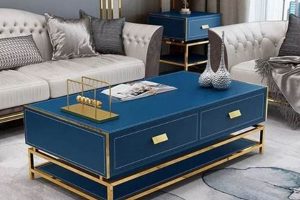
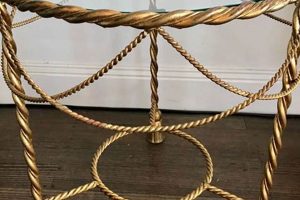
Furniture design originating from the Ming Dynasty (1368-1644) exhibits specific characteristics, often emphasizing simplicity, balance, and elegance. A low table intended for use in front of seating, reflecting these design principles, exemplifies this style. These tables are characterized by clean lines, a rectangular or square top, and legs that often feature a subtle outward curve or a straight, unadorned design. Construction typically involves hardwoods like rosewood or ebony, with a focus on showcasing the natural grain of the wood.
The enduring appeal of these tables lies in their understated sophistication and adaptability to various interior design schemes. Their minimalist aesthetic allows them to integrate seamlessly into both traditional and contemporary settings. Functionally, they provide a surface for displaying objects, holding beverages, or serving as a focal point within a living space. Historically, such furniture reflected the Ming Dynasty’s emphasis on artistry and craftsmanship, contributing to the development of distinct furniture styles that continue to influence design today.
This article will delve further into the key features, historical influences, and modern interpretations of this furniture form, exploring variations in materials, construction techniques, and design elements. Subsequent sections will also address the identification of authentic pieces and considerations for incorporating such a table into a contemporary home.
Tips for Selecting a Ming Style Coffee Table
The acquisition of a table reflecting Ming Dynasty design principles requires careful consideration. Adherence to the following guidelines will assist in making an informed decision.
Tip 1: Material Evaluation: Hardwoods are typically employed. Rosewood, ebony, or elm are common choices. Inspect the wood for grain quality and consistency. Avoid pieces constructed from inferior materials.
Tip 2: Construction Assessment: Traditional joinery techniques, such as mortise and tenon, should be evident. Examine the joints for tightness and stability. Screws or nails may indicate a lower quality reproduction.
Tip 3: Leg Design Scrutiny: Legs often feature a subtle curve or a straight, tapered form. Ensure the legs are structurally sound and evenly spaced to provide stability. Unevenness may indicate damage or poor craftsmanship.
Tip 4: Surface Inspection: The tabletop should be smooth and free of cracks or significant imperfections. The finish should be appropriate for the wood type and period, often a clear lacquer or varnish to enhance the natural grain.
Tip 5: Size and Proportion Considerations: The dimensions of the table should be appropriate for the intended space. Ensure that the table complements the surrounding furniture and does not overwhelm the room.
Tip 6: Authenticity Verification: Consult with experts in antique furniture to assess the piece’s provenance and authenticity, particularly if purchasing an antique. Documented history or reputable dealers are important.
Tip 7: Price Comparison: Research the market value of similar items to ensure a fair price. Factor in the condition, materials, and provenance of the specific table when making a purchase decision.
By carefully evaluating these factors, one can select a high-quality piece that reflects the elegance and craftsmanship of Ming Dynasty design, adding a sophisticated element to any interior.
The following section will provide guidance on incorporating this furniture form into various interior design styles, addressing issues of placement and aesthetic compatibility.
1. Simplicity
Simplicity serves as a foundational principle in the design aesthetic of the Ming Dynasty and is manifestly evident in low tables of that style. The causal relationship is straightforward: Ming artisans deliberately eschewed elaborate ornamentation in favor of clean lines and uncluttered surfaces. The importance of simplicity stems from its capacity to highlight the inherent quality of the materials used, typically hardwoods like rosewood or elm. For instance, a rosewood table with a simple rectangular top and straight legs allows the wood’s grain and color to take center stage, rather than being obscured by carvings or inlays. This restrained approach contributes to the table’s overall elegance and timeless appeal.
Further illustrating this point is the absence of extraneous details. Unlike furniture from other periods characterized by ornate embellishments, a typical table features a flat, unadorned surface and a minimal number of structural elements. This design choice not only enhances the table’s visual harmony but also simplifies its construction and maintenance. The practical application of this understanding lies in the ability to discern authentic or high-quality reproductions from inferior imitations; authentic pieces prioritize simplicity and material quality over superfluous decoration. An example includes the mortise and tenon joints used in its constructions, this highlights its functionality, a table of this style offers a durable surface suitable for various activities, emphasizing practical use, and a focal point of artistic expression.
In summary, simplicity is not merely a stylistic choice in low tables; it is a defining characteristic that underscores the quality of materials, enhances visual balance, and contributes to overall elegance. Understanding this connection is crucial for appreciating the aesthetic and practical significance of this design. While maintaining simplicity presents a challenge in contemporary interpretations, preserving this element is key to retaining the essence of Ming design, linking this specific furniture form to the broader artistic principles of the dynasty.
2. Hardwood Construction
Hardwood construction is a defining characteristic, and an integral component to consider when discussing the aesthetic and structural integrity of low tables crafted in the style of the Ming Dynasty. The selection of hardwoods is not merely a matter of preference; it is a deliberate choice that reflects both functional requirements and an appreciation for natural beauty.
- Durability and Longevity
Hardwoods, such as rosewood, ebony, and elm, offer superior durability compared to softwoods. This inherent strength allows the tables to withstand daily use and resist wear and tear over extended periods. The longevity of hardwood ensures that these pieces can serve as functional furniture for generations, becoming heirloom items. For example, a table constructed from rosewood can maintain its structural integrity and aesthetic appeal for centuries with proper care.
- Aesthetic Qualities
Hardwoods exhibit distinct grain patterns and natural color variations that enhance the visual appeal. The rich textures and tones of rosewood or ebony contribute to the table’s overall elegance. Artisans often exploit these aesthetic qualities by applying clear finishes that accentuate the wood’s natural beauty rather than concealing it. A finely crafted ebony table, for instance, showcases the wood’s deep, lustrous color and intricate grain, making it a focal point in a room.
- Resistance to Environmental Factors
Hardwoods possess a greater resistance to moisture, pests, and decay compared to softer wood types. This resistance is crucial for preserving the table’s structural integrity in varying environmental conditions. A hardwood table is less susceptible to warping, cracking, or insect infestation, ensuring its long-term stability and aesthetic preservation. For example, teak wood’s high oil content naturally repels water and insects, making it a suitable choice for pieces intended for use in areas with higher humidity.
- Traditional Craftsmanship
The use of hardwoods aligns with traditional Ming Dynasty woodworking techniques. These techniques, such as mortise and tenon joinery, are specifically designed to exploit the strength and stability of hardwoods, creating robust and long-lasting furniture. The combination of hardwood and traditional joinery methods results in pieces that are not only aesthetically pleasing but also structurally sound, capable of withstanding the test of time. An example of this includes the use of dovetailed joints with a strong hardwood like elm, this creates exceptionally strong joints.
In conclusion, the choice of hardwood in the construction of tables is fundamental to their durability, aesthetic appeal, resistance to environmental factors, and adherence to traditional craftsmanship. The utilization of these materials ensures that the tables exemplify the quality and elegance associated with Ming Dynasty design, providing both functional utility and enduring beauty within a living space. These qualities of hardwood materials provide examples for understanding and appraising furniture made during the Ming dynasty, or in that style.
3. Rectangular Form
The rectangular form constitutes a significant design element in tables inspired by the Ming Dynasty. Its prevalence is not arbitrary but rather stems from a confluence of practical, aesthetic, and cultural considerations inherent to the period. The rectangular shape offers a balance between usability and visual harmony, aligning with the Ming aesthetic of understated elegance.
- Optimized Surface Area
The rectangular shape maximizes usable surface area while maintaining a proportional footprint. This is particularly crucial for function, providing ample space for tea ceremonies, displaying objects, or holding books and other items. A square form might be too compact for certain uses, while a circular or irregular shape could waste space along walls or in corners. For example, a rectangular table provides ample space for a complete tea set, allowing the user to enjoy the tea culture.
- Symmetry and Balance
The rectangular form contributes to a sense of symmetry and visual balance, aligning with the principles of design. The clean lines and right angles of the rectangle create a sense of order and stability, complementing the unadorned aesthetic often associated with the style. This contrasts with more asymmetrical forms, which may introduce a sense of visual tension that is not characteristic of the design. Consider the placement of a rectangular table centered within a seating arrangement; its form promotes visual equilibrium.
- Ease of Integration
The rectangular shape facilitates seamless integration into various interior spaces and furniture arrangements. Its linear form allows it to be easily positioned against walls, in front of sofas, or between chairs. This adaptability is particularly valuable in contemporary settings where space optimization is a priority. A rectangular table can be neatly placed against a wall when not in use, maximizing floor space.
- Symbolic Associations
While not as overtly symbolic as shapes in other cultures, the rectangular form can be associated with stability and order. These qualities align with the general aesthetic of the Ming Dynasty, which valued balance, harmony, and functionality. The rectangular form reinforces a sense of grounding and dependability, contributing to the overall sense of calm and order associated with the style. A table symbolizes wealth, social status, and cultural refinement.
In summary, the rectangular form, as expressed in the design, is not simply a stylistic choice but a functional and aesthetic decision. It optimizes surface area, promotes visual balance, facilitates integration into various spaces, and resonates with the principles of design. These factors collectively contribute to the table’s enduring appeal and its compatibility with both traditional and modern interiors. These combined examples highlight rectangular shapes’ critical role in the history and application of the style table.
4. Clean Lines

The term “clean lines” is intrinsically linked to the design aesthetic, representing a fundamental characteristic of the furniture form. The causal relationship is direct: the pursuit of simplicity and understated elegance during the Ming Dynasty led to the prioritization of straight, unadorned lines in furniture construction. The importance of clean lines lies in their ability to convey a sense of order, balance, and visual clarity. Their absence would fundamentally alter the piece’s identity, moving it away from the defining traits of Ming furniture. An example of this can be seen in the legs of the table. Straight, unembellished legs are a common feature, contrasting with the ornate, curved legs found in furniture styles from other periods. The practical significance of understanding this is the ability to distinguish between authentic or well-executed reproductions and those that deviate from the historical aesthetic.
The application of clean lines extends beyond mere aesthetics; it also impacts the structural integrity of the piece. By minimizing unnecessary ornamentation, the focus shifts to the quality of the materials and the precision of the joinery. Hardwoods, such as rosewood or ebony, are often chosen for their natural beauty, which is further enhanced by the simplicity of the design. For example, a table with clean lines showcases the natural grain and color variations of the wood, whereas an overly ornate design would distract from these inherent qualities. Furthermore, the absence of elaborate carvings or inlays simplifies the manufacturing process, allowing artisans to focus on achieving precise dimensions and seamless connections.
In conclusion, clean lines are not merely a stylistic choice; they are a defining element that embodies the essence. Their presence is crucial for maintaining the aesthetic integrity and historical accuracy. While interpretations of the style may vary in contemporary designs, the core principle of prioritizing simplicity and clean lines remains essential. The challenge lies in adapting this principle to modern contexts without sacrificing the fundamental characteristics that make these tables distinct, linking the object to the principles of its dynasty.
5. Balance

Balance, in the context of a table reflecting Ming Dynasty design principles, manifests as a harmonious equilibrium between form, function, and material. The causal relationship stems from the Ming Dynasty’s philosophical and aesthetic values, which emphasized order and equilibrium. The importance of balance cannot be overstated; it is a key characteristic that distinguishes this furniture style from others. Without balance, a table may appear visually discordant or structurally unsound, failing to capture the essence of Ming design. For instance, a table with overly thick legs in proportion to a thin tabletop would lack visual balance and potentially structural stability. The practical significance of understanding this connection is to discern authentic designs or high-quality reproductions from poorly executed imitations.
This balance is achieved through several design elements. Symmetry plays a crucial role, with the table often featuring a rectangular or square top supported by legs of equal size and spacing. The use of negative space is also deliberate, preventing the table from appearing too heavy or cluttered. Material choice contributes to balance as well; the natural grain and color of hardwoods are often showcased, creating a sense of visual harmony. Functionally, the table’s dimensions and proportions are carefully considered to ensure it serves its purpose without overwhelming the surrounding space. An example of this is a table whose height complements the seating arrangement, creating comfortable access for placing or retrieving items. The balance between usability and aesthetic appeal is a signature feature.
In conclusion, balance is a defining attribute of furniture inspired by the Ming Dynasty. It is not merely a stylistic choice but a fundamental design principle that reflects the cultural values of the period. Achieving this balance requires careful consideration of form, function, and material. While contemporary interpretations may introduce variations, the core concept of balance remains essential for capturing the essence. The challenge lies in maintaining this equilibrium while adapting the design to modern contexts, ensuring that these tables continue to embody the elegance and harmony associated with the Ming Dynasty.
6. Functionality
Functionality serves as a central tenet in the design, influencing its form, dimensions, and integration into various living spaces. The causal relationship is evident: tables were conceived primarily as utilitarian objects, designed to support activities such as tea ceremonies, calligraphy, or the display of art objects. The importance of functionality stems from its direct impact on the table’s usability and its compatibility with the intended environment. Without considering functionality, a table may be aesthetically pleasing but impractical, failing to serve its intended purpose. For instance, a table with an excessively low height may be visually appealing but uncomfortable for placing or retrieving objects. The practical significance of understanding this connection is to evaluate the table’s suitability for specific needs and to appreciate the deliberate choices made by Ming Dynasty artisans to optimize its utility.
This functionality is manifested through several design elements. The rectangular or square shape maximizes surface area for practical use, while the smooth, unadorned tabletop provides a stable and easily cleaned surface. The dimensions are typically scaled to complement traditional seating arrangements, allowing for comfortable interaction. The use of durable hardwoods ensures the table can withstand daily use and resist wear and tear. Consider a table placed in a scholar’s studio, providing ample space for writing materials and serving as a focal point for intellectual pursuits. The incorporation of minimalist construction techniques ensures that the table is structurally sound without sacrificing its aesthetic elegance. The functional integration of these elements enhances the table’s value as a practical and aesthetically pleasing object.
In conclusion, functionality is not merely a secondary consideration, but a primary driver shaping the design. It ensures that the table is not only visually appealing but also practical and adaptable to various needs. While contemporary interpretations may introduce variations in style, the underlying principle of functionality remains essential. The challenge lies in balancing aesthetic considerations with functional requirements, ensuring that the tables continue to serve their purpose effectively while embodying the elegance and harmony associated with the Ming Dynasty. This ongoing consideration ensures that the piece remains relevant and useful in modern contexts, bridging the gap between historical tradition and contemporary living.
Frequently Asked Questions
The following section addresses common inquiries regarding design coffee tables, providing informative responses based on historical context and design principles.
Question 1: What defines a table as adhering to the principles?
A defining characteristic is its simplicity in form, avoidance of ornate embellishments, and use of hardwoods like rosewood or elm. Clean lines, a rectangular or square top, and a focus on balance and proportion are also key indicators.
Question 2: What types of wood are typically used in constructing a table of the style?
Historically, hardwoods such as rosewood, ebony, and elm are favored for their durability, aesthetic qualities, and resistance to environmental factors. These woods exhibit distinct grain patterns and natural color variations that enhance the table’s visual appeal.
Question 3: How does the rectangular form contribute to the overall design?
The rectangular shape optimizes surface area, promotes visual balance, facilitates integration into various interior spaces, and aligns with the value of stability and order. Its linear form allows it to be easily positioned within diverse furniture arrangements.
Question 4: What is the significance of “clean lines” in the aesthetic?
Clean lines represent a prioritization of straight, unadorned lines in furniture construction. They convey a sense of order, balance, and visual clarity. Minimizing ornamentation shifts the focus to the quality of materials and the precision of joinery.
Question 5: How is balance achieved in the design?
Balance is achieved through a harmonious equilibrium between form, function, and material. Symmetry, the use of negative space, and careful consideration of dimensions and proportions contribute to the overall sense of visual harmony.
Question 6: How does functionality influence the design?
Functionality shapes the table’s form, dimensions, and integration into living spaces. Conceived as utilitarian objects, they are designed to support activities such as tea ceremonies or the display of art objects. The focus on usability ensures the table is both aesthetically pleasing and practical.
These responses provide a concise overview of key characteristics and design principles. Further research into specific construction techniques and historical context is recommended for a comprehensive understanding.
The subsequent section will address considerations for incorporating a table of this style into modern interior design schemes.
Ming Style Coffee Table
This exploration has delineated the defining characteristics of furniture informed by the design principles of the Ming Dynasty. Through considerations of hardwood construction, rectangular form, clean lines, balance, and functionality, it becomes evident that pieces exemplify a deliberate synthesis of form and purpose. The enduring appeal stems from its inherent simplicity and adaptability, allowing it to seamlessly integrate within both historical and contemporary contexts.
The continued appreciation of these tables signifies the enduring value of thoughtful design. Recognizing the nuances of construction techniques, material selection, and historical context enables informed choices, ensuring that such pieces retain their aesthetic and functional integrity for generations to come. Therefore, diligent consideration must be given to preserving the essence that defines this furniture form, and continuing its legacy.
![Best Coffee Tables for Your Gray Couch [Guide] | The Ultimate Coffee Guide: Types, Brewing Methods & Best Beans](https://deacoffee.com/wp-content/uploads/2026/04/th-354-300x200.jpg "Best Coffee Tables for Your Gray Couch [Guide] The Ultimate Coffee Guide: Types, Brewing Methods & Best Beans")