These are designed for drip coffee makers that brew larger quantities, specifically those producing approximately twelve cups of coffee. They provide a barrier to separate coffee grounds from the brewed liquid during the brewing process, resulting in a cleaner cup of coffee. These filters typically feature a conical or basket shape, tailored to fit specific coffee maker models.
Using appropriately sized filtration media is crucial for optimal coffee flavor and brewing efficiency. They prevent sediment from entering the final brew, leading to a smoother taste experience. Historically, various materials have been used for coffee filtration, but paper has become the dominant choice due to its convenience, affordability, and effective filtering capabilities. The availability of the correctly sized filter ensures consistent results, minimizing the risk of overflow or grounds in the brewed coffee.
The following sections will explore the different types available, material compositions, environmental considerations, and selection criteria for these essential brewing components. These factors influence the overall coffee brewing process and contribute to the quality of the final beverage.
Effective Utilization of 12-Cup Coffee Filters
This section provides practical recommendations for maximizing the effectiveness and lifespan of larger-capacity coffee filtration media, leading to improved brewing outcomes and reduced waste.
Tip 1: Select the Appropriate Filter Type: Basket-style are generally suited for flat-bottomed brewers, while cone-shaped are designed for conical filter holders. Using an incompatible shape can lead to improper filtration and inconsistent brewing.
Tip 2: Pre-wet the Filter: Rinsing with hot water before adding grounds helps eliminate paper taste and preheats the brewing chamber for more even extraction.
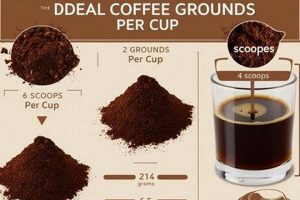
Tip 3: Use the Correct Amount of Coffee: A general guideline is two tablespoons of ground coffee per six ounces of water. Adjust to personal taste preferences, but ensure grounds are distributed evenly within the filter.
Tip 4: Store Filters Properly: Keep them in a dry, airtight container to prevent moisture absorption and potential mold growth, preserving their integrity and preventing contamination.
Tip 5: Consider Unbleached Options: Unbleached options are environmentally preferable and eliminate the risk of any chemical residue affecting the coffee’s flavor profile.
Tip 6: Dispose of Used Filters Responsibly: Compostable paper filters can be added to composting systems, reducing landfill waste and enriching soil. Ensure only paper filters and coffee grounds are composted.
Tip 7: Clean the Filter Basket Regularly: Coffee oils can accumulate in the filter basket, impacting the flavor of subsequent brews. Clean with soap and water or a vinegar solution periodically.
Implementing these strategies will ensure optimal performance, enhance the coffee’s taste, and contribute to more sustainable practices in coffee preparation.
The concluding section will summarize the overall value and utility of these filtration components in the context of modern coffee brewing.
1. Proper Filter Size

The accurate dimensioning of coffee filters relative to twelve-cup coffee makers constitutes a fundamental determinant of brewing efficacy and overall beverage quality. Incompatibility in size introduces a range of operational and qualitative detriments.
- Capacity Overreach
An undersized filter, when used in a twelve-cup coffee maker, lacks the capacity to contain the full volume of coffee grounds required for a full batch. This deficiency invariably leads to overflow during the brewing cycle, resulting in a diluted and sediment-laden final product. The overflow can also cause operational disruptions, potentially damaging the coffee maker’s internal components.
- Restricted Water Flow
A filter that is excessively large for the filter basket, even if technically rated for twelve cups, can impede the uniform flow of water through the coffee grounds. This restricted flow creates uneven extraction, yielding both under-extracted and over-extracted flavors within the same brew. The resultant cup profile is characterized by imbalance and a lack of clarity.
- Structural Integrity Compromise
Incorrect filter size can compromise the structural integrity of the filter itself. An oversized filter may crumple or collapse under the weight of saturated coffee grounds, leading to tears and the release of sediment into the brewed coffee. Conversely, an undersized filter may stretch beyond its capacity, risking similar structural failure.
- Brewing Inefficiency
Using the wrong size diminishes brewing efficiency. Overflow requires cleaning and re-brewing, wasting coffee and water. Improper water flow necessitates manual intervention, like stirring, disrupting the automated brewing process. The result is an extended brewing time and an inconsistent coffee quality.
The selection of appropriately sized filters for twelve-cup coffee makers transcends mere convenience; it is a critical factor influencing the entire brewing process and the ultimate sensory experience of the brewed coffee. Adherence to precise sizing standards minimizes waste, prevents operational issues, and ensures a consistent, high-quality beverage.
2. Material Composition
The composition of materials used in the construction of filtration media directly influences the final quality and characteristics of coffee brewed in twelve-cup machines. Material properties affect filtration efficiency, taste neutrality, and environmental impact, making material selection a critical consideration.
- Paper Pulp Type
Coffee filters primarily utilize paper pulp, sourced from various wood types. The pulp’s origin and processing impact filter porosity and flavor contribution. Unbleached filters, retaining lignin, may impart a subtle papery taste, while bleached filters undergo chemical treatments to eliminate this. The pulp’s fiber length affects the filter’s structural integrity, preventing tears and sediment leakage.
- Bleaching Agents
Bleached filters often undergo processing with chlorine or oxygen-based bleaching agents. Chlorine bleaching can leave residual dioxins, potentially affecting taste and posing environmental concerns. Oxygen-bleached or unbleached filters offer alternatives that mitigate these risks, contributing to a cleaner taste profile and reduced environmental impact.
- Filter Thickness and Density
The thickness and density of the paper material directly impact filtration efficiency. Thicker, denser filters trap more sediment, resulting in a cleaner, brighter cup of coffee. However, excessive density can impede water flow, leading to over-extraction and bitterness. Optimal thickness balances sediment retention with efficient water passage.
- Synthetic Fiber Additives
Some filters incorporate synthetic fibers, such as polypropylene, to enhance wet strength and prevent tearing. While improving durability, these additives introduce non-biodegradable components, complicating disposal and raising environmental concerns. The presence of these synthetics requires careful consideration of disposal practices.
These compositional factors collectively determine the functional performance and sustainability of these filters. The choice of materials directly affects brewing efficiency, the taste profile of the coffee, and the environmental footprint of coffee preparation. Understanding these connections allows consumers to make informed decisions aligning with their desired brewing outcomes and environmental values.
3. Filtration Efficiency

The degree to which coffee filters, specifically those designed for twelve-cup coffee makers, effectively remove particulate matter from the brewing slurry constitutes their filtration efficiency. This property is paramount in determining the clarity, taste profile, and overall quality of the brewed coffee. Deviations in filtration efficiency can manifest as variations in sediment presence, potentially altering the sensory experience.
- Pore Size and Distribution
The dimensions and uniformity of pores within the filter material are critical determinants. Smaller, more consistently distributed pores restrict the passage of fine coffee grounds, resulting in a cleaner filtrate. Conversely, larger or unevenly distributed pores permit greater sediment passage, leading to a muddier brew. Pore size optimization involves a balance between sediment retention and maintaining adequate flow rates for efficient brewing in larger capacity machines.
- Material Density and Thickness
Increased material density and thickness enhance the filter’s capacity to trap particulate matter. Denser materials present a more tortuous path for sediment, increasing the likelihood of retention. However, excessive density can impede water flow, potentially leading to over-extraction and bitterness. An optimal balance between density, thickness, and flow rate is essential for achieving desired filtration performance in twelve-cup applications.
- Wet Strength and Structural Integrity
The filter’s ability to maintain its structural integrity when saturated with water and coffee grounds directly affects filtration efficiency. Weak or easily torn filters allow sediment to bypass the filter matrix, compromising the clarity of the brew. High wet strength ensures the filter remains intact throughout the brewing cycle, effectively retaining particulate matter and preventing sediment leakage, especially in the prolonged brewing times associated with larger batches.
- Surface Area and Pleating
The total surface area of the filter, often enhanced through pleating or other texturing techniques, influences the overall filtration capacity. A larger surface area provides more opportunities for sediment to be trapped, improving filtration efficiency. The configuration of the filter, such as the depth and spacing of pleats, affects the flow dynamics and sediment retention characteristics. Maximizing surface area while maintaining uniform flow is crucial for optimal filtration in larger-volume brewing scenarios.
These interconnected aspects of filtration efficiency collectively govern the performance of coffee filters used in twelve-cup coffee makers. Controlling and optimizing these parameters is essential for producing consistently clean, flavorful, and sediment-free coffee. Variations in any of these factors can significantly impact the quality and consumer satisfaction associated with each brewed batch.
4. Basket/Cone Shape

The geometric configuration, either basket or cone, of filtration media significantly impacts the brewing dynamics and extraction efficiency within twelve-cup coffee makers. The chosen shape must correspond to the design of the brewing apparatus to ensure optimal performance and prevent operational complications.
- Surface Area and Extraction Uniformity
Cone-shaped filters, with their tapered geometry, promote a more concentrated saturation of coffee grounds as water passes through. This can lead to more uniform extraction, particularly in smaller batches. Basket-shaped filters, possessing a flat bottom, distribute water more evenly across a wider bed of coffee grounds, a characteristic that is advantageous when brewing larger volumes, as is typical with twelve-cup machines. The chosen shape directly influences the consistency of extraction, thereby affecting the coffee’s flavor profile.
- Water Flow Dynamics
The slope of a cone-shaped filter facilitates a more directed flow of water, encouraging channeling and potentially leading to uneven extraction if not properly managed. Basket-shaped filters, with their flat bottom, tend to promote more even water distribution across the grounds, mitigating channeling effects, especially in larger brewing volumes. Flow rate, and consequently extraction efficiency, is closely tied to the filter’s shape and its interaction with the water dispersion mechanism of the coffee maker.
- Sediment Trapping and Filtration Efficiency
The geometry of the filter influences its ability to trap and retain sediment. Cone-shaped filters, due to their pointed bottom, may concentrate sediment in a smaller area, potentially leading to a slightly cleaner final brew. Basket-shaped filters distribute sediment across a larger surface, which can, if the filter material is not of sufficient quality, result in slightly more sediment escaping into the brewed coffee. The shape interacts with the filter material to determine the overall effectiveness of sediment removal.
- Compatibility with Brewing Apparatus
The shape of the filter must be precisely matched to the design of the coffee maker’s filter holder. Attempting to use a cone-shaped filter in a basket-style holder, or vice versa, will result in improper fit, leading to bypass of water around the grounds, uneven extraction, and potentially damage to the brewing mechanism. This incompatibility is particularly problematic in larger twelve-cup machines, where precise operation is crucial for consistent results.
The selection of either a basket or cone-shaped filter for a twelve-cup coffee maker must be predicated on a thorough understanding of the machine’s design and the desired brewing characteristics. Mismatched shapes compromise extraction efficiency and can lead to suboptimal coffee quality, underscoring the importance of shape compatibility in the context of larger-volume brewing.
5. Environmental Impact

The environmental consequences associated with filtration media designed for twelve-cup coffee makers necessitate careful consideration, encompassing resource consumption, waste generation, and potential pollution. Evaluating the life cycle of these filters is crucial for mitigating their ecological footprint.
- Raw Material Sourcing and Production
The primary material in many filters is paper pulp, derived from forests. Sustainable forest management practices, such as those certified by the Forest Stewardship Council (FSC), are essential to minimize deforestation and habitat disruption. The bleaching process, often employed to whiten filters, can release harmful chemicals into waterways if not properly managed. The energy consumption during pulp processing and filter manufacturing contributes to greenhouse gas emissions. The environmental impact starts well before the consumer purchases the item.
- Biodegradability and Compostability
Standard paper filters decompose over time in landfills, but the process is often slow and contributes to methane production, a potent greenhouse gas. Compostable filters, when properly processed in composting facilities, break down more rapidly and enrich soil. The presence of synthetic fibers in some filters hinders biodegradability, extending their lifespan in landfills. Composting practices offer an avenue for mitigating the environmental burden of these filters.
- Landfill Waste Volume
Discarded filters constitute a significant fraction of landfill waste, particularly considering the widespread daily consumption of coffee. The sheer volume of filters accumulating in landfills exacerbates waste management challenges and contributes to land degradation. Reducing filter consumption through alternative brewing methods or promoting reusable filter options can lessen this impact. The cumulative effect of individual disposal habits translates into a substantial environmental burden.
- Alternative Materials and Sustainable Practices
Reusable metal filters, constructed from stainless steel or other durable materials, offer a long-term alternative to disposable paper filters. These options eliminate the need for continuous filter replacement, significantly reducing waste. Innovations in biodegradable materials, such as bamboo or hemp fibers, present promising avenues for developing more sustainable disposable filters. The adoption of eco-conscious materials and manufacturing practices is crucial for minimizing the environmental footprint of filtration media.
These interconnected facets underscore the complex environmental dimensions of filtration media used in twelve-cup coffee makers. Conscious consumption habits, coupled with advancements in sustainable materials and waste management practices, are imperative for minimizing the ecological impact associated with this ubiquitous brewing accessory.
Frequently Asked Questions
The following addresses common inquiries regarding the selection, usage, and disposal of filtration media designed for twelve-cup coffee brewing apparatuses.
Question 1: What are the key differences between bleached and unbleached coffee filters for 12-cup brewers?
Bleached filters undergo a chemical process to whiten the paper, potentially leaving trace residues. Unbleached filters retain their natural color and avoid chemical exposure, but may impart a subtle papery taste. Selection depends on individual preference regarding taste neutrality and chemical avoidance.
Question 2: How does the shape of a coffee filter (basket vs. cone) affect brewing in a 12-cup coffee maker?
Basket-shaped filters provide a flat bottom, promoting even water distribution across the grounds, which is advantageous for larger batch sizes. Cone-shaped filters concentrate the grounds, potentially leading to channeling and uneven extraction if not properly managed. The filter shape should match the specific coffee maker’s filter holder design.
Question 3: Can standard coffee filters be used in a 12-cup coffee maker?
It is generally inadvisable. Filters designed for smaller capacities may not adequately contain the volume of grounds required for a twelve-cup batch, resulting in overflow and inconsistent brewing. Using the correctly sized filter is essential for optimal performance.
Question 4: What is the proper method for disposing of used coffee filters?
Compostable paper filters can be added to composting systems, reducing landfill waste. Filters containing synthetic fibers are not suitable for composting and should be disposed of in general waste. Coffee grounds can be composted regardless of the filter type.
Question 5: How does filter thickness influence the quality of coffee brewed in a 12-cup machine?
Thicker filters generally trap more sediment, leading to a cleaner cup of coffee. However, excessive thickness can impede water flow, potentially causing over-extraction and bitterness. An ideal thickness balances sediment retention with efficient water passage.
Question 6: Are reusable coffee filters a viable alternative to disposable filters for 12-cup brewers?
Reusable metal filters offer a sustainable alternative, eliminating the need for disposable paper filters. They require cleaning after each use but reduce waste and long-term cost. The initial investment is higher, but the lifespan is significantly longer than disposable options.
Choosing the appropriate filtration media, adhering to proper usage guidelines, and employing responsible disposal practices are crucial for optimizing the brewing process and minimizing environmental impact.
The concluding section will provide a summary of best practices related to coffee filter use in twelve-cup machines.
Concluding Remarks
This exploration has illuminated the multifaceted considerations surrounding the use of coffee filters 12 cup. From material composition and filtration efficiency to shape compatibility and environmental impact, each aspect significantly influences the brewing process and the quality of the resulting beverage. Selection should be predicated on a comprehensive understanding of these factors, aligning with individual preferences and environmental consciousness.
The effective utilization of coffee filters 12 cup transcends mere convenience, representing a commitment to both quality coffee and responsible consumption. Continued innovation in materials and manufacturing practices promises further advancements in filter performance and sustainability, underscoring the enduring importance of this seemingly simple component in the pursuit of the perfect cup. Prudent selection and conscientious disposal remain critical for minimizing environmental impact and maximizing the enjoyment of brewed coffee.