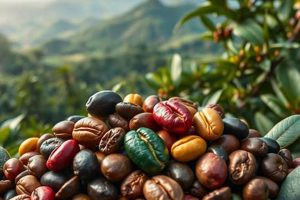
The central question revolves around the suitability of diverse coffee bean varieties for creating espresso. While theoretically, any coffee bean can be used in an espresso machine, the resulting beverage’s quality and flavor profile will vary significantly. For instance, using a light-roast, single-origin Ethiopian bean might produce a bright, acidic espresso, whereas a dark-roast, blended bean from South America might yield a bolder, more chocolatey cup.
The significance of bean selection stems from its direct impact on the espresso’s characteristics. The density, origin, roast level, and blend of the coffee beans all contribute to the final product’s crema, body, acidity, and overall flavor complexity. Historically, specific regions and roasting techniques have been favored for espresso production due to their ability to deliver consistent and desirable results. Optimizing bean selection improves the espresso experience.
Therefore, understanding the nuances of coffee bean characteristics is crucial for achieving optimal espresso extraction. The following sections will delve into the factors that contribute to a quality espresso, including bean origin, roast level, and blending strategies, providing a comprehensive guide to choosing the right beans for espresso.
Considerations for Coffee Bean Selection
Optimal espresso extraction necessitates careful evaluation of coffee bean properties. The following points provide guidance for maximizing espresso quality regardless of the bean origin.
Tip 1: Roast Level Assessment: Darker roasts generally produce more consistent results due to increased solubility. Evaluate the roast level to ensure it aligns with the desired flavor profile; a darker roast mitigates acidity.
Tip 2: Origin Impact Awareness: Single-origin beans offer unique flavor characteristics but may require adjustments to grind size and extraction time. Understand the inherent acidity and body associated with specific geographic regions.
Tip 3: Blend Construction Strategies: Blending different bean origins can create a more balanced espresso. Experiment with combinations to achieve the desired sweetness, acidity, and body.
Tip 4: Freshness Prioritization: Freshly roasted beans are paramount for optimal crema and flavor. Purchase whole beans and grind them immediately before brewing to retain volatile aromatic compounds.
Tip 5: Grind Size Calibration: Precise grind size is crucial for espresso extraction. Adjust the grinder setting based on the bean’s density and roast level to achieve the correct extraction time, aiming for a consistent flow rate.
Tip 6: Water Quality Influence: Water composition significantly affects espresso taste. Use filtered water with a balanced mineral content to minimize unwanted flavors and maximize flavor clarity.
Tip 7: Extraction Time Monitoring: Strive for an extraction time of approximately 25-30 seconds. Adjust grind size and tamping pressure to achieve this target range and prevent under- or over-extraction.
Selecting and preparing coffee beans requires a comprehensive understanding of the interplay between roast level, origin, and brewing parameters. Adhering to these guidelines will enable the production of a well-balanced and flavorful espresso.
The final section will summarize the core principles of coffee bean selection and highlight the importance of continuous experimentation to refine the espresso brewing process.
1. Roast Level

The roast level of coffee beans exerts a significant influence on the suitability of said beans for espresso preparation. A darker roast, characterized by prolonged exposure to high temperatures, typically enhances the bean’s solubility. This increased solubility facilitates a more consistent extraction process under the high pressure environment of an espresso machine. Conversely, lightly roasted beans, while potentially showcasing brighter, more nuanced flavor profiles, may present challenges in achieving optimal extraction, often resulting in a weaker, more acidic espresso. The selection of a roast level must therefore consider the desired outcome, balancing the potential for unique flavors against the requirements for consistent and efficient extraction.
For instance, a darker Italian roast, a common choice for espresso, exhibits pronounced bitterness and chocolate notes, a consequence of the extensive roasting process. This profile is frequently desired in traditional espresso blends. In contrast, attempting to create espresso with a light-roasted Ethiopian Yirgacheffe bean may yield a beverage with distinct citrus and floral characteristics but can also lead to sourness if the extraction parameters are not meticulously adjusted. The roaster should adjust extraction time and other parameters to enhance the coffee expression.
In summation, while theoretically any roast level can be employed in espresso production, the practical implications are substantial. The roast level directly impacts the ease of extraction, the consistency of the resulting beverage, and the overall flavor profile. An informed selection, aligned with the desired espresso characteristics and the extraction equipment’s capabilities, is paramount for achieving satisfactory results. Light roasts are more soluble in hot water instead of hot steam.
2. Bean Origin

The geographical origin of coffee beans exerts a significant influence on their suitability for espresso preparation. While theoretically any bean can be used, the inherent characteristics imparted by the origin dramatically affect the final beverage’s flavor profile, acidity, and body, making certain origins more conducive to espresso than others.
- Terroir and Flavor Development
The terroir, encompassing soil composition, climate, and altitude, directly influences the bean’s chemical composition and flavor precursors. For example, high-altitude Ethiopian beans often exhibit bright acidity and floral notes, while Sumatran beans tend to possess earthy, full-bodied characteristics. These inherent traits impact the espresso’s complexity and balance.
- Acidity Levels and Extraction
The natural acidity levels in coffee beans, largely determined by origin, play a crucial role in espresso extraction. High-acidity beans may require precise grind size and temperature adjustments to prevent sourness or under-extraction. Conversely, low-acidity beans may lack the desired brightness and complexity, necessitating blending with higher-acidity varieties.
- Regional Processing Methods
Processing methods, such as washed, natural, or honey processing, vary significantly across regions and profoundly affect the bean’s flavor profile. Washed coffees typically exhibit cleaner, brighter flavors, while natural coffees often showcase fruitier, more complex characteristics. The chosen processing method must complement the desired espresso style.
- Traditional Espresso Blends
Certain origins have historically been favored in traditional espresso blends due to their inherent suitability for creating balanced and consistent shots. South American beans, such as Brazilian and Colombian varieties, often form the base of espresso blends, providing body and sweetness, while African or Central American beans contribute acidity and complexity. The origin selection forms the foundation of blend construction.
Therefore, while the premise stands that any coffee bean could be used for espresso, the origin represents a key determinant in whether the resulting shot achieves desirable levels of quality and flavor intricacy. Understanding the characteristics associated with diverse geographical areas is essential for maximizing espresso potential. The origin sets the stage for the entire brewing process.
3. Grind Size

The suitability of any coffee bean for espresso is inextricably linked to grind size. Grind size dictates the surface area exposed to pressurized water during extraction, directly affecting the rate at which soluble compounds are dissolved. If the grind is too coarse, water flows through too quickly, resulting in under-extraction and a weak, sour espresso. Conversely, an excessively fine grind can lead to over-extraction, producing a bitter, astringent shot as less desirable compounds are dissolved. The bean type will affect the grind size you need. For example, a lighter roasted bean will need a finer grind than a dark roasted bean.
Achieving the correct grind size is further complicated by the variability in bean density and roast level. A lighter roasted, denser bean may require a finer grind than a darker roasted, more porous bean to achieve a similar extraction time. This necessitates careful adjustment of the grinder to match the specific bean being used. For instance, a dense, high-altitude Guatemalan bean might require a significantly finer grind than a lower-density, Brazilian bean roasted to the same level. A too-coarse grind will yield a sour espresso, while a too-fine grind will lead to bitterness.
In conclusion, while the question considers the universal applicability of coffee beans for espresso, the critical role of grind size cannot be overstated. Achieving proper extraction, regardless of bean origin or roast level, relies on meticulous adjustment of the grind to optimize water flow and solubility. The correct grind size allows any coffee bean to be brewed correctly. Therefore, the ability to accurately calibrate grind size constitutes a prerequisite for successful espresso preparation, irrespective of the bean chosen. In effect, it could be said that optimal espresso lies not just in the bean itself, but in the grind of the bean. This understanding is essential for any barista or coffee enthusiast.
4. Extraction Time

Extraction time, the duration during which pressurized hot water passes through the coffee grounds, is a critical variable affecting the quality of espresso, and is intimately connected to the initial premise that any coffee bean can be used for espresso. Irrespective of the bean origin or roast level, manipulating the extraction time is essential to optimize the espresso’s flavor profile. The goal is to highlight its relevance.
- Influence of Bean Density and Roast Level
Denser beans, typically associated with lighter roasts, require longer extraction times to fully dissolve the desired compounds. Conversely, more porous, darker roasted beans extract more quickly, demanding shorter extraction times to prevent over-extraction and bitterness. Ignoring this correlation will result in an unbalanced beverage.
- Impact on Flavor Development
Under-extraction, characterized by insufficient contact time, results in sour, weak espresso due to the incomplete dissolution of acids and sugars. Conversely, over-extraction yields bitter, astringent flavors as undesirable compounds are extracted. The extraction time window allows one to optimize the coffee’s flavor based on the kind of bean and roast.
- Adjustment Strategies for Different Beans
To effectively use any coffee bean for espresso, skilled baristas must adjust extraction time based on visual cues (shot color and flow) and taste. For example, a light-roasted Ethiopian bean might necessitate a longer pre-infusion and a slightly longer overall extraction time to develop its inherent sweetness and acidity, while a dark-roasted Sumatran bean might require a shorter extraction to avoid bitterness. This is the skill that separates a good barista from a great barista.
- Pre-infusion Role
Pre-infusion, the initial saturation of the coffee puck with water before full pressure is applied, plays a crucial role in preparing the grounds for even extraction. This technique is especially valuable when working with beans that tend to channel (uneven water flow), allowing for more consistent and balanced results. A proper pre-infusion often contributes to a better crema formation, too.
These relationships demonstrate that while any coffee bean can theoretically be used for espresso, achieving optimal results relies heavily on understanding and manipulating extraction time. Skillful adjustment of extraction parameters allows one to coax the desired flavor profile from diverse bean types, highlighting the importance of a nuanced approach to espresso preparation. The extraction parameters set the boundaries of the process, which allows any bean to be used.
5. Water Quality

The impact of water quality on espresso transcends mere hydration; it significantly influences the extraction process and the final beverage’s taste, ultimately impacting the success of using diverse beans for espresso. As such, water composition forms a critical element in the espresso-making process, deserving careful consideration irrespective of the bean origin or roast level.
- Mineral Content and Extraction
Water’s mineral content directly affects its ability to extract soluble compounds from coffee grounds. Calcium and magnesium ions, present in hard water, aid in extracting flavor compounds, potentially leading to a more balanced and flavorful espresso. Conversely, soft water, lacking these minerals, may result in a flat and lifeless extraction. The type of water used can either highlight the positives or amplify the negatives of different coffee beans when used for espresso.
- pH Level and Acidity
Water’s pH level impacts the perceived acidity of espresso. Water with a pH above 7 (alkaline) can neutralize some of the coffee’s acidity, resulting in a smoother, less tart beverage. Water with a pH below 7 (acidic) can accentuate the coffee’s acidity, potentially leading to an unbalanced and sour taste. Choosing the right water can balance the acidity of beans used for espresso.
- Chlorine and Off-Flavors
The presence of chlorine or other disinfectants in tap water can introduce undesirable off-flavors to espresso. These compounds can react with coffee compounds during extraction, producing medicinal or chemical tastes that mask the bean’s inherent flavor profile. Therefore, utilizing filtered water is crucial for preserving the bean’s integrity.
- Total Dissolved Solids (TDS) and Balance
The total dissolved solids (TDS) level in water refers to the concentration of all dissolved minerals, salts, and metals. Water with a balanced TDS level, typically between 75-250 ppm, promotes optimal flavor extraction. Too low a TDS may result in under-extraction, while too high a TDS may lead to over-extraction and mineral flavors overpowering the coffee. Certain coffee beans work best with water containing a low TDS level.
These facets demonstrate the integral role water plays in the entire espresso-making process. Adjusting water quality based on the specific coffee bean may allow for more consistent and high-quality espresso, regardless of the coffee beans’ roast or origin. Optimizing water quality enhances the possibility of utilizing any bean for espresso effectively.
6. Bean Freshness

Bean freshness critically influences the capacity to employ diverse coffee beans for espresso preparation successfully. Roasted coffee beans, upon exposure to atmospheric oxygen, undergo a process of oxidation, leading to the degradation of volatile aromatic compounds and a corresponding decline in flavor complexity. This staling process directly diminishes the potential for achieving optimal espresso extraction, regardless of the bean’s origin or roast level. Using stale beans, even those of exceptional origin and expertly roasted, will consistently yield a muted and less desirable espresso, directly undermining the ambition to use a variety of bean types effectively. Freshness could be considered one of the most important of the list.
The effects of bean staleness are particularly pronounced in espresso production due to the concentrated nature of the beverage. The rapid extraction process magnifies subtle flavor nuances, both positive and negative. Freshly roasted beans exhibit a vibrant crema, a complex aroma, and a well-defined flavor profile. Stale beans, conversely, produce a thin, lackluster crema, a diminished aroma, and a flat, often bitter, taste. For example, a freshly roasted Ethiopian Yirgacheffe bean might yield an espresso with pronounced floral and citrus notes, while the same bean, weeks after roasting, might deliver a bland, lifeless shot lacking any distinctive character. The timeframe to use after roast date affects the quality of the shot.
In summary, while the theoretical premise allows for the utilization of any coffee bean for espresso, the practical reality underscores the vital role of bean freshness. The staling process inevitably diminishes the potential for achieving optimal extraction and a desirable flavor profile, irrespective of the bean’s inherent qualities. Therefore, prioritizing freshly roasted beans and employing appropriate storage techniques are paramount for maximizing the success of utilizing a diverse range of coffee beans for espresso preparation. Freshness enables the possibility of a great result.
7. Blending Strategy
Blending strategy is a crucial component in determining the suitability of diverse coffee beans for espresso preparation. While theoretically, various beans may be employed, the artful combination of different origins and roast levels through strategic blending often results in a more balanced and nuanced espresso than can be achieved with a single-origin coffee.
- Balancing Acidity and Body
Blending allows for the strategic combination of beans to achieve a desired balance between acidity and body. For example, a naturally processed Ethiopian bean, known for its high acidity and fruity notes, can be blended with a Sumatran bean, offering a full body and earthy undertones. This approach mitigates potential shortcomings of each individual bean, creating a more harmonious cup.
- Achieving Flavor Complexity
Strategic blending facilitates the development of intricate flavor profiles. By incorporating beans from multiple origins with distinct characteristics, a blender can create layers of flavor that evolve on the palate. A blend might include a Brazilian bean for sweetness, a Kenyan bean for brightness, and a Guatemalan bean for chocolate notes, resulting in a complex and satisfying espresso experience.
- Ensuring Consistency and Repeatability
Blending provides a mechanism for maintaining consistency in espresso blends, even when individual bean crops vary from season to season. By adjusting the proportions of different components, blenders can compensate for fluctuations in flavor and aroma, ensuring a reliable and repeatable espresso experience. This adaptability is essential for commercial espresso operations.
- Addressing Roast Compatibility
Strategic blending requires careful consideration of roast compatibility. Beans with similar density and moisture content should be selected for blending to ensure uniform roasting. Incompatible blends may result in uneven roasting, leading to extraction inconsistencies and compromised flavor. Therefore, understanding the roasting properties of individual beans is paramount for successful blending.
In summary, blending strategy significantly enhances the viability of utilizing a wide range of coffee beans for espresso. Through careful consideration of flavor profiles, body, acidity, consistency, and roast compatibility, skilled blenders can craft espresso blends that surpass the capabilities of single-origin coffees, optimizing the potential of diverse beans for a superior espresso experience. The appropriate blending strategy is essential for the coffee to be brewed correctly.
Frequently Asked Questions
The following section addresses common inquiries regarding the suitability of diverse coffee beans for espresso preparation.
Question 1: Is there a specific type of coffee bean designated exclusively for espresso?
No. The designation of a “coffee bean for espresso” is a misnomer. Espresso refers to a brewing method, not a specific variety of coffee bean. However, certain bean characteristics are more conducive to optimal espresso extraction.
Question 2: Does roast level affect the suitability of beans for espresso?
Yes. Darker roasts are generally favored for espresso due to their increased solubility, leading to more consistent extraction. Lighter roasts can be used, but require greater precision in grind size and extraction time to prevent under-extraction.
Question 3: Can any origin of coffee bean be used for espresso?
Theoretically, yes. However, the inherent characteristics of beans from different origins will impact the resulting espresso’s flavor profile. Careful consideration of acidity, body, and sweetness is crucial when selecting bean origins for espresso.
Question 4: How does grind size affect espresso quality when using different bean types?
Grind size is paramount. A fine grind is typically required for espresso, but the optimal grind size varies depending on the bean’s density and roast level. Finer grinds are often necessary for denser, lighter-roasted beans to achieve proper extraction.
Question 5: What role does water quality play in espresso extraction when using diverse bean origins?
Water quality significantly impacts espresso taste. Filtered water with balanced mineral content is recommended to minimize unwanted flavors and maximize flavor clarity, irrespective of the bean origin.
Question 6: How important is bean freshness when preparing espresso with different bean types?
Bean freshness is critical. Freshly roasted beans are essential for optimal crema and flavor development. Stale beans, regardless of origin, will produce a muted and less desirable espresso.
In conclusion, while any coffee bean can theoretically be used for espresso, achieving consistently high-quality results requires careful attention to roast level, bean origin, grind size, water quality, bean freshness, and blending strategy. These factors collectively determine the potential of any bean to produce a satisfying espresso experience.
The subsequent section will provide a brief recap, providing a concise synthesis of the key themes discussed throughout the article.
Concluding Considerations
The preceding exploration of “can you use any coffee beans for espresso” reveals a nuanced landscape. While technically feasible, the unbridled application of this premise overlooks the critical variables that dictate espresso quality. Roast level, bean origin, grind size, extraction time, water quality, bean freshness, and blending strategy represent essential parameters that must be carefully managed to achieve acceptable results. Disregarding these factors invariably leads to a substandard espresso experience, irrespective of the bean’s initial potential.
Therefore, the informed application of knowledge regarding bean characteristics and extraction techniques remains paramount. Experimentation, coupled with rigorous evaluation, is crucial for refining the espresso brewing process and maximizing the potential of diverse bean types. The pursuit of optimal espresso demands a commitment to understanding the complex interplay of these variables and a willingness to adapt brewing parameters accordingly. Only then can the question “can you use any coffee beans for espresso” be answered with a qualified affirmative.