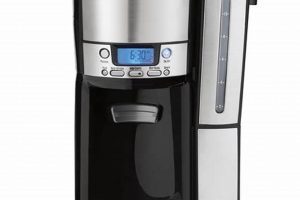
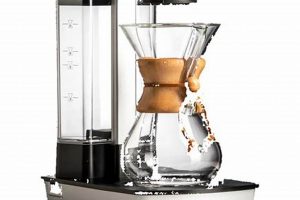
A device designed to maintain the temperature of coffee brewed using a specific pour-over method and a particular glass coffeemaker. These implements provide a consistent heat source, preventing the brewed coffee from cooling down too rapidly after the brewing process is complete. For example, a user might employ one of these devices to keep a freshly brewed batch of coffee at an ideal serving temperature for an extended period, ensuring each cup remains hot and flavorful.
Maintaining optimal coffee temperature is crucial for preserving the beverage’s intended taste profile. As coffee cools, it can develop undesirable flavors and acidity. These warming devices mitigate these negative effects, ensuring a more consistent and enjoyable drinking experience. Historically, methods for keeping coffee warm have ranged from simple insulated carafes to sophisticated electric warming plates. The contemporary versions tailored for the Chemex system often prioritize both functionality and aesthetic appeal, complementing the coffeemaker’s elegant design.
This article will examine the different types of devices available for keeping Chemex-brewed coffee warm, discussing their functionalities, benefits, and relevant considerations for selection. The overview aims to help consumers make informed decisions regarding which method best suits their needs and preferences, ensuring an ongoing enjoyment of their pour-over coffee.
Tips on Coffee Temperature Maintenance for Chemex Brews
Maintaining optimal coffee temperature is crucial for preserving the intended flavor profile of a Chemex brew. The following tips offer guidance on selecting and utilizing appropriate warming methods, ensuring a consistent and enjoyable coffee experience.
Tip 1: Prioritize Gentle Heat: Direct, high heat can scorch coffee, leading to a bitter taste. Opt for warming solutions that provide a consistent, low-level heat source, such as a controlled-temperature warming plate or a candle warmer specifically designed for this purpose.
Tip 2: Consider a Double-Walled Server: A high-quality, double-walled thermal server provides passive heat retention, slowing the cooling process without applying external heat. Ensure the server is preheated with hot water before transferring the brewed coffee.
Tip 3: Evaluate Warming Plate Temperature Control: If using an electric warming plate, verify it features adjustable temperature settings. Aim for a temperature range that keeps the coffee warm without causing it to simmer or evaporate excessively. The ideal temperature is typically between 150-160F (65-71C).
Tip 4: Avoid Prolonged Exposure to Direct Heat: Regardless of the chosen method, limit the coffee’s exposure to direct heat for extended periods. Coffee’s flavor degrades over time, even at optimal temperatures. Brewing smaller batches more frequently may be preferable.
Tip 5: Inspect and Maintain Equipment Regularly: Regularly clean warming plates or servers to prevent buildup that can affect performance or introduce unwanted flavors. Ensure electric components are functioning correctly and safely.
Tip 6: Pre-Heat Before Brewing: Place the Chemex on top of your chosen heat maintenance tool to pre-heat the glass before brewing, helping to keep your coffee warmer for longer from the first cup.
By implementing these strategies, one can effectively maintain the ideal serving temperature of Chemex-brewed coffee, maximizing flavor and minimizing degradation. Employing a combination of passive and active warming techniques often yields the best results.
The subsequent sections will explore specific devices and strategies in greater detail, providing a comprehensive guide to effective coffee temperature maintenance.
1. Consistent Heat Distribution
Consistent heat distribution is a critical factor in preserving the quality of coffee brewed using a Chemex coffeemaker when employing a warming device. The uniformity of heat exposure directly influences the coffee’s flavor, aroma, and overall drinking experience.
- Even Temperature Gradient
The ideal warmer provides a gradual, even temperature gradient across the bottom surface of the Chemex. This prevents localized hot spots that can scorch the coffee, leading to bitter or burnt flavors. Even heating ensures that all portions of the brewed coffee remain at a uniform temperature, preserving the integrity of the beverage’s flavor profile.
- Minimizing Temperature Fluctuations
Consistent heat distribution inherently minimizes temperature fluctuations. Rapid changes in temperature can shock the coffee, causing undesirable flavor compounds to be released or intensified. A stable heat source prevents these fluctuations, resulting in a smoother and more consistent taste throughout the serving period.
- Material Properties and Design
The materials used in the warmer’s construction, along with its design, significantly impact heat distribution. Certain materials, such as ceramic or specific alloys, exhibit superior heat-spreading properties compared to others. A well-designed warmer incorporates these materials strategically to optimize heat transfer and ensure uniformity across the contact surface.
- Impact on Flavor Stability
Consistent heat distribution directly contributes to flavor stability. By maintaining a uniform temperature, the degradation of delicate aromatic compounds is slowed, and the formation of undesirable byproducts is minimized. This results in a coffee that retains its intended flavor profile for a longer duration.
Therefore, when evaluating a warming solution for a Chemex coffeemaker, the ability to provide consistent heat distribution is paramount. A device that effectively achieves this contributes significantly to the preservation of the coffee’s quality and the overall enjoyment of the brewing process.
2. Temperature Control Precision
Temperature control precision is a defining characteristic of effective warming devices designed for Chemex coffee makers. Its importance stems from coffee’s inherent sensitivity to heat variations, which can significantly alter its flavor profile. An apparatus lacking precise temperature regulation can compromise the quality of the brewed coffee, negating the intended benefits of the pour-over method.
- Target Temperature Maintenance
The primary function of temperature control precision is to maintain the brewed coffee within a narrow target temperature range. Deviation from this range, either too high or too low, can lead to flavor degradation. A well-designed warmer should be capable of sustaining a temperature between 150F (65C) and 160F (71C), preventing scorching or cooling. This ensures the beverage remains palatable for an extended period.
- Feedback Mechanisms and Stability
Effective temperature control relies on feedback mechanisms that continuously monitor the warming surface’s temperature and make adjustments as needed. This could involve the use of thermocouples or thermistors that provide real-time temperature readings to a control unit. The stability of the temperature is equally crucial; frequent fluctuations can disrupt the coffee’s flavor compounds, leading to inconsistency in taste.
- Material Influence on Control
The materials used in the construction of the warmer play a significant role in temperature control. Materials with high thermal conductivity can distribute heat more evenly, reducing the risk of localized hot spots. The heating element’s design and placement are also critical, influencing the speed and efficiency with which the target temperature is reached and maintained.
- Impact on Sensory Qualities
Precise temperature control directly impacts the sensory qualities of the coffee. Overheating can result in bitterness and a loss of delicate aromas, while insufficient heat can lead to a flat, lifeless taste. A warming device with precise temperature control ensures that the coffee’s intended flavors are preserved, providing a more enjoyable and nuanced drinking experience.
In essence, temperature control precision is not merely a feature of a warming device but a fundamental requirement for preserving the quality of Chemex-brewed coffee. It is the linchpin that connects the brewing process to a prolonged and satisfying drinking experience, underscoring the importance of selecting a device with robust temperature regulation capabilities.
3. Material Compatibility

Material compatibility represents a crucial consideration in the context of warming devices intended for use with Chemex coffeemakers. The selection of materials used in both the construction of the warmer and its interface with the glass Chemex directly impacts the safety, longevity, and flavor integrity of the brewed coffee.
- Thermal Expansion Consistency
Variations in thermal expansion rates between the warmer’s surface and the Chemex glass can induce stress on the glass structure. Consistent expansion and contraction are critical to preventing cracking or breakage of the Chemex. Materials such as specific alloys and ceramics that exhibit similar thermal expansion coefficients to borosilicate glass, the material commonly used for Chemex carafes, are preferred.
- Absence of Leachable Substances
The warming surface must be constructed from materials that do not leach any chemicals or unwanted flavors into the coffee, even at elevated temperatures. Materials such as food-grade stainless steel or inert ceramics are suitable choices due to their resistance to chemical reactivity and their inability to impart off-flavors to the beverage. Polymers should be carefully vetted to ensure they are BPA-free and heat-stable.
- Surface Durability and Cleanliness
The material’s resistance to scratching, chipping, and staining influences its long-term usability and aesthetic appeal. A durable surface that is easy to clean minimizes the risk of contamination and maintains a sanitary environment for coffee preparation. Smooth, non-porous surfaces are preferable, as they are less likely to harbor bacteria or coffee residue.
- Heat Conductivity and Distribution
The chosen material’s thermal conductivity impacts the evenness of heat distribution across the Chemex’s base. Materials with high thermal conductivity, such as certain metals, can promote uniform heating, preventing hot spots that might scorch the coffee. Conversely, materials with low thermal conductivity may result in uneven warming and flavor inconsistencies.
In summation, material compatibility represents a multifaceted consideration in the design and selection of warming apparatus for Chemex coffee. Careful attention to thermal expansion, chemical inertness, durability, and heat conductivity ensures both the preservation of the coffee’s delicate flavors and the extended lifespan of the brewing equipment.
4. Energy Efficiency

Energy efficiency is a critical consideration in the design and selection of a warming device for Chemex coffee makers. The energy consumption of these devices directly impacts both operational costs and environmental sustainability. Optimizing energy usage while maintaining consistent coffee temperature is a key design objective.
- Insulation Effectiveness
Effective insulation minimizes heat loss, reducing the amount of energy required to maintain the target coffee temperature. Warmer designs incorporating insulated walls or bases, constructed from materials with low thermal conductivity, are more energy-efficient. Examples include double-walled constructions or the use of insulating ceramics. The absence of effective insulation necessitates continuous operation of the heating element, resulting in higher energy consumption.
- Heating Element Design
The design of the heating element significantly influences energy efficiency. Heating elements that provide rapid and uniform heat distribution require less energy to reach and maintain the desired temperature. Elements utilizing infrared technology or those with optimized surface area-to-volume ratios can enhance energy efficiency. Over-sized or poorly designed heating elements consume excess energy, leading to inefficiencies.
- Automatic Shut-Off Features
Incorporating automatic shut-off features is essential for preventing unnecessary energy consumption. Timers that automatically turn off the warmer after a set period, or sensors that detect the presence of the Chemex and activate the heating element only when needed, contribute to energy savings. The absence of such features results in the device running continuously, wasting energy and potentially damaging the coffee.
- Power Consumption Optimization
Optimizing the power consumption of the warming device involves minimizing the energy required to maintain the target temperature. This can be achieved through precise temperature control algorithms, efficient power conversion circuitry, and the use of energy-efficient components. Warmer models displaying their power consumption ratings allow consumers to make informed decisions regarding energy efficiency.
In conclusion, prioritizing energy efficiency in the selection of a warming device for Chemex coffee makers offers both economic and environmental benefits. Features such as effective insulation, optimized heating element design, automatic shut-off capabilities, and power consumption optimization collectively contribute to reduced energy usage without compromising the quality or temperature of the brewed coffee.
5. Design Integration
Design integration, within the context of a warming device for Chemex coffee makers, encompasses the seamless blending of form and function, ensuring the apparatus is not only effective in maintaining temperature but also aesthetically complementary to the Chemex brewer itself and the broader environment. This integration considers ergonomics, visual harmony, and spatial efficiency, aiming for a unified user experience.
- Aesthetic Harmony
The warming device’s visual design should align with the elegant and minimalist aesthetic of the Chemex coffee maker. This includes matching materials, finishes, and overall design language to create a cohesive visual presentation. For example, a warmer constructed from polished stainless steel or wood may complement the Chemex’s glass body and wooden collar, enhancing the overall visual appeal of the coffee preparation setup. This aesthetic harmony elevates the ritual of coffee brewing and serving.
- Ergonomic Compatibility
The physical design of the warming device should facilitate ease of use and seamless interaction with the Chemex. This includes considerations such as the height of the warmer, the accessibility of controls, and the stability of the Chemex when placed upon it. A well-integrated design allows for effortless placement and removal of the Chemex, minimizing the risk of spills or accidents. Ergonomic compatibility enhances the user experience by streamlining the brewing and serving process.
- Spatial Efficiency
The warming device should be designed to occupy minimal space while effectively maintaining coffee temperature. A compact footprint allows the device to integrate seamlessly into various kitchen or serving environments without cluttering the workspace. Some warming devices incorporate stackable designs or utilize integrated storage solutions to further enhance spatial efficiency. A spatially efficient design optimizes the use of available space and contributes to a more organized and functional coffee preparation area.
- Material Consistency
The materials used in the construction of the warming device should be consistent with the Chemex’s design ethos, prioritizing natural, durable, and aesthetically pleasing options. The use of materials such as wood, stainless steel, or ceramic creates a sense of visual continuity and reinforces the overall quality of the brewing setup. Material consistency enhances the tactile and visual experience of using the warming device and contributes to its perceived value.
The successful integration of these facets within a warming device for Chemex coffee makers transforms a functional appliance into a component of a refined coffee ritual. A harmonious blend of aesthetics, ergonomics, spatial efficiency, and material consistency elevates the user experience, enhancing the appreciation of both the brewing process and the resulting beverage.
Frequently Asked Questions
This section addresses common inquiries concerning warming apparatus specifically designed for maintaining the temperature of coffee brewed using a Chemex coffeemaker. These answers aim to provide clarity and informed guidance.
Question 1: What constitutes an appropriate temperature range for maintaining the quality of Chemex-brewed coffee on a warmer?
The ideal temperature range for maintaining Chemex-brewed coffee on a warming device is between 150F (65C) and 160F (71C). Maintaining this temperature range mitigates degradation of the coffee’s volatile aromatic compounds and prevents the development of undesirable flavors.
Question 2: What types of warming apparatus are suitable for use with a Chemex coffeemaker?
Suitable warming devices include electric warming plates with adjustable temperature controls, candle warmers specifically designed for Chemex carafes, and double-walled thermal servers. The selection should consider factors such as temperature control precision, heat distribution uniformity, and compatibility with the Chemex’s glass construction.
Question 3: How does prolonged exposure to a warming device impact the flavor profile of Chemex-brewed coffee?
Prolonged exposure to a warming device, even at optimal temperatures, can negatively impact the flavor profile of Chemex-brewed coffee. Extended heating can lead to the degradation of delicate aromatic compounds, resulting in a loss of nuance and the potential development of bitter or stale flavors. Limiting the duration of warming is advised.
Question 4: What materials should be avoided in a warming device intended for use with a Chemex coffeemaker?
Materials that may leach chemicals or impart off-flavors to the coffee should be avoided. Plastics not rated for high-temperature food contact, as well as metals prone to corrosion, are unsuitable. Opt for devices constructed from food-grade stainless steel, inert ceramics, or heat-resistant glass.
Question 5: What safety precautions should be observed when using a warming device with a Chemex coffeemaker?
Safety precautions include ensuring the warming device is placed on a stable surface, avoiding contact between the Chemex glass and excessively hot surfaces, and following the manufacturer’s instructions regarding usage and maintenance. Unplugging the device when not in use is also recommended.
Question 6: How does the shape of the warming surface affect the uniformity of heat distribution across the Chemex carafe?
The shape of the warming surface significantly impacts heat distribution. A flat, evenly heated surface provides the most uniform heat transfer to the Chemex carafe, minimizing the risk of hot spots. Concave or uneven surfaces can lead to inconsistent temperature distribution and localized overheating.
Optimal maintenance of Chemex-brewed coffee temperature requires attention to device selection, temperature control, and duration of exposure. These considerations, when properly addressed, will maximize the enjoyment of the brewed coffee.
The subsequent section will provide information about how to clean warmer for Chemex Coffee Maker.
Conclusion
The preceding exploration of “warmer for chemex coffee maker” underscores the importance of temperature maintenance in preserving the quality of pour-over coffee. Key considerations, including consistent heat distribution, precise temperature control, material compatibility, energy efficiency, and design integration, collectively influence the device’s overall performance and the resulting coffee’s flavor profile. Selecting a suitable warmer is therefore a critical decision for Chemex enthusiasts.
The continued refinement of warming technology promises further advancements in temperature control and energy efficiency. As consumers prioritize both functionality and sustainability, manufacturers will likely focus on developing devices that not only preserve coffee quality but also minimize environmental impact. The conscious selection and responsible use of a “warmer for chemex coffee maker” contributes to a more enjoyable and sustainable coffee experience.

![Best 12 Cup Programmable Coffee Maker [Guide & Reviews] | The Ultimate Coffee Guide: Types, Brewing Methods & Best Beans](https://deacoffee.com/wp-content/uploads/2026/04/th-268-300x200.jpg "Best 12 Cup Programmable Coffee Maker [Guide & Reviews] The Ultimate Coffee Guide: Types, Brewing Methods & Best Beans")