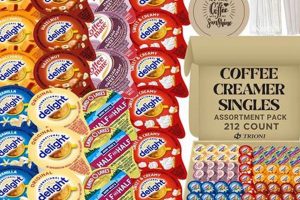
These single-serving containers of liquid or powdered non-dairy substitutes are designed to be added to coffee as a way to lighten its color and enrich its flavor. They are often found in office break rooms, restaurants, and hotels. For example, a box of individual plastic cups filled with a hazelnut-flavored liquid can be used to transform a plain cup of black coffee into a richer, more palatable beverage.
Their appeal stems from their convenience, portability, and portion control. They eliminate the need for refrigeration and are ideal for on-the-go consumption. Historically, these pre-portioned servings addressed a growing need for easily accessible and sanitary coffee enhancements, particularly in public settings. This packaging method also allows for a variety of flavor options without requiring a full-sized bottle of each.
The subsequent article will delve into the components, usage scenarios, environmental considerations, and market trends associated with these pre-packaged coffee additions. This detailed exploration aims to provide a thorough understanding of their role in modern coffee consumption and related industries.
Usage and Storage Recommendations
The following recommendations provide guidance on effectively using and storing single-serving coffee enhancements to maximize freshness and ensure optimal consumption experiences.
Tip 1: Observe Expiration Dates: Prior to use, examine the expiration date printed on the individual containers. Consuming past this date may result in compromised flavor or product quality.
Tip 2: Controlled Portioning: These are pre-portioned to provide consistent flavor in a single cup of coffee. Avoid adding multiple servings unless a stronger flavor profile is desired.
Tip 3: Proper Storage Conditions: Store these in a cool, dry place, away from direct sunlight. Elevated temperatures can degrade the product, potentially affecting its consistency and taste.
Tip 4: Minimize Exposure to Air: Once opened, use immediately. Leaving an opened container exposed to air can lead to oxidation and potential contamination, rendering the remaining contents unsuitable for consumption.
Tip 5: Avoid Freezing: Freezing may alter the composition and texture of the product, causing separation or a grainy consistency upon thawing. This can negatively impact the sensory experience.
Tip 6: Check for Damage: Before using, visually inspect each cup for any signs of damage, such as leaks or punctures. Damaged packaging can compromise the product’s sterility and lead to spoilage.
Tip 7: Consider Allergen Information: Individuals with allergies should carefully review the ingredient list on the packaging. These may contain allergens such as dairy, soy, or nuts.
Adhering to these guidelines helps to maintain the quality, flavor, and safety of the product, ensuring a satisfactory and enjoyable coffee-drinking experience.
The subsequent section will address the environmental impact and disposal considerations related to the packaging of these single-serving coffee enhancements.
1. Convenience

The primary driver behind the widespread adoption of single-serving coffee enhancements lies in their inherent convenience. These pre-portioned units eliminate the need for refrigeration, measuring, and dispensing, thereby streamlining the coffee preparation process. This is particularly critical in high-traffic environments such as office break rooms, hotel lobbies, and catered events where speed and efficiency are paramount. The individual packaging protects the contents from contamination and degradation, ensuring a consistently fresh and readily available product. A clear illustration of this convenience is seen in the provision of these at self-service coffee stations, allowing individuals to customize their beverages without requiring dedicated staff or equipment.
Further amplifying this convenience is their portability. The small size and robust packaging enable easy transport, making them suitable for travel and outdoor activities. For example, individuals can carry a selection in their luggage or backpacks to ensure access to preferred coffee additives regardless of location. This feature reduces reliance on external sources and provides a reliable solution for those with specific dietary requirements or flavor preferences. Moreover, the disposable nature of the packaging minimizes cleanup, further contributing to the overall convenience offered by these products.
In summary, the convenience factor of single-serving coffee enhancements is a multi-faceted benefit encompassing ease of use, portability, and sanitation. This advantage has established them as a staple in both commercial and personal settings. However, this convenience comes with challenges related to environmental sustainability, prompting ongoing efforts to develop more eco-friendly packaging alternatives and promote responsible disposal practices.
2. Portion Control
The integration of portion control into single-serving coffee enhancements offers a structured method for managing caloric and nutritional intake associated with coffee consumption. This is a key feature, aligning with health-conscious consumer trends and dietary management strategies.
- Standardized Caloric Intake
The pre-measured volume within each unit facilitates consistent caloric intake per serving. This standardization is critical for individuals monitoring their daily caloric limits or managing conditions such as diabetes, where precise dietary control is essential. Each unit contains a fixed amount of cream, mitigating the variability often found when pouring from larger containers.
- Reduced Sugar Consumption
Many individuals use sweeteners in conjunction with cream. Pre-portioned creamers often contain a specified amount of added sugar. This allows for a conscious decision regarding sugar intake, preventing unintentional over-sweetening, which can contribute to unwanted weight gain or fluctuations in blood sugar levels.
- Fat Content Awareness
Single-serving formats promote awareness of fat content. Nutritional information, clearly displayed on the packaging, enables consumers to make informed choices about the type and amount of fat they are adding to their coffee. This level of transparency aids in adherence to low-fat or specific dietary plans.
- Facilitating Dietary Tracking
The use of single-serving containers simplifies the process of dietary tracking. Each unit represents a discrete, measurable component, making it easier to log caloric and nutritional information accurately. This is particularly beneficial for individuals using food diaries or tracking applications to monitor their overall dietary intake.
By providing a structured approach to portion control, single-serving coffee enhancements empower consumers to make informed choices regarding their coffee consumption habits, aligning with broader health and wellness goals. This emphasis on controlled serving sizes is a significant factor in their sustained popularity and adoption across various settings.
3. Flavor Variety
The availability of diverse flavors in single-serving coffee creamers represents a significant driver of consumer preference and product differentiation within the beverage market. This variety caters to individual taste preferences and elevates the overall coffee-drinking experience.
- Enhanced Consumer Customization
Flavor variety allows consumers to tailor their coffee to specific tastes, moving beyond the traditional options of plain cream or milk. Flavors such as vanilla, hazelnut, caramel, and mocha offer distinct profiles that complement or contrast with the inherent characteristics of coffee. This customization enhances satisfaction and encourages experimentation.
- Seasonal and Limited-Edition Offerings
Manufacturers often introduce seasonal or limited-edition flavors to create excitement and novelty. Examples include pumpkin spice during autumn or peppermint during the winter holidays. These offerings capitalize on temporal trends, attracting new customers and retaining existing ones by providing fresh and unique options.
- Catering to Dietary Needs and Preferences
Flavor variety extends to cater to specific dietary needs and preferences, with options like sugar-free, dairy-free, and vegan creamers available in various flavors. This inclusivity broadens the appeal of single-serving creamers to a wider consumer base, including those with allergies or specific dietary restrictions.
- Competitive Market Advantage
Offering a broad spectrum of flavors provides a competitive advantage in the market. Companies can differentiate their products by providing a unique or extensive flavor selection, attracting consumers seeking novel or specialized options. This differentiation contributes to brand loyalty and market share.
The correlation between flavor variety and single-serving coffee creamers reflects a strategic response to evolving consumer demands for personalization and convenience. This focus on diverse flavor profiles reinforces the product’s appeal and solidifies its position in the contemporary coffee consumption landscape. The continuous innovation in flavor development ensures ongoing relevance and consumer engagement.
4. Shelf Stability
Shelf stability, a critical attribute of single-serving coffee creamers, dictates their usability and marketability. It refers to the product’s ability to maintain acceptable quality attributes, such as flavor, texture, and color, over an extended period under specified storage conditions.
- Preservation Techniques
Shelf stability is achieved through various preservation techniques, including ultra-high temperature (UHT) processing and aseptic packaging. UHT processing involves heating the creamer to a high temperature for a short duration to eliminate spoilage microorganisms. Aseptic packaging then ensures the product is sealed in a sterile environment, preventing recontamination. These processes enable the creamers to remain viable without refrigeration for an extended shelf life, typically several months.
- Impact on Distribution and Storage
The inherent shelf stability of these products significantly impacts their distribution and storage logistics. Because refrigeration is unnecessary, they can be stored and transported more easily and cost-effectively than fresh dairy products. This attribute makes them suitable for locations where refrigeration is limited or unavailable, such as offices, catered events, and outdoor activities. This also reduces energy consumption associated with refrigerated transport and storage.
- Role of Packaging Materials
The packaging material plays a crucial role in maintaining shelf stability. Typically, these products are packaged in multi-layered materials that provide a barrier against oxygen, light, and moisture. These barriers prevent oxidation, microbial growth, and flavor degradation, all of which can compromise the product’s quality. The integrity of the packaging is therefore paramount in ensuring the creamer remains shelf-stable throughout its intended lifespan.
- Consumer Convenience and Waste Reduction
Extended shelf life enhances consumer convenience by allowing bulk purchasing without concerns about spoilage. Consumers can store a supply of single-serving creamers for on-demand use without refrigeration, reducing the frequency of shopping trips. Additionally, this stability minimizes product waste, as consumers are less likely to discard unused portions due to expiration, aligning with efforts to reduce food waste.
The interconnectedness of preservation methods, packaging, and storage capabilities underscores the importance of shelf stability in single-serving coffee creamers. This feature not only facilitates efficient distribution and storage but also enhances consumer convenience and contributes to waste reduction, making it an indispensable characteristic of these products.
5. Sanitary Packaging
Sanitary packaging plays a foundational role in the production and distribution of individual coffee creamers. Its primary function is to protect the product from contamination, ensuring a safe and hygienic experience for the consumer. The integrity of the packaging directly influences the perceived and actual quality of the product.
- Barrier Protection
The packaging material acts as a physical barrier against external contaminants, including bacteria, fungi, and airborne particles. Multi-layered plastic films or foil laminates are commonly used due to their impermeability. For instance, a polypropylene layer provides moisture resistance, while an aluminum foil layer offers an oxygen barrier, collectively preventing spoilage and maintaining product freshness. This is critical in environments where cleanliness cannot be guaranteed, such as self-service stations.
- Sterile Environment
The manufacturing process employs aseptic techniques to ensure a sterile environment during filling and sealing. This involves sterilizing both the packaging material and the creamer before they come into contact. The closed, hermetically sealed system prevents microbial ingress, prolonging shelf life and minimizing the risk of foodborne illnesses. An example is the use of hydrogen peroxide sterilization for packaging materials followed by filling in a cleanroom environment, which minimizes potential contamination.
- Tamper Evidence
Sanitary packaging often incorporates tamper-evident features, providing visual cues that the product has not been compromised. These features can include sealed lids, shrink bands, or specialized closures that break upon opening. The presence of these indicators reassures consumers of the product’s integrity. For example, a foil seal under the lid of the creamer cup serves as evidence that the product has not been previously opened or tampered with.
- Material Composition and Safety
The materials used in sanitary packaging are selected based on their compatibility with food products and their adherence to regulatory standards. These materials must be non-toxic, inert, and resistant to leaching or degradation under normal storage conditions. For instance, the use of BPA-free plastics ensures that no harmful chemicals migrate into the creamer, maintaining the product’s safety and purity. Compliance with FDA regulations further ensures the suitability of the packaging materials for food contact applications.
The implementation of robust sanitary packaging protocols for single-serving coffee creamers is essential for maintaining consumer trust and ensuring product safety. The multifaceted approach, encompassing barrier protection, sterile processing, tamper evidence, and material safety, collectively mitigates contamination risks and upholds the hygienic standards expected in the food and beverage industry. These measures are pivotal for the continued success and acceptance of these products in diverse environments.
6. Cost-effectiveness
Cost-effectiveness is a key consideration in the widespread adoption and utilization of single-serving coffee creamers across various sectors, from individual consumers to large-scale food service operations. The economic implications of using these pre-portioned units extend beyond the initial purchase price, encompassing factors such as waste reduction, inventory management, and labor efficiency.
- Reduced Product Waste
Pre-portioned creamers inherently minimize waste compared to larger containers, as they provide a precise serving amount, reducing the likelihood of spoilage or unused portions. This is especially significant in environments with fluctuating demand or limited storage facilities. For instance, in a small office with variable coffee consumption, using individual creamers prevents the wastage associated with an open carton of liquid creamer that may expire before being fully consumed. The financial benefits of this waste reduction contribute to the overall cost-effectiveness.
- Simplified Inventory Management
Single-serving creamers simplify inventory management by providing a consistent unit size, making it easier to track and control stock levels. This is particularly advantageous for businesses such as hotels or restaurants, where accurate inventory tracking is essential for budgeting and operational efficiency. The predictable nature of these units allows for precise forecasting of demand, minimizing overstocking or stockouts. This streamlined management translates to reduced labor costs associated with inventory monitoring and ordering.
- Lower Labor Costs
The use of single-serving creamers reduces labor costs by eliminating the need for employees to measure and portion cream. This is particularly beneficial in self-service environments where customers can easily add the desired amount of creamer without requiring assistance from staff. The time saved can be allocated to other tasks, improving overall operational efficiency. In a busy caf, for example, self-service creamer stations using individual cups can significantly reduce wait times and free up staff to focus on preparing beverages and serving customers.
- Competitive Pricing Strategies
Manufacturers often offer competitive pricing on single-serving creamers to attract bulk purchasers, such as businesses or institutions. Bulk discounts can significantly lower the unit cost, making them an economically viable option for organizations with high coffee consumption. Furthermore, the predictability of expenses associated with these products simplifies budgeting processes. The ability to forecast and control costs related to coffee service is a key factor in the cost-effectiveness of single-serving creamers.
The multifaceted cost-effectiveness of single-serving coffee creamers, encompassing waste reduction, simplified inventory management, lower labor costs, and competitive pricing, underscores their appeal to both individual consumers and large organizations. The economic advantages, combined with the convenience and sanitary benefits, contribute to their widespread adoption and continued market presence.
7. Environmental Impact

The proliferation of single-serving coffee creamers presents a notable environmental challenge, primarily stemming from the materials used in their production and the subsequent disposal practices. These diminutive containers, often composed of plastics or laminate materials, contribute significantly to plastic waste accumulation. The non-biodegradable nature of these materials ensures their persistence in landfills or the environment for extended periods. For example, a typical office setting consuming hundreds of these units daily generates a substantial volume of plastic waste that, if not properly managed, can lead to pollution of soil and waterways. The environmental impact is compounded by the energy-intensive processes involved in the manufacturing and transportation of these single-use items.
Furthermore, the small size and composition of these containers often impede effective recycling efforts. Many recycling facilities lack the infrastructure to process these items efficiently, leading to their rejection and eventual disposal in landfills. The lightweight nature of the materials also contributes to windblown litter, exacerbating pollution in both urban and rural environments. Consider coastal regions where these discarded containers can accumulate along shorelines, posing a threat to marine ecosystems. In these environments, plastic debris can be ingested by marine life, leading to physical harm or bioaccumulation of toxins within the food chain. The necessity for responsible disposal and the exploration of alternative, sustainable materials become increasingly apparent.
Addressing the environmental impact of single-serving coffee creamers requires a multi-faceted approach involving manufacturers, consumers, and waste management systems. Developing biodegradable or compostable packaging materials presents a viable solution to reduce long-term waste accumulation. Encouraging consumers to opt for larger, refillable creamer containers can significantly decrease the demand for single-use options. Strengthening recycling infrastructure to handle small-sized plastics and laminates is also crucial. Ultimately, a collaborative effort focused on sustainable materials, responsible consumption, and improved waste management practices is essential to mitigate the environmental consequences associated with the widespread use of single-serving coffee creamers.
Frequently Asked Questions
The following section addresses common inquiries and misconceptions regarding single-serving coffee creamers, providing factual and objective information.
Question 1: Are “coffee creamer mini cups” shelf-stable, and what determines their expiration date?
Yes, single-serving coffee creamers are generally shelf-stable due to UHT processing and aseptic packaging. The expiration date is determined by the manufacturer based on factors such as ingredient degradation, packaging integrity, and potential for microbial growth. It is advisable to adhere to the printed expiration date for optimal product quality.
Question 2: What are the primary ingredients typically found in “coffee creamer mini cups”?
Typical ingredients include water, vegetable oil (often soybean or canola), corn syrup solids, sugar, emulsifiers (such as mono- and diglycerides), stabilizers (like carrageenan), artificial flavors, and coloring agents. Specific formulations may vary between brands and flavor varieties.
Question 3: Can “coffee creamer mini cups” be recycled?
The recyclability of single-serving coffee creamer containers varies depending on the material composition and local recycling infrastructure. Many facilities are not equipped to process small-sized plastics or laminate materials. Consumers should check with their local recycling guidelines for specific instructions.
Question 4: What are the potential health concerns associated with frequent consumption of “coffee creamer mini cups”?
Potential health concerns may include increased intake of saturated fats, added sugars, and artificial ingredients, which can contribute to weight gain, elevated cholesterol levels, and other health issues. Individuals with dietary restrictions or health conditions should review the nutritional information and ingredient list carefully.
Question 5: Are there alternatives to “coffee creamer mini cups” that are more environmentally friendly?
Yes, environmentally friendly alternatives include using larger, refillable containers of liquid or powdered creamer, opting for plant-based milk alternatives (such as almond or soy milk), or using coffee black. These options typically generate less waste and may have a lower environmental footprint.
Question 6: How should “coffee creamer mini cups” be stored to maintain their quality?
Single-serving coffee creamers should be stored in a cool, dry place away from direct sunlight and extreme temperatures. Excessive heat or exposure to light can degrade the product and affect its flavor and consistency. Proper storage helps to maintain the quality and extend the shelf life until the expiration date.
In summary, the appropriate use and disposal of single-serving coffee creamers require awareness of their composition, potential health implications, and environmental impact. Informed decisions can mitigate potential drawbacks and promote responsible consumption.
The subsequent section will explore innovations and emerging trends in the coffee creamer industry.
Conclusion
This exposition has scrutinized single-serving coffee enhancements, addressing aspects from convenience and flavor diversity to shelf stability and environmental consequences. The examination encompasses the product’s composition, usage recommendations, and implications for health and sustainability. A balanced assessment reveals that while these products offer demonstrable advantages in terms of ease of use and portion control, their impact on the environment necessitates critical evaluation.
The information presented serves as a resource for both consumers and industry stakeholders. It is imperative that manufacturers prioritize sustainable packaging solutions, that consumers make informed purchasing choices, and that comprehensive waste management systems be implemented. The future viability of these products hinges on a collective commitment to mitigating their environmental footprint and promoting responsible consumption practices.