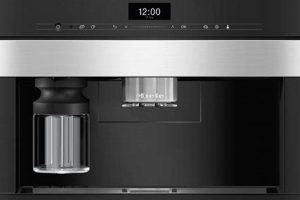
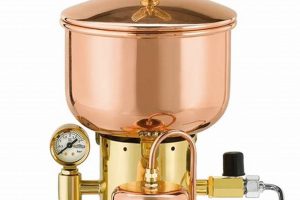
A device that automates the brewing process of coffee by initiating it at a pre-set time. This functionality is commonly integrated into electric coffee makers, enabling users to wake up to freshly brewed coffee or have it ready upon arrival at home. For example, a user might program their coffee maker to start brewing at 6:30 AM, ensuring a hot beverage is prepared before their morning commute.
The implementation of timed brewing offers convenience and efficiency. It reduces the need for manual intervention in the morning routine, allowing individuals to save time and effort. Historically, early versions relied on mechanical clockwork mechanisms, whereas contemporary models typically utilize digital timers for increased accuracy and programmability. The addition of this feature has significantly enhanced the user experience associated with automated coffee preparation.
The following sections will delve into the specifics of selecting appropriate devices, understanding programming options, exploring troubleshooting methods, and examining the energy efficiency considerations associated with their use. Additionally, maintenance procedures to ensure the longevity of the coffee brewing device will be addressed.
Tips for Optimizing Scheduled Coffee Brewing
This section provides practical advice for maximizing the utility and lifespan of devices designed to automate the coffee brewing process. Adhering to these guidelines ensures consistent performance and reduces the risk of equipment failure.
Tip 1: Precise Time Setting: Ensure the integrated clock is accurately set. Discrepancies between the device’s internal clock and actual time will result in off-schedule brewing, negating the intended benefit.
Tip 2: Consistent Water Levels: Maintain consistent water levels for each scheduled brew. Fluctuations in water volume will affect the coffee-to-water ratio, influencing the beverage’s strength and flavor.
Tip 3: Regular Cleaning: Implement a routine cleaning schedule for the machine. Mineral buildup and residue can impact performance and potentially damage internal components. Consult the manufacturer’s instructions for recommended cleaning solutions and procedures.
Tip 4: Fresh Coffee Grounds: Utilize freshly ground coffee beans whenever possible. Pre-ground coffee loses its aroma and flavor over time, diminishing the quality of the brewed beverage. Store coffee beans in an airtight container away from direct sunlight and heat.
Tip 5: Power Outage Contingency: Be aware of the device’s power outage memory. Some models retain programmed settings for a limited time after a power interruption. If a power outage occurs, verify and reset the settings as needed to ensure proper function.
Tip 6: Filter Maintenance: Use appropriate filters and replace them regularly. Dirty or clogged filters impede water flow and can affect the taste of the coffee. Refer to the manufacturer’s guidelines for recommended filter types and replacement intervals.
Tip 7: Temperature Considerations: Avoid placing the coffee machine in direct sunlight or near heat sources. Excessive heat can affect the internal components and potentially damage the device.
By incorporating these measures, users can optimize the performance and extend the life of their automated coffee brewing equipment, resulting in consistent and enjoyable coffee preparation.
The following section will address common troubleshooting scenarios encountered with coffee machines and offer solutions to resolve these issues efficiently.
1. Programmable Start Time
The programmable start time is a core functionality of coffee machines equipped with a timer. It dictates the precise moment the brewing cycle commences, thereby automating coffee preparation. This element is fundamental to the utility of the device, transforming a manual process into an automated one. Without a programmable start time, the device merely functions as a standard coffee maker, devoid of its primary time-saving advantage. For instance, a user can set the start time for 7:00 AM, ensuring a fresh pot of coffee is ready at that time without requiring manual initiation.
The accuracy and reliability of the programmable start time are paramount for user satisfaction. Variations between the set time and the actual brewing time can negate the intended benefits of automation. Modern coffee machines often incorporate digital timers, offering greater precision and ease of use compared to older, mechanical models. Furthermore, some advanced models allow for multiple programmable start times, catering to varying daily schedules. This feature is particularly useful for individuals with inconsistent work or sleep patterns. The integration of this feature in coffee machine adds the convienience of the user.
In summary, the programmable start time is not merely an ancillary feature, but rather a defining characteristic of coffee machines equipped with timers. Its accurate and reliable operation is crucial for delivering the convenience and time-saving benefits that users expect. The evolution of this technology, from mechanical to digital timers, reflects a continuous effort to improve accuracy and user experience. Understanding the link between programmed start time and timer is beneficial to choose the perfect machine according to personal schedule.
2. Power Outage Memory
Power outage memory is a critical feature in coffee machines equipped with timers, ensuring the preservation of programmed settings during temporary interruptions in electrical power. The absence of this functionality necessitates the user to reprogram the device after each power disruption, negating the convenience offered by the automated brewing schedule. The cause-and-effect relationship is evident: a power outage without memory retention results in the loss of timer settings, directly impacting the user’s ability to automatically brew coffee at a desired time. For example, if a coffee machine is programmed to brew at 6:00 AM, a brief overnight power outage will erase this setting if power outage memory is absent, requiring the user to manually reset the timer in the morning.
The importance of power outage memory is underscored by the prevalence of brief power fluctuations in many residential and commercial environments. Even momentary power dips can reset devices lacking this feature, leading to user frustration and diminished utility. Modern coffee machines often employ capacitor-based or battery-backed memory systems to retain settings for a specified duration, typically ranging from a few minutes to several hours. The practical significance of understanding this feature lies in the informed decision-making process when selecting a coffee machine. Users residing in areas prone to power outages should prioritize models with robust power outage memory capabilities to ensure consistent automated brewing schedules.
In summary, power outage memory represents a vital component of coffee machines featuring timers. Its presence mitigates the disruptive effects of power interruptions, safeguarding programmed settings and maintaining the integrity of the automated brewing process. The absence of this functionality undermines the core benefit of automated brewing. Recognizing the practical implications of power outage memory allows consumers to make informed purchasing decisions, selecting devices that meet their specific needs and environmental conditions. The longevity of programmed timer settings is directly dependent on power outage memory capability.
3. Brew Strength Settings

Brew strength settings, in the context of a coffee machine equipped with a timer, represent a crucial element of customization within the automated brewing process. These settings allow the user to pre-select the desired intensity of the coffee, which the machine then executes at the programmed time. The integration of brew strength control with the timer function enhances the overall convenience by enabling users to wake up to or return home to coffee prepared precisely to their individual preferences. For example, an individual who prefers a bolder brew might set the machine to ‘strong’ before going to bed, ensuring a robust cup is ready in the morning. Conversely, someone preferring a milder flavor could select a ‘weak’ or ‘regular’ setting.
The practical significance of understanding brew strength settings lies in optimizing the coffee-making experience. These settings typically function by adjusting the water-to-coffee ratio or altering the brewing time, impacting the extraction of coffee solubles. A higher coffee-to-water ratio or longer brewing time generally results in a stronger, more concentrated brew, while a lower ratio or shorter time produces a weaker one. The ability to control these parameters, in conjunction with the automated timer, minimizes manual intervention and ensures consistent results. Moreover, the effectiveness of brew strength settings is also linked to the quality of the coffee beans and the fineness of the grind; a coarse grind paired with a ‘strong’ setting might not yield the desired intensity. Regular maintenance, such as cleaning the machine, also ensures the settings function accurately over time.
In summary, brew strength settings represent a critical feature in a coffee machine with a timer, facilitating personalized automation of the brewing process. They empower users to pre-determine the intensity of their coffee, aligning the automated brewing cycle with individual taste preferences. The understanding and proper utilization of these settings, in conjunction with appropriate coffee bean selection and machine maintenance, are essential for maximizing the convenience and satisfaction derived from automated coffee preparation. The relationship between brew strength settings and timer functions is synergistic, resulting in a user-centric and efficient brewing experience.
4. Automatic Shut-Off

The automatic shut-off feature in coffee machines equipped with timers serves as a critical safety and energy-saving mechanism. Its presence is closely intertwined with the functionality of the timer, providing a crucial layer of oversight that prevents potential hazards and promotes efficient operation. This feature’s integration is not merely an addition but a necessity, augmenting the automated capabilities of the timer function with responsible resource management.
- Prevention of Overheating
The primary role of automatic shut-off is to prevent the coffee machine from overheating. When the timer initiates the brewing process, and the cycle completes, the machine may continue to draw power to keep the warming plate active. If left unattended for an extended period, this can lead to excessive heat buildup, potentially damaging the machine or posing a fire risk. The automatic shut-off intervenes by deactivating the heating element after a predetermined duration, mitigating the risk of overheating and ensuring safe operation.
- Energy Conservation
Beyond safety, automatic shut-off significantly contributes to energy conservation. By automatically ceasing power consumption after a set period, the feature prevents unnecessary energy wastage. In the absence of automatic shut-off, a coffee machine could remain active for hours, drawing power even when the brewed coffee is no longer being consumed. This function promotes responsible energy usage and reduces the environmental impact associated with prolonged operation.
- Extended Machine Lifespan
Consistent overheating can accelerate the degradation of a coffee machine’s internal components. The automatic shut-off feature, by preventing prolonged exposure to high temperatures, helps extend the overall lifespan of the appliance. Reducing thermal stress on the heating element, wiring, and other critical parts contributes to long-term reliability and reduces the frequency of repairs or replacements.
- User Convenience and Peace of Mind
The integration of automatic shut-off offers users added convenience and peace of mind. Knowing that the coffee machine will automatically power down after a specified time eliminates the need to manually switch off the appliance, particularly beneficial in situations where users may forget or be unable to do so. This feature reduces the anxiety associated with leaving an appliance unattended and enhances the overall user experience.
These facets collectively underscore the importance of automatic shut-off in coffee machines featuring timers. The interplay between automated brewing and responsible power management ensures safe, efficient, and convenient operation. Automatic shut-off function is essential for preventing fire and keep the user in safe
5. Consistent Water Temperature
Maintaining a consistent water temperature is a critical factor in achieving optimal coffee extraction, particularly within the automated context of a coffee machine equipped with a timer. This consistency directly impacts the flavor profile, aroma, and overall quality of the brewed coffee. Deviations from the ideal temperature range can result in under-extraction, leading to a weak and sour taste, or over-extraction, producing a bitter and astringent brew. The integration of a timer amplifies the importance of temperature stability as the brewing process occurs without direct user oversight.
- Extraction Efficiency
Consistent water temperature within the range of 195-205F (90-96C) facilitates the efficient extraction of desirable compounds from coffee grounds. This precise temperature range allows for the optimal solubilization of flavors and aromas while minimizing the extraction of undesirable bitter compounds. Deviation below this range leads to under-extraction, resulting in sour and weak coffee. Exceeding this range can lead to over-extraction, causing bitter taste. In timed coffee machines, accurate temperature control is crucial as the brewing process is automated and cannot be manually adjusted mid-cycle.
- Heating Element Stability
The stability of the heating element directly influences the consistency of water temperature. A reliable heating element maintains a constant output, ensuring the water remains within the optimal brewing range throughout the entire extraction process. Fluctuations in the heating element can lead to temperature variations, resulting in inconsistent flavor profiles. Coffee machines with advanced heating systems, such as thermoblock or PID controllers, offer greater temperature stability compared to those with simpler heating mechanisms. In automated, timed systems, a robust heating element is paramount for predictable results.
- Preheating Phase
The preheating phase is essential for stabilizing the water temperature before the brewing cycle begins. This phase ensures that the heating element reaches the desired temperature range before coming into contact with the coffee grounds. Inadequate preheating can result in inconsistent extraction, particularly during the initial stages of brewing. Coffee machines with timers should incorporate a preheating mechanism that efficiently brings the water to the target temperature, thus ensuring consistent extraction with scheduled brewing.
- Insulation and Thermal Retention
Effective insulation and thermal retention minimize heat loss during the brewing cycle, contributing to consistent water temperature. Insulated water reservoirs and brewing chambers help maintain the desired temperature, preventing significant fluctuations that can impact extraction efficiency. In coffee machines equipped with timers, adequate insulation is particularly important, as the brewing process may occur over an extended period without user supervision. Proper thermal retention ensures the temperature stability and optimal coffee preparation.
These interconnected facets highlight the critical role of consistent water temperature in optimizing the performance of coffee machines with timers. The ability to maintain stable temperatures within the ideal brewing range directly impacts the quality, flavor, and aroma of the final product. Incorporating advanced heating systems, efficient preheating mechanisms, and robust insulation contributes to a more consistent and enjoyable coffee-making experience in an automated environment. Consistent water temperature is critical to a scheduled coffee machine.
Frequently Asked Questions About Timed Coffee Machines
This section addresses common inquiries regarding coffee machines equipped with timers. Information presented aims to clarify operational aspects and potential challenges.
Question 1: How accurately do the timers on coffee machines operate?
Timer accuracy varies based on the mechanism. Digital timers generally provide more precise operation compared to analog timers. Discrepancies may arise due to power fluctuations or internal clock drift.
Question 2: What is the typical lifespan of a timer mechanism within a coffee machine?
The timer mechanism’s lifespan depends on usage frequency and build quality. Regular maintenance, such as descaling the machine, can positively impact longevity. On average, a timer may function effectively for several years with proper care.
Question 3: Can the brewing time affect the strength of the coffee produced by a timed coffee machine?
Brewing time directly influences coffee strength. Longer brewing durations typically result in more concentrated flavors. Many timed coffee machines allow for adjusting brew strength by manipulating the brewing time.
Question 4: What steps should be taken if a timed coffee machine fails to initiate brewing at the programmed time?
Initial troubleshooting involves verifying the timer settings and confirming that the machine is properly plugged in. A reset of the device may also resolve the issue. If the problem persists, professional repair may be necessary.
Question 5: Are there energy-saving features associated with timed coffee machines?
Some models incorporate automatic shut-off functions that deactivate the heating element after a set period. This reduces energy consumption and enhances safety. Users should consult the device’s specifications for specific energy-saving capabilities.
Question 6: How does power outage memory function within a coffee machine timer system?
Power outage memory retains programmed settings during brief electrical interruptions. The duration of memory retention varies depending on the specific model. This function eliminates the need to reprogram the timer after each power outage.
In summary, understanding the operational characteristics and maintenance requirements of coffee machine timers can enhance the user experience and extend the device’s lifespan. Addressing these common questions provides practical guidance for effective utilization.
The following section provides a comprehensive guide to maintaining and cleaning a coffee machine to keep the device in good condition.
Conclusion
The preceding analysis demonstrates the multifaceted utility of the timer in coffee machines. The accurate and reliable execution of pre-programmed brewing schedules, coupled with energy-saving and safety features, underscores the technological advancement integrated into these appliances. Consistent water temperatures, brew strength adjustments, and power outage memory enhance the user experience. Regular maintenance, appropriate troubleshooting, and an understanding of operational nuances are essential for maximizing the longevity and efficiency of these devices.
Consideration of these factors is crucial for consumers seeking to optimize convenience and effectiveness in automated coffee preparation. As technology evolves, further advancements in timer precision and customization are anticipated, refining the user experience and promoting greater energy efficiency. The integration of sophisticated features emphasizes the importance of informed decision-making when selecting coffee machines that align with individual needs and preferences, ensuring a seamless and personalized brewing process.
![Best Vintage: Retro Style Coffee Machine [Guide] | The Ultimate Coffee Guide: Types, Brewing Methods & Best Beans](https://deacoffee.com/wp-content/uploads/2026/02/th-157-300x200.jpg "Best Vintage: Retro Style Coffee Machine [Guide] The Ultimate Coffee Guide: Types, Brewing Methods & Best Beans")
![Why Miele Built-In Coffee Machine is Best? [Year] | The Ultimate Coffee Guide: Types, Brewing Methods & Best Beans](https://deacoffee.com/wp-content/uploads/2026/02/th-114-300x200.jpg "Why Miele Built-In Coffee Machine is Best? [Year] The Ultimate Coffee Guide: Types, Brewing Methods & Best Beans")