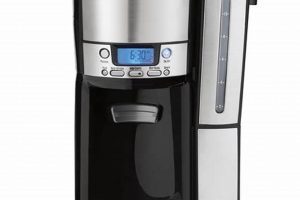
The core challenge addressed is achieving a concentrated coffee beverage, traditionally produced under pressure, using an appliance designed for gravity-fed brewing. Attempts often aim to replicate the strong flavor profile and body associated with espresso despite the fundamental difference in brewing methods. The endeavor can be understood as adapting available resources to approximate a desired outcome.
While a drip coffee maker cannot truly replicate authentic espresso, there is a strong incentive to explore alternative methods. The accessibility and widespread availability of drip coffee makers make it a convenient option for individuals who lack specialized espresso equipment. The pursuit stems from a desire to enjoy a strong, concentrated coffee experience without the investment and learning curve associated with espresso machines.
The following sections will detail methods to enhance the strength and concentration of coffee brewed in a standard drip machine. This will include examining the role of coffee bean selection, grind size, coffee-to-water ratio, and techniques to maximize extraction efficiency. The goal is to provide actionable steps toward achieving a bolder, more espresso-like coffee beverage within the limitations of a drip coffee maker.
Tips for Approximating Espresso with a Drip Coffee Maker
Maximizing the potential of a drip coffee maker for creating a beverage resembling espresso requires meticulous attention to detail and a strategic approach to the brewing process. The following tips provide guidance on achieving a stronger, more concentrated coffee extraction.
Tip 1: Select Dark Roast Coffee Beans: Opt for dark roast beans. Their extended roasting time results in lower acidity and bolder flavors, characteristics closer to espresso’s profile.
Tip 2: Use a Fine Grind: Grind the coffee beans finer than typically used for drip coffee. A finer grind increases the surface area exposed to water, promoting greater extraction. Caution is advised to avoid an overly fine grind, which can lead to a bitter taste.
Tip 3: Adjust the Coffee-to-Water Ratio: Increase the amount of coffee used per unit of water. A higher coffee-to-water ratio results in a stronger, more concentrated brew. Experiment to find the optimal balance without causing over-extraction.
Tip 4: Pre-wet the Grounds: Mimic the pre-infusion stage of espresso by manually pouring a small amount of hot water over the coffee grounds and allowing it to bloom for approximately 30 seconds. This process degasses the coffee and promotes more even extraction.
Tip 5: Reduce Water Volume: If the drip coffee maker allows, use less water than the machine typically uses. This forces the water to interact with coffee longer. Pay close attention to the result, and avoid any burn taste.
Tip 6: Clean the Drip Coffee Maker Regularly: Mineral buildup can affect the water flow and temperature, impacting extraction efficiency. Regular cleaning ensures optimal performance and flavor.
Tip 7: Consider a Strong Filter: Use a filter with a finer pore size. This can help to prevent the passage of fine particles that can lead to a muddy or bitter taste. The ideal filter balances filtration with optimal water flow.
By implementing these techniques, it is possible to significantly enhance the strength and concentration of coffee produced with a drip coffee maker. While the resulting beverage will not be identical to espresso, it can serve as a satisfying alternative for those seeking a bolder coffee experience.
The concluding section will offer a final perspective on the practicality and limitations of adapting a drip coffee maker for espresso-like beverages.
1. Dark Roast Selection

The selection of dark roast coffee beans is a critical factor when attempting to approximate an espresso-like beverage using a drip coffee maker. The inherent characteristics of dark roast beans contribute significantly to achieving the desired flavor profile and body, albeit within the constraints of drip brewing.
- Flavor Profile:
Dark roast beans undergo a longer roasting process, which results in a more pronounced smoky, bitter, and often chocolatey flavor profile. These characteristics align more closely with the intense and bold flavors associated with espresso compared to lighter or medium roasts. Choosing dark roast beans lays the foundation for a stronger, more concentrated taste.
- Reduced Acidity:
The extended roasting process reduces the acidity of the coffee beans. Espresso is typically characterized by low acidity, and using dark roast beans helps to minimize the acidity in the drip coffee, moving it closer to the desired espresso-like characteristics. High acidity in coffee can be perceived as sourness, which is generally undesirable in espresso.
- Oil Content and Extraction:
Dark roast beans have a higher oil content due to the extended roasting time. These oils contribute to a richer mouthfeel and a more intense aroma. While a drip coffee maker cannot extract oils to the same extent as an espresso machine, using dark roast beans increases the likelihood of extracting a greater proportion of these flavorful compounds, enhancing the overall sensory experience.
- Masking Weaknesses:
Drip coffee makers are not known for producing strong, concentrated brews. The bold flavors of dark roasts can somewhat compensate for the lack of pressure-driven extraction, providing a more robust and noticeable taste that helps create a more convincing imitation of espresso. Using lighter roasts may result in a weak and unimpressive brew that further deviates from the desired outcome.
In summary, the strategic selection of dark roast coffee beans represents a fundamental step in the process of emulating espresso with a drip coffee maker. The inherent flavor profile, reduced acidity, increased oil content, and ability to mask the weaknesses of drip brewing make dark roast beans an essential component for achieving a bolder and more concentrated coffee beverage. While it cannot replicate true espresso, it provides a practical approach to approaching its characteristics without specialized equipment.
2. Finer Grind Consistency

Achieving a finer grind consistency represents a crucial adaptation when utilizing a drip coffee maker to approximate espresso. Standard drip coffee makers are designed for medium-coarse grounds; therefore, adjusting the grind size finer is a strategic attempt to increase extraction, mimicking the process in espresso preparation.
- Increased Surface Area:
A finer grind increases the total surface area of coffee particles exposed to water during the brewing process. This augmented surface area facilitates a greater extraction of soluble compounds, including oils, acids, and sugars. In the context of emulating espresso, this is particularly important, as a higher concentration of dissolved solids contributes to a bolder and more intense flavor profile.
- Enhanced Extraction Rate:
With a finer grind, water passes through the coffee more slowly, prolonging the contact time between water and coffee particles. This extended contact time enhances the extraction rate, allowing for more of the desirable compounds to be dissolved. It is crucial to manage this prolonged contact carefully to avoid over-extraction, which can lead to bitter or astringent flavors. The goal is to maximize extraction without compromising the taste quality.
- Challenges with Filtration:
Using a finer grind in a drip coffee maker can present challenges with filtration. The increased density of the coffee bed may cause the filter to clog, slowing down the brewing process or leading to an uneven extraction. In some cases, very fine particles may pass through the filter, resulting in a muddy or sediment-filled beverage. Experimentation with different filter types or the use of a cloth filter can mitigate these issues.
- Balancing Fines and Bitterness:
The pursuit of a finer grind must be balanced with the potential for increased bitterness. Over-extraction of the coffee, due to the prolonged contact time, can release undesirable compounds that contribute to a bitter taste. To counter this, it is essential to monitor the brewing time and adjust the grind size accordingly. The optimal grind size is one that maximizes extraction and boldness while minimizing bitterness and off-flavors.
The strategic manipulation of grind consistency serves as a pivotal technique in adapting a drip coffee maker for the purpose of creating a stronger, more espresso-like beverage. While it requires careful attention to detail and a degree of experimentation, the potential benefits in terms of flavor and concentration make it a worthwhile endeavor for those seeking an alternative to specialized espresso equipment.
3. Adjusted Coffee Ratio

The coffee-to-water ratio is a fundamental parameter influencing the strength and concentration of brewed coffee. When the objective is to approximate an espresso-like beverage using a drip coffee maker, manipulating this ratio becomes a critical technique to compensate for the inherent differences between drip brewing and pressure-driven espresso extraction.
- Elevated Concentration of Soluble Compounds:
Increasing the proportion of coffee grounds relative to the amount of water results in a higher concentration of soluble compounds in the final brew. This directly addresses the primary goal of creating a stronger, more intense beverage reminiscent of espresso, which is known for its concentrated flavor profile. The adjusted ratio aims to saturate the water with a greater quantity of coffee solubles, enhancing the overall robustness of the drink.
- Compensating for Lack of Pressure:
Espresso machines utilize pressure to extract flavors and oils that drip coffee makers, operating on gravity, cannot achieve. By using more coffee, attempts are made to saturate the brew, artificially increasing the ‘richness’ that would be naturally present in espresso. This can help elevate the mouthfeel and overall taste of the coffee made in a drip coffee maker.
- Mitigating Over-Extraction Risks:
While increasing the coffee-to-water ratio can enhance strength, it also increases the risk of over-extraction, particularly with finer grinds and prolonged brewing times. Over-extraction releases undesirable compounds that contribute to bitterness and astringency. Therefore, careful adjustment of the ratio, coupled with monitoring of the brewing process, is essential to strike a balance between strength and flavor quality. Experimentation is key to find the ratio that delivers the desired intensity without introducing unpleasant tastes.
- Impact on Water Flow and Saturation:
A higher coffee-to-water ratio means that more coffee grounds need to be saturated, therefore more water will be needed. It’s a delicate balance of ratio between coffee and water. Some drip coffee makers can only let in certain volume of water. It is worth researching on the drip coffee maker’s water dispersion function before putting too much ground coffee into it.
The adjusted coffee ratio, therefore, represents a significant lever in the process of adapting a drip coffee maker for espresso-like results. When combined with complementary techniques such as dark roast selection and fine grinding, the careful calibration of the coffee-to-water ratio enables a more intense and concentrated coffee experience, albeit one that remains distinct from authentic espresso due to fundamental differences in brewing methodology. It is a targeted compromise to achieve desired characteristics without specialized equipment.
4. Pre-infusion Simulation
Pre-infusion, a standard step in espresso extraction, involves saturating the coffee grounds with hot water prior to applying full pressure. While a standard drip coffee maker lacks the capacity for true pre-infusion, simulating this process can improve extraction and enhance the resulting coffee’s flavor when striving for an espresso-like beverage.
- Ground Degassing and Even Saturation
Dry coffee grounds contain trapped carbon dioxide. Pouring a small amount of hot water over the grounds allows them to bloom, releasing this gas. This degassing facilitates more even saturation of the grounds during the main brewing cycle, leading to more uniform extraction. In the context of adapting a drip coffee maker, this reduces the likelihood of channeling, where water bypasses certain areas of the coffee bed, resulting in under-extraction.
- Enhanced Flavor Extraction
The brief pre-wetting period allows water to begin dissolving soluble compounds from the coffee grounds before the full brewing process commences. This initial contact aids in extracting a broader spectrum of flavors, contributing to a more complex and nuanced final product. When aiming for an espresso-like beverage, this can help amplify the intensity and richness of the coffee.
- Control Over Water Temperature
Manually pre-wetting the grounds allows for a degree of control over water temperature. A standard drip coffee maker may not consistently maintain optimal brewing temperatures. By using a separate kettle to heat water to the desired temperature (typically between 195-205F or 90-96C) and manually pouring it over the grounds, the user can ensure that the initial saturation occurs at the correct temperature for optimal flavor extraction.
- Mitigation of Drip Coffee Maker Limitations
Drip coffee makers often lack precise control over water flow and pressure. The simulated pre-infusion step can help to compensate for these limitations. By providing an initial, controlled saturation, the user can create a more consistent brewing environment, promoting more complete extraction and reducing the variability in the final cup. This is particularly relevant when attempting to achieve a concentrated, espresso-like flavor.
In conclusion, simulating pre-infusion in a drip coffee maker is a deliberate strategy to address some of its inherent limitations. By manually saturating the grounds prior to brewing, the user can promote degassing, enhance flavor extraction, control water temperature, and mitigate the effects of inconsistent water flow. While this technique cannot fully replicate the benefits of true pre-infusion in an espresso machine, it represents a practical method for improving the quality and intensity of coffee brewed in a drip coffee maker, moving closer to an espresso-like outcome.
5. Equipment Cleanliness
The pursuit of a concentrated, espresso-like beverage using a drip coffee maker necessitates meticulous attention to equipment cleanliness. Mineral buildup, coffee residue, and stale oils can accumulate within the machine, directly impacting water flow, brewing temperature, and overall extraction efficiency. These factors compromise the ability to achieve the desired flavor profile, making regular maintenance a critical component of the process. For example, calcium deposits in the water reservoir can reduce the water temperature during brewing, leading to under-extraction and a weak, sour taste. Stale coffee oils, on the other hand, can impart a rancid flavor to the final brew, obscuring the intended characteristics of the dark roast coffee.
Scale buildup on the heating element of a drip coffee maker can reduce its efficiency. If the temperature is less, there will be reduction in potential flavor from the coffee. The heating element requires to have a proper heat to be able to have a complete chemical reaction with the coffee.
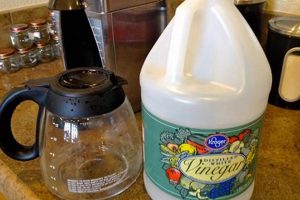
Regular cleaning, including descaling with vinegar or a commercial descaling solution, is essential for maintaining optimal performance. Thorough rinsing of all removable parts, such as the carafe, filter basket, and water reservoir, prevents the accumulation of coffee residue and mineral deposits. The cleaning ensures consistent water flow, proper brewing temperature, and the absence of unwanted flavors, contributing to a cleaner, more concentrated, and espresso-like beverage within the capabilities of the drip coffee maker.
Frequently Asked Questions
The following addresses common inquiries regarding the pursuit of an espresso-like beverage using a standard drip coffee maker. It aims to provide clarity and realistic expectations regarding this brewing approach.
Question 1: Can a drip coffee maker truly produce authentic espresso?
No. A drip coffee maker, by its design, operates on fundamentally different principles than an espresso machine. Espresso requires high pressure to force hot water through finely-ground coffee, extracting oils and flavors in a concentrated manner. Drip coffee makers rely on gravity to drip water through coarser grounds. Therefore, a drip coffee maker cannot replicate the pressure, extraction, or resulting beverage characteristics of authentic espresso.
Question 2: What is the primary goal when attempting to mimic espresso with a drip coffee maker?
The primary goal is to achieve a stronger, more concentrated coffee beverage than a typical drip brew. This involves maximizing the extraction of soluble compounds from the coffee grounds to approximate the intensity and boldness associated with espresso. The objective is not to create an exact replica, but rather to produce a satisfying alternative when specialized espresso equipment is unavailable.
Question 3: Why is dark roast coffee recommended for this method?
Dark roast coffee beans possess flavor profiles closer to espresso, characterized by lower acidity and bolder, often smoky or chocolatey notes. The extended roasting time also increases oil content, which contributes to a richer mouthfeel. Using dark roast beans helps to compensate for the lack of pressure extraction in a drip coffee maker, resulting in a more robust and intense flavor.
Question 4: Is a finer grind always better when attempting to simulate espresso with a drip coffee maker?
Not necessarily. While a finer grind increases surface area and promotes greater extraction, it also increases the risk of over-extraction and filter clogging. The optimal grind size is one that balances extraction with filtration efficiency, avoiding bitterness and ensuring a smooth, sediment-free brew. Experimentation is key to finding the right balance for a specific drip coffee maker and coffee bean type.
Question 5: How important is the coffee-to-water ratio in this process?
The coffee-to-water ratio is critically important. Increasing the amount of coffee used per unit of water directly enhances the concentration of the resulting beverage. However, this must be balanced against the risk of over-extraction and bitterness. Careful adjustment of the ratio, based on personal preference and brewing parameters, is essential for achieving the desired strength without compromising flavor quality.
Question 6: Are there any limitations to this method that consumers should be aware of?
Yes. Despite employing techniques to enhance extraction and concentration, the fundamental limitations of a drip coffee maker remain. The lack of pressure, inability to achieve optimal water temperature consistency, and inherent design constraints prevent true replication of espresso. This method serves as a compromise, providing a stronger and bolder coffee experience but not an authentic espresso substitute.
In conclusion, adapting a drip coffee maker for an espresso-like beverage is a practical approach for those seeking a stronger coffee experience without specialized equipment. However, realistic expectations and a thorough understanding of the limitations are essential. Careful attention to detail, including bean selection, grind size, coffee-to-water ratio, and equipment cleanliness, can significantly improve the results.
The following resources will offer a final perspective on adapting the drip coffee maker for espresso-like results.
Conclusion
This exploration of how to make espresso with a drip coffee maker elucidates the achievable limits and pragmatic strategies involved. While a standard drip appliance cannot replicate the nuanced extraction inherent to pressure-driven espresso, modifications to bean selection, grind consistency, coffee-to-water ratio, and brewing technique can yield a significantly bolder and more concentrated beverage. It underscores a compromise, balancing accessibility with aspiration.
Ultimately, the pursuit of “espresso” through alternative means speaks to resourcefulness and the desire to elevate everyday experiences. Experimentation and careful refinement of the presented methods can lead to a satisfying, if not authentic, coffee outcome. Those seeking the genuine espresso experience are encouraged to explore dedicated espresso machines; however, the presented methodology provides a pathway for improved coffee using readily available equipment.

![Best 12 Cup Programmable Coffee Maker [Guide & Reviews] | The Ultimate Coffee Guide: Types, Brewing Methods & Best Beans](https://deacoffee.com/wp-content/uploads/2026/04/th-268-300x200.jpg "Best 12 Cup Programmable Coffee Maker [Guide & Reviews] The Ultimate Coffee Guide: Types, Brewing Methods & Best Beans")