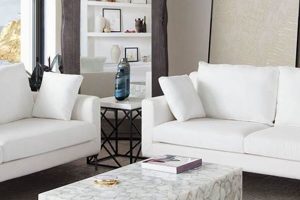
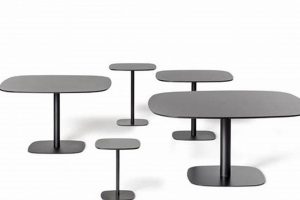
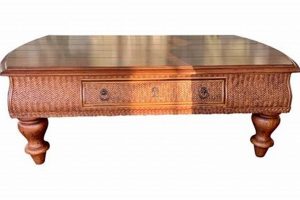
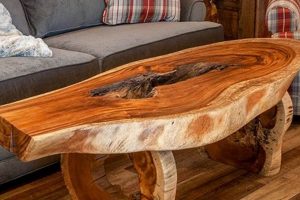
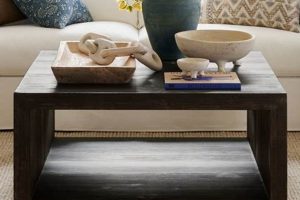
These furnishing pieces represent a fusion of modern design principles with the timeless elegance of a natural stone. Characterized by clean lines, minimalist forms, and the luxurious veining inherent in the material, they serve as focal points in living spaces. For example, a table might feature a simple geometric base crafted from metal supporting a honed white marble top, providing a sophisticated surface for beverages, books, or decorative objects.
The appeal of these tables lies in their ability to elevate the aesthetic of a room while offering practical functionality. Their inherent durability ensures longevity, while the unique patterns in each stone top guarantee a one-of-a-kind piece. Historically, marble has been associated with luxury and refinement, and its integration into modern furniture designs maintains this association, adding a touch of opulence to contemporary interiors. Benefits include increased visual appeal, enhanced room ambiance, and lasting value.
The following sections will delve into the specific design elements, material considerations, and practical applications related to these furniture items, providing a detailed understanding of their role in interior design and home decor.
Tips for Selecting Contemporary Marble Coffee Tables
Choosing the correct table requires careful consideration of several factors to ensure it complements the existing dcor and meets practical needs.
Tip 1: Assess the Room’s Style: The table’s design should harmonize with the overall aesthetic. A minimalist room benefits from a sleek, geometric table, while a more eclectic space might accommodate a table with bolder veining or an unconventional base material. For example, a mid-century modern room could pair well with a round table featuring a walnut wood base.
Tip 2: Determine the Appropriate Size and Shape: The table should be proportional to the seating area. A large sectional sofa requires a larger table to maintain visual balance. Consider the shape of the table as well. Round tables can promote conversation, while rectangular tables are often more practical for placing items within reach from a sofa.
Tip 3: Evaluate Marble Quality and Veining: Marble varies significantly in quality and appearance. Examine the stone for imperfections and ensure the veining is consistent with the desired aesthetic. Carrara marble, known for its subtle grey veining, offers a classic look, while Calacatta marble, with its bolder gold veining, provides a more luxurious statement.
Tip 4: Consider Base Material and Stability: The base material impacts both the table’s style and its stability. Metal bases, such as stainless steel or wrought iron, offer a modern or industrial look, while wooden bases provide a warmer, more traditional feel. Ensure the base is sturdy enough to support the weight of the marble top.
Tip 5: Factor in Practicality and Maintenance: While visually appealing, marble is a porous material susceptible to staining. Consider applying a sealant to protect the surface. Regularly clean spills promptly to prevent damage. For heavy use, a darker marble may be more forgiving of minor spills and scratches.
Tip 6: Verify Height and Functionality: Confirm the height of the table complements the seating arrangement. It should be easily accessible for placing drinks and other items. Consider whether the table will primarily serve as a decorative piece or a functional surface for daily use.
Tip 7: Explore Different Edge Profiles: The edge profile of the marble top can significantly impact the table’s overall appearance. A beveled edge provides a refined look, while a bullnose edge offers a softer, more rounded aesthetic. A straight edge provides a clean, minimalist appearance.
Careful attention to these details ensures the selected table enhances the space’s aesthetic, fulfills its functional role, and stands the test of time.
The subsequent sections will provide a more in-depth analysis of specific design styles and material combinations relevant to these tables.
1. Shape
The shape of these tables significantly impacts both the visual harmony and functional utility of a living space. The chosen form influences traffic flow, seating arrangement possibilities, and the overall perception of room size and style. For instance, a square or rectangular table, often preferred for its expansive surface area, can effectively serve as a central gathering point in a larger living room, offering ample space for beverages, books, and decorative items. Conversely, its angularity may obstruct easy passage through a smaller space, potentially creating a sense of confinement.
Round or oval tables, in contrast, promote smoother circulation and encourage conversation. Their lack of sharp corners makes them particularly suitable for households with children, minimizing the risk of accidental bumps or injuries. A round marble table can soften the lines of a room dominated by angular furniture, creating a more inviting and balanced atmosphere. However, the curved edges may result in less efficient surface utilization, especially when placed against a straight-edged sofa or sectional.
Ultimately, the optimal table shape is dictated by the room’s dimensions, existing furniture layout, and the intended purpose of the piece. Careful consideration of these factors is crucial to ensure that the table not only complements the space aesthetically but also enhances its practicality and comfort. The shape should facilitate movement, promote interaction, and contribute to the overall sense of balance and harmony within the living environment.
2. Size
The dimensions of these tables play a crucial role in determining their suitability for a particular space. The size must be carefully considered in relation to the room’s overall proportions, the existing furniture arrangement, and the intended use of the table.
- Room Proportion and Scale
The table’s dimensions should be proportionate to the room’s size. A large table in a small room can overwhelm the space, making it feel cramped and unbalanced. Conversely, a small table in a large room may appear insignificant and fail to provide adequate surface area. For instance, a sprawling living room with a large sectional sofa requires a generously sized table to maintain visual equilibrium, while a smaller apartment living room necessitates a more compact design. Failure to consider the room’s dimensions can lead to a visually jarring and functionally inadequate arrangement.
- Seating Arrangement Compatibility
The height and surface area of the table must complement the surrounding seating. A table that is too low or too far from the seating makes it difficult to reach for beverages or other items. Conversely, a table that is too high can obstruct the view and create an awkward interaction with the seating. A table should ideally be positioned at approximately the same height as the sofa cushions and within comfortable reach from all seating positions. Improper alignment can lead to discomfort and inconvenience for users.
- Functional Requirements
The intended use of the table dictates the necessary surface area. If the table is primarily intended for decorative purposes, a smaller size may suffice. However, if it is intended for serving drinks, holding books, or supporting other items, a larger surface area is necessary. Consider the types of activities that will occur around the table and select a size that can accommodate those needs. Neglecting this consideration can render the table impractical for its intended purpose.
- Visual Weight and Material Impact
The size interacts with the inherent visual weight of marble. A large table made of a dark, heavily veined marble will appear more imposing than a smaller table made of a light-colored, minimally veined marble. Consider the material’s density and color when assessing the overall impact of the table’s size on the room’s aesthetic. A larger, visually heavier table may require a lighter, more open base design to prevent the space from feeling overwhelmed.
The interplay between size and these facets underscores the importance of careful planning when selecting these tables. An appropriately sized table will seamlessly integrate into the space, enhancing both its aesthetic appeal and its functional utility. Conversely, a poorly sized table can disrupt the room’s balance and detract from its overall appeal.
3. Veining
The inherent veining within marble is a defining characteristic that significantly impacts the aesthetic appeal and perceived value of contemporary marble coffee tables. Veining refers to the patterns and lines created by mineral deposits within the stone, and its variations offer a spectrum of visual effects, influencing design choices and the overall ambiance of a living space.
- Visual Impact and Aesthetic Style
The type and intensity of veining dictate the table’s visual presence. Bold, dramatic veining, as seen in Calacatta marble, creates a statement piece, commanding attention and adding a sense of luxury. Conversely, subtle, delicate veining, characteristic of Carrara marble, offers a more understated elegance, blending seamlessly with various interior styles. The choice directly shapes the table’s role in the room, determining whether it serves as a focal point or a complementary element.
- Uniqueness and Natural Variation
Each marble slab possesses a unique veining pattern, ensuring that every table is a one-of-a-kind creation. This natural variation is highly valued, adding character and individuality to the piece. Homeowners often seek out specific veining patterns that resonate with their personal taste, understanding that no two tables will ever be exactly alike. This inherent uniqueness contributes to the table’s intrinsic value and desirability.
- Color and Contrast
The color of the veining, contrasted against the base color of the marble, significantly impacts the overall visual effect. Gold veining against a white background, for example, evokes a sense of opulence and warmth, while grey veining offers a more classic and timeless appeal. The interplay of colors creates depth and dimension, enhancing the visual interest of the table. Careful consideration of color combinations is essential to ensure the table complements the existing color palette of the room.
- Direction and Flow
The direction and flow of the veining can influence the perceived movement and energy within a space. Veining that runs parallel to the edges of the table creates a sense of order and stability, while swirling or diagonal veining adds dynamism and visual excitement. Designers often use veining to guide the eye and create a sense of flow within the room. The strategic placement of marble slabs with specific veining patterns can subtly alter the perception of space and enhance the overall design aesthetic.
Veining in contemporary marble coffee tables is not merely a decorative element; it is an integral aspect of the stone’s identity and a key factor in determining the table’s aesthetic impact and perceived value. The variations in pattern, color, and flow offer a vast array of design possibilities, allowing homeowners to select a piece that perfectly reflects their individual style and complements their living space. The natural uniqueness of each slab ensures that the table remains a timeless and cherished addition to any home.
4. Base Material
The selection of the base material for contemporary marble coffee tables profoundly influences not only the aesthetic style but also the structural integrity and longevity of the piece. It is a critical design consideration that balances visual appeal with functional performance.
- Structural Support and Stability
The primary function of the base material is to provide adequate support for the weight of the marble top. Materials such as steel and reinforced concrete offer exceptional strength and stability, making them suitable for larger or heavier marble slabs. Wooden bases, while aesthetically pleasing, may require careful engineering and joinery to ensure long-term stability, particularly with thicker marble tops. The base must distribute weight evenly to prevent stress fractures or warping of the marble.
- Aesthetic Complement and Contrast
The base material serves as a visual counterpoint to the marble, either complementing its natural beauty or creating a deliberate contrast. For example, a sleek metal base in stainless steel or powder-coated black can enhance the modern aesthetic of a white Carrara marble top, while a warm wooden base in walnut or oak can add a touch of traditional elegance to a more heavily veined Calacatta marble. The choice of base material color, texture, and finish significantly impacts the overall visual harmony of the table.
- Durability and Environmental Considerations
The base material must withstand daily use and environmental factors such as humidity and temperature fluctuations. Steel and aluminum are resistant to corrosion and provide long-term durability. Wood requires proper sealing and maintenance to prevent moisture damage or insect infestation. Furthermore, the sustainability of the base material is an increasingly important consideration, with options such as reclaimed wood or recycled metal offering environmentally conscious alternatives.
- Design Versatility and Style Integration
The base material allows for a wide range of design possibilities, enabling integration into diverse interior styles. Minimalist designs often feature simple geometric metal bases, while more elaborate designs may incorporate intricate wooden carvings or sculptural metalwork. The base material can also be customized to match existing furniture or architectural elements, creating a cohesive and unified living space. Its flexibility allows designers to tailor the table to specific aesthetic preferences and functional requirements.
The interplay between the marble top and the base material defines the overall character of contemporary coffee tables. The selection of appropriate base materials is essential not only for structural integrity and longevity but also for achieving the desired aesthetic effect and seamlessly integrating the piece into its intended environment. Careful consideration of these factors ensures that the table serves as both a functional and visually appealing addition to the home.
5. Edge Profile
The edge profile on marble coffee tables significantly influences both the table’s aesthetic character and its functional suitability for a given space. The selection of an edge treatment, therefore, constitutes a critical design decision, affecting the perception of formality, modernity, and overall user experience. Different edge profiles, such as bullnose, bevel, straight, or ogee, present distinct visual and tactile qualities, consequently impacting the perceived value and appropriateness of the furniture piece within various interior design contexts. For example, a bullnose edge, with its rounded form, provides a softer, more forgiving surface, suitable for environments prioritizing safety and comfort, particularly in households with children. In contrast, a straight edge offers a clean, minimalist aesthetic, aligning with contemporary design principles emphasizing simplicity and geometric precision. This direct correlation demonstrates how a seemingly minor detail can substantially alter the overall impact of a table.
Furthermore, the practical implications of edge profiles extend beyond mere aesthetics. The chosen edge treatment affects the table’s resistance to chipping and damage. A beveled edge, for instance, can help mitigate the risk of chipping along the perimeter of the marble top, thereby enhancing the table’s longevity. The edge profile also influences the ease of cleaning and maintenance. A complex edge, such as an ogee, may accumulate dust and debris more readily than a simple, straight edge. In commercial settings, where tables are subjected to heavy use, the durability and maintainability offered by specific edge profiles become paramount. Therefore, the selection should align with the anticipated demands of the environment and the desired level of maintenance.
In summary, the edge profile is an integral component of marble coffee tables, functioning as both a design element and a determinant of practical performance. Consideration of the intended aesthetic, the demands of the environment, and the desire for durability informs the optimal selection. A failure to appreciate the nuanced impact of edge profiles may result in a table that is either aesthetically incongruous or functionally inadequate. Consequently, the edge profile must be viewed as a key element that contributes to the successful integration of the table within the context of the overall interior design scheme.
6. Finish

The finish applied to marble surfaces of contemporary coffee tables is a critical determinant of their aesthetic appeal, durability, and maintenance requirements. Selection of the appropriate finish extends beyond mere surface treatment, influencing the perceived texture, reflectivity, and resistance to environmental factors.
- Honed Finish
A honed finish produces a matte surface with minimal reflectivity. Achieved through grinding and polishing, it leaves the marble smooth but without a glossy sheen. This finish is favored for its ability to conceal minor scratches and etching, making it a practical choice for high-traffic areas or households with children. It presents a subtle, understated elegance, often complementing minimalist or contemporary interior designs. However, the porous nature of a honed surface may require more frequent sealing to prevent staining from spills.
- Polished Finish
A polished finish results in a high-gloss, reflective surface, enhancing the marble’s natural veining and color. This finish creates a luxurious and sophisticated look, often used in formal living spaces or areas where visual impact is paramount. Polished marble surfaces are relatively easy to clean but are more susceptible to scratches and etching from acidic substances. Regular maintenance and the use of protective coasters are necessary to preserve the finish’s integrity.
- Leathered Finish
A leathered finish provides a textured, slightly uneven surface with a soft sheen. This finish is achieved through a specialized process that removes the softer portions of the stone, creating a tactile and visually interesting surface. Leathered marble is resistant to fingerprints and water spots, making it a practical choice for busy households. Its unique texture adds depth and character to the table, often complementing rustic or transitional interior styles.
- Sealed Finish
Regardless of the primary finish (honed, polished, or leathered), application of a sealant is essential for protecting the marble from stains and moisture damage. Sealants penetrate the stone’s pores, creating a barrier against liquids and other contaminants. The type of sealant used depends on the specific marble variety and the desired level of protection. Regular reapplication of sealant is necessary to maintain its effectiveness and prolong the life of the coffee table. This protective measure is critical for preserving the aesthetic appeal and structural integrity of the table over time.
The choice of finish for contemporary marble coffee tables is a multifaceted decision involving aesthetic considerations, practical requirements, and maintenance expectations. Understanding the properties and implications of each finish allows for informed selection, ensuring that the table remains a visually appealing and functional centerpiece within the living space.
7. Maintenance
The long-term aesthetic appeal and structural integrity of contemporary marble coffee tables are inextricably linked to diligent maintenance practices. Marble, a porous natural stone, is susceptible to staining, etching, and scratching, necessitating proactive care to mitigate potential damage. The absence of appropriate maintenance can lead to irreversible alterations in the marble’s surface, diminishing its inherent luster and potentially compromising its structural integrity. For example, failure to promptly address spills of acidic substances, such as lemon juice or vinegar, can result in etching, creating dull spots that detract from the table’s overall appearance. Regular cleaning with pH-neutral solutions and the consistent use of protective coasters are crucial for preserving the marble’s original condition.
Effective maintenance strategies extend beyond routine cleaning. Periodic sealing is essential to create a protective barrier against liquids and prevent staining. The frequency of sealing depends on the type of marble and the level of use, but typically, resealing is recommended every one to two years. Furthermore, avoiding abrasive cleaners and harsh chemicals is imperative to prevent scratching and surface damage. Instead, gentle cleaning agents and soft cloths should be employed. For instance, a solution of mild dish soap and warm water, applied with a microfiber cloth, can effectively remove everyday dirt and grime without harming the marble’s surface. Adherence to these specific maintenance protocols directly impacts the table’s longevity and sustained visual appeal.
In conclusion, maintenance constitutes an indispensable component of contemporary marble coffee table ownership. While the inherent beauty and elegance of marble contribute to its desirability, the longevity and continued aesthetic quality of these tables depend on consistent and appropriate care. Challenges may arise from the inherent susceptibility of marble to specific types of damage, but proactive application of preventative measures, coupled with appropriate cleaning techniques, ensures that these tables remain a valuable and visually pleasing addition to any living space.
Frequently Asked Questions
This section addresses common inquiries regarding the selection, care, and maintenance of contemporary marble coffee tables, providing clear and concise answers to ensure informed decision-making.
Question 1: What factors determine the cost of contemporary marble coffee tables?
The cost is influenced by several factors, including the type of marble used (e.g., Carrara, Calacatta, Statuario), the size and shape of the table, the complexity of the base design, and the reputation of the manufacturer or retailer. Rare or highly sought-after marble varieties, intricate base designs, and established brands command higher prices.
Question 2: How can the authenticity of marble in coffee tables be verified?
Authentic marble exhibits natural veining patterns, cool temperature to the touch, and a degree of porosity. Inspect the surface for imperfections and variations in veining, which are indicative of natural stone. Request documentation from the seller confirming the marble’s origin and composition. Perform a scratch test in an inconspicuous area; marble will scratch easily compared to engineered stone.
Question 3: What cleaning agents are safe for use on marble coffee tables?
Only pH-neutral cleaning solutions specifically formulated for marble should be used. Avoid acidic or alkaline cleaners, as they can etch or damage the surface. A mixture of mild dish soap and warm water is generally safe for routine cleaning. Always test any cleaning agent in an inconspicuous area before applying it to the entire surface.
Question 4: How frequently should contemporary marble coffee tables be sealed?
The frequency of sealing depends on the type of marble, the level of use, and the type of sealant applied. Generally, resealing every one to two years is recommended. Perform a water test: if water beads up on the surface, the sealant is effective; if the water is absorbed, resealing is necessary.
Question 5: What measures can be taken to prevent staining on marble coffee tables?
Promptly clean up spills, especially those containing acidic substances like wine, citrus juices, or coffee. Use coasters and placemats to protect the surface from heat and moisture. Apply a high-quality sealant to create a protective barrier. Avoid placing items that could potentially stain the marble, such as oily foods or dyed fabrics, directly on the surface.
Question 6: How can scratches on marble coffee tables be repaired?
Minor scratches can often be buffed out using a marble polishing compound and a soft cloth. Deeper scratches may require professional restoration services. A qualified stone restoration specialist can assess the damage and recommend appropriate repair techniques, such as grinding, polishing, or filling the scratches with a color-matched epoxy resin.
These FAQs provide essential information for making informed decisions about purchasing and maintaining these tables. Proper care will ensure that this furniture remains a beautiful and functional element of the home for years to come.
The subsequent section will delve into various design styles for these furnishings.
Conclusion
The preceding analysis has illuminated diverse facets of “contemporary marble coffee tables,” encompassing design attributes, material considerations, maintenance protocols, and practical implications. Key aspects reviewed include shape, size, veining characteristics, base material selection, edge profile detailing, finish options, and essential maintenance procedures. These elements collectively influence the aesthetic appeal, functional utility, and long-term value of these furnishings. Thorough consideration of these factors is paramount for informed decision-making.
The enduring allure of these tables rests in their capacity to seamlessly blend timeless elegance with modern design sensibilities. Their selection warrants a strategic approach, ensuring harmony with the intended environment and alignment with practical needs. As trends evolve, the fundamental principles of quality craftsmanship and informed selection will remain central to maximizing the enduring value and aesthetic contribution of these pieces within contemporary living spaces. Future innovations in sealing technologies and sustainable sourcing practices may further enhance their appeal and longevity.