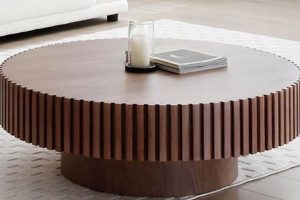
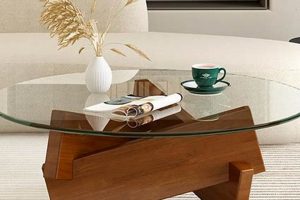
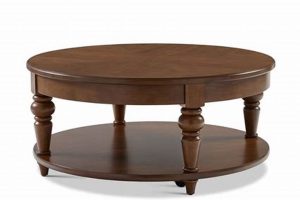
These furnishings emulate the aesthetic of older, often historically significant, tables designed for placement in front of seating. They are not genuine antiques, but rather contemporary pieces manufactured to evoke a sense of age, often through distressed finishes, reproduction hardware, and stylistic mimicry of past eras. For example, a newly produced table might feature cabriole legs and a dark wood stain to replicate a Queen Anne style piece.
The appeal of such furniture lies in its ability to introduce a vintage or classic ambiance into a space without the challenges associated with owning authentic antiques. These reproductions provide the desired aesthetic while offering the benefits of modern construction, such as improved durability and consistent availability. Furthermore, they often come at a lower price point than genuine antique counterparts, making the historical look more accessible. Historically, the coffee table evolved from lower tea tables, gaining popularity as living room seating arrangements shifted in the 20th century.
This discussion will explore various design elements characterizing these tables, including prevalent styles, materials utilized in their construction, and considerations for integrating them into diverse interior decorating schemes.
Selecting and Incorporating Reproduction Vintage Tables
Careful consideration is required when selecting and integrating pieces that emulate aged designs. These guidelines ensure successful integration and enduring satisfaction.
Tip 1: Assess Room Scale: Ensure proportional compatibility between the table and the dimensions of the room. An excessively large table will overwhelm a small space, while an undersized table may appear insignificant in a larger area. Measure the intended space and compare it to the table’s dimensions prior to purchase.
Tip 2: Evaluate Material Composition: Examine the materials used in construction. Solid wood or high-quality veneers provide greater durability and a more authentic appearance than cheaper alternatives like particleboard or plastic laminates. Inspect the quality of joinery and hardware.
Tip 3: Analyze Finish Quality: Observe the finish for consistent application and appropriate aging techniques. A well-executed distressed finish will appear naturally worn, while a poorly applied finish will look artificial and detract from the overall aesthetic. Consider hand-rubbed or multi-layered finishes for enhanced realism.
Tip 4: Match Style to Decor: Select a table style that complements the existing decor. A Victorian-inspired table may clash with a minimalist, modern interior. Consider the dominant styles and color palettes within the room to ensure a cohesive design. Research different historical styles to accurately match eras and features.
Tip 5: Consider Functionality: Determine the primary function of the table. A table intended for storage should feature drawers or shelves. A table used for display should have an appropriate surface area and potentially a glass top to protect delicate items.
Tip 6: Inspect Hardware Details: The hardware can significantly impact the table’s authenticity. Look for reproduction hardware that accurately reflects the period being emulated. Avoid modern, mass-produced hardware that detracts from the vintage appearance. Consider patinated or antiqued finishes on pulls, knobs, and hinges.
Tip 7: Investigate the Origin and Maker: Research the manufacturer or vendor of the table. Reputable manufacturers often use higher-quality materials and construction techniques. Reading reviews and comparing brands can help ensure a satisfying purchase.
Adhering to these guidelines will enhance the likelihood of selecting a reproduction vintage table that fulfills both aesthetic and functional requirements. Furthermore, these steps contribute to an environment that aligns with design intentions and historical context.
The next section will examine prevalent design styles characteristic of these tables.
1. Reproduction

The essence of an “antique looking coffee table” lies in its reproduction of design elements from past eras. This replication is not merely stylistic imitation; it is a calculated effort to evoke a sense of history and craftsmanship that characterizes authentic antique furniture. The success of this reproduction hinges on the accuracy and authenticity of the replicated details. For instance, a coffee table marketed as “antique looking” but constructed with modern, uncharacteristic materials or featuring anachronistic hardware would fail to effectively convey the desired historical aesthetic. The degree to which a newly manufactured piece accurately reproduces elements from a specific historical period directly impacts its perceived value and its effectiveness in creating the intended ambiance within a space.
Consider the practical implications of this understanding. Consumers seeking to furnish a room with an “antique looking” aesthetic need to carefully assess the quality of the reproduction. This assessment requires a degree of knowledge about historical furniture styles and construction techniques. A discerning buyer might examine the joinery, the type of wood used, the finish applied, and the hardware employed to determine whether the table is a faithful reproduction or a superficial imitation. Furthermore, understanding the distinction between an authentic antique and a reproduction can prevent overpayment, ensuring that the price reflects the actual value of the item, rather than a falsely inflated perception of antiquity.
In summary, “reproduction” is a foundational element of the “antique looking coffee table” concept. Its importance extends beyond mere aesthetic imitation to encompass the tangible qualities of construction, material, and finish. The challenge lies in discerning authentic reproductions from superficial imitations, requiring consumers to develop a critical eye and a basic understanding of historical furniture styles. This understanding is crucial for achieving the desired aesthetic and ensuring value for money.
2. Distressed Finish

The application of a distressed finish is a critical element in replicating the appearance of aged furniture. This technique simulates the effects of natural wear and tear accumulated over time, contributing significantly to the perception of antiquity in modern furnishings.
- Simulated Wear Patterns
Distressing techniques often involve creating artificial wear patterns, such as rounded edges, worn corners, and simulated scratches. These marks mimic the gradual erosion of a finish caused by decades of use and exposure. The placement and intensity of these wear patterns are crucial; excessively uniform or unnatural patterns undermine the illusion of age. On surfaces subject to regular contact, such as edges and drawer fronts, more pronounced wear is typically observed.
- Color Layering and Rub-Through
Achieving a convincing distressed finish frequently requires the application of multiple layers of paint or stain, followed by selective removal to reveal underlying colors. This rub-through technique simulates the gradual erosion of successive layers of finish, creating visual depth and complexity. The choice of colors is also important, with historically accurate palettes enhancing the authenticity of the distressed effect. For example, a piece might feature a top layer of muted cream, with underlying layers of dark brown or red peeking through in worn areas.
- Hardware Aging
The distressing process often extends to the hardware used on the furniture. Metal components may be treated with chemical patinas or abrasive techniques to create a tarnished or aged appearance. Rusting, pitting, and discoloration are often simulated to match the overall aesthetic. Replacing modern hardware with reproduction antique pieces is another common strategy for enhancing the perceived age of the furniture.
- Surface Texture Manipulation
Beyond visual effects, distressed finishes often incorporate textural elements. Techniques such as distressing with wire brushes or creating small indentations simulate the effects of prolonged use and environmental exposure. Wormholes can be artificially created to further enhance the impression of age and historical authenticity. The degree of textural manipulation should be carefully controlled to avoid an overly artificial or cartoonish appearance.
Effective application of these distressing techniques contributes substantially to the believability of an “antique looking coffee table.” The goal is to create a piece that suggests a long and eventful history, seamlessly blending into a decor that values vintage aesthetics.
3. Period Styles
The concept of “Period Styles” is fundamental to the creation of “antique looking coffee tables.” The successful emulation of historical aesthetics requires a deliberate and informed selection of design characteristics originating from specific eras. These period styles dictate the overall form, ornamentation, material choices, and construction techniques employed in the creation of these reproductions.
- Victorian Era
Victorian-style coffee tables often feature elaborate ornamentation, dark wood finishes (such as mahogany or walnut), and cabriole legs. The influence of this period results in pieces characterized by opulence and detail, reflecting the era’s emphasis on conspicuous consumption and ornate design. Reproduction pieces may incorporate features like carved floral motifs, button-tufted upholstery, and decorative metal accents. The implications for creating an “antique looking coffee table” in this style involve meticulous attention to detail and a commitment to replicating the period’s rich visual language. In the Victorian era the coffee table was considered a relatively new addition to the home, evolving from earlier tea tables, and served primarily as a decorative element.
- Art Deco
Art Deco pieces are recognized by geometric patterns, streamlined forms, and the use of luxurious materials such as exotic woods, chrome, and glass. These tables often showcase symmetrical designs and bold, angular profiles, reflecting the era’s fascination with modernity and technological advancement. In reproduction, designers may use veneers of exotic woods, geometric inlays, and polished metal accents to capture the spirit of Art Deco. The impact on the table design is a reduction of unnecessary detail and a focus on streamlined elegance. The historical context positions Art Deco as a response to the excesses of the Victorian era, embracing industrial aesthetics and a forward-looking design philosophy.
- Mid-Century Modern
Mid-Century Modern styles are characterized by clean lines, minimalist forms, and the use of natural materials like teak, walnut, and birch. Coffee tables from this period frequently feature tapered legs, simple geometric shapes, and a focus on functionality. Reproduction pieces often emphasize the natural grain of the wood and avoid excessive ornamentation. This style has a particular emphasis on simple shapes and functionality. Historically, this style emerged in the post-World War II era, driven by advances in manufacturing and a desire for practical, affordable furniture.
- Queen Anne
Queen Anne designs are known for their graceful curves, cabriole legs, and understated elegance. Coffee tables in this style often feature a rich wood finish, such as cherry or walnut, and minimal ornamentation. Common features include pad feet, shell carvings, and a focus on proportion and balance. Reproduction pieces require careful attention to the shaping of the legs and the overall symmetry of the design. This style reflects the early 18th century aesthetic that focused on functionality. These tables were made of wood, reflecting a new focus on simple elegance and fine materials.
Understanding these “Period Styles” provides a framework for creating convincing “antique looking coffee tables.” By accurately replicating the design characteristics, materials, and construction techniques associated with specific eras, manufacturers can produce pieces that effectively evoke a sense of history and authenticity.
4. Material Selection
The choice of materials is paramount in achieving a credible “antique looking coffee table.” The materials utilized directly influence the furniture’s aesthetic, durability, and perceived historical accuracy. Inappropriate material choices can undermine the desired effect, regardless of stylistic adherence. For instance, using particleboard with a laminate finish to simulate a mahogany Victorian-era table is incongruous. Authentic mahogany, or a high-quality veneer over hardwood, would be necessary to approximate the intended look and feel. The selection of materials, therefore, is not merely a practical consideration but a critical factor in conveying historical authenticity.
Real-life examples illustrate the significance of appropriate material choices. Consider the use of solid wood versus engineered wood. A solid wood table, constructed from species common in historical periods (oak, walnut, cherry), possesses a weight, texture, and grain pattern that resonates with antique furniture. These materials age naturally, developing a patina that enhances the illusion of antiquity. Conversely, engineered wood products, while cost-effective, often lack the characteristic warmth and aging properties of solid wood. Similarly, the hardware used on these tables plays a crucial role. Using modern, mass-produced hardware on a reproduction table detracts from its vintage appearance. Reproduction hardware crafted from brass, iron, or other historically appropriate metals, often with an aged finish, provides a more convincing aesthetic. The effect of the distressed finish, in particular, is highly dependent on the underlying material, where solid wood will react different to chemical patina or other wear and tear aging techniques that are not compatible with particleboard. If the wrong choice of materials were used, the distress may have no effect, or an undesired effect, making the illusion look unnatural.
In summary, the success of creating an “antique looking coffee table” hinges significantly on careful material selection. The use of historically accurate and high-quality materials not only enhances the aesthetic appeal but also contributes to the longevity and perceived value of the piece. Challenges arise in balancing cost considerations with the desire for authenticity. However, prioritizing appropriate materials, even if it necessitates a higher initial investment, ultimately yields a more convincing and enduring reproduction. This focus on material selection aligns with the broader theme of historical accuracy and attention to detail that defines the creation of successful reproduction furniture.
5. Functionality

The utility of furnishings is inextricable from their design, historical period, and intended setting. In the context of “antique looking coffee tables,” functional considerations often intersect with the stylistic constraints imposed by emulating historical designs. These factors may necessitate compromises or creative solutions to reconcile aesthetic fidelity with contemporary needs.
- Storage Integration
Many historical coffee table designs prioritized aesthetics over storage capabilities. However, modern consumers often require additional storage within living spaces. Therefore, “antique looking coffee tables” frequently incorporate discreet storage solutions, such as hidden drawers or lower shelves, to enhance functionality without compromising the external appearance. For example, a Queen Anne style table might feature a shallow drawer concealed beneath the tabletop. Implications include carefully balancing the storage capacity with the overall proportions and visual harmony of the piece.
- Surface Durability
Antique furniture often exhibits delicate surfaces susceptible to damage from spills or everyday use. Reproduction “antique looking coffee tables” address this concern by employing more durable surface finishes. These finishes may include modern varnishes, sealants, or protective coatings that resist staining and scratching. These adaptations allow for daily use without requiring the level of care associated with genuine antiques. The challenge lies in selecting finishes that provide adequate protection while maintaining a visually authentic appearance.
- Size and Proportion Adjustments
Historical coffee tables were often designed for specific room sizes and seating arrangements. Modern living spaces may necessitate adjustments to the dimensions of these tables to better suit contemporary needs. “Antique looking coffee tables” may be produced in a range of sizes to accommodate diverse room layouts. This adaptation requires careful consideration to preserve the aesthetic proportions of the original design, avoiding disproportionate or ungainly modifications.
- Material Adaptations for Stability
Certain materials commonly used in antique furniture may lack the structural stability required for modern use. Reproduction “antique looking coffee tables” may incorporate subtle material adaptations to enhance stability and durability. For instance, a table leg might be reinforced with internal supports or constructed from a denser hardwood than originally specified. These modifications are typically concealed to maintain the external appearance of the piece while ensuring its long-term structural integrity.
The reconciliation of function and form is central to the design of “antique looking coffee tables.” While striving to capture the visual appeal of historical pieces, manufacturers must also address the practical requirements of modern living. Success lies in the skillful integration of functional enhancements without sacrificing the essential aesthetic qualities that define these reproductions.
Frequently Asked Questions about Reproduction Vintage Tables
The following addresses prevalent inquiries and clarifies common misconceptions concerning furnishings designed to replicate the aesthetics of older coffee tables.
Question 1: What is the primary distinction between a genuine antique and a reproduction vintage table?
A genuine antique is an item of furniture originating from a specific historical period, possessing inherent age and historical value. A reproduction, conversely, is a contemporary piece manufactured to emulate the style and appearance of antique furniture, lacking historical provenance.
Question 2: How does one ascertain the quality of a distressed finish on a reproduction piece?
A high-quality distressed finish will exhibit natural variations and simulate wear patterns consistent with age, such as rounded edges and subtle abrasions. An inferior finish will appear artificial, with uniform or exaggerated distressing that detracts from the overall aesthetic.
Question 3: What factors determine the appropriateness of a specific period style for a given interior design?
The selection of a period style should complement the existing architectural elements, color palettes, and furniture styles within the room. Cohesion is achieved when the table’s design harmonizes with the overall aesthetic, rather than clashing with existing elements.
Question 4: Is solid wood essential for a convincing “antique looking” table, or are veneers acceptable?
While solid wood is desirable for its durability and authentic appearance, high-quality veneers applied over a solid wood core can provide a suitable alternative. The key is to ensure the veneer is thick and expertly applied to prevent peeling or damage.
Question 5: How can one balance the desire for historical accuracy with the need for modern functionality in a coffee table?
Discreetly integrating storage solutions, such as hidden drawers or shelves, is a viable approach. Additionally, employing durable surface finishes that resist staining and scratching can enhance practicality without compromising the vintage aesthetic.
Question 6: What are the potential drawbacks of purchasing a low-priced reproduction vintage table?
Lower-priced tables may utilize inferior materials, such as particleboard or low-quality veneers, which can compromise durability and aesthetic appeal. Additionally, the quality of the finish and hardware may be substandard, detracting from the overall impression of antiquity.
The above clarifications serve to illuminate the critical considerations involved in acquiring and appreciating reproduction furnishings that evoke historical aesthetics. Informed consumers are better equipped to make choices aligning with both aesthetic preferences and practical requirements.
The subsequent segment will explore strategies for preserving and maintaining reproduction vintage pieces.
Conclusion
The preceding discussion has elucidated the multifaceted nature of “antique looking coffee tables.” Exploration has encompassed design elements, material considerations, historical context, and functional requirements. Understanding these aspects is crucial for both consumers seeking to integrate such pieces into interior spaces and manufacturers aiming to produce convincing reproductions. The successful creation and selection hinges on a commitment to historical accuracy, material quality, and functional adaptation to modern lifestyles.
Continued diligence in preserving the aesthetic and structural integrity of these furnishings is paramount. Furthermore, recognizing the nuances that distinguish genuine antiques from reproductions is essential for informed decision-making within the furniture market. Future advancements in manufacturing and materials may further refine the authenticity and durability of “antique looking coffee tables,” ensuring their continued relevance in interior design schemes. Further research into historical furniture styles and evolving production techniques is, therefore, encouraged.