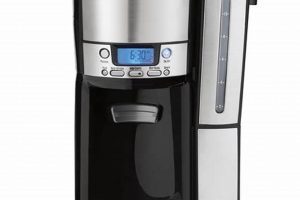
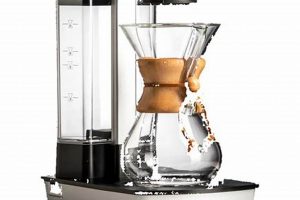
This refers to a traditional coffee brewing apparatus that utilizes gravity to filter heated water through coffee grounds. The process involves slowly dripping hot water over the grounds, extracting the coffee essence, and collecting the brewed liquid in a carafe below. These coffee makers, often manually operated, represent a simpler approach to coffee preparation compared to modern automated machines.
Such devices offer several advantages. The deliberate, controlled brewing process allows for greater influence over the final flavor profile. Individuals can adjust water temperature, drip rate, and coffee-to-water ratio to achieve a preferred taste. Historically, these brewers were common household items, providing a reliable and affordable means of producing coffee before the advent of electric models. Their simplicity ensures durability and ease of maintenance.
The subsequent discussion will delve into the mechanics of this brewing method, exploring its enduring appeal and examining techniques for optimizing the coffee extraction process. Considerations will also be given to the materials used in construction and their impact on the final brew.
Optimizing the Drip Brewing Process
Achieving optimal results with gravity-fed brewing methods requires attention to several key variables. Consistent application of these techniques enhances the quality and flavor extraction of the final product.
Tip 1: Grind Consistency: Utilize a burr grinder to achieve uniform particle size. Inconsistent grinds result in uneven extraction, leading to bitter or weak coffee.
Tip 2: Water Temperature Regulation: Maintain a water temperature between 195-205F (90-96C). Temperatures outside this range can negatively impact flavor. A thermometer is a useful tool for precise monitoring.
Tip 3: Pre-wetting the Grounds: Prior to the main brewing cycle, saturate the coffee grounds with a small amount of hot water, allowing the grounds to bloom. This process releases trapped carbon dioxide, improving extraction.
Tip 4: Drip Rate Control: If using a manual model, regulate the water flow to maintain a steady, even drip. Rapid pouring can lead to channeling and under-extraction. Controlled, consistent flow is desirable.
Tip 5: Coffee to Water Ratio: A standard ratio of 1:15 to 1:17 (coffee to water) is generally recommended. Adjust this ratio according to personal preference and coffee bean characteristics.
Tip 6: Filter Selection: Paper filters can impart a paper taste if not pre-rinsed with hot water. Reusable metal filters offer a different flavor profile, allowing more oils and sediment to pass through. Select a filter based on desired taste characteristics.
Tip 7: Cleanliness: Regularly clean the apparatus to prevent the build-up of coffee oils and residue, which can impart unpleasant flavors. Use a mild detergent and thoroughly rinse all components.
By adhering to these guidelines, individuals can enhance the flavor and quality of coffee produced via this method. The consistency and quality will improve with each batch.
The subsequent sections will explore the various designs of this brewing apparatus and the importance of material selection in achieving a superior cup of coffee.
1. Simplicity

The intrinsic appeal of an “old fashioned drip coffee maker” lies significantly in its operational simplicity. This characteristic distinguishes it from more complex, automated brewing systems, offering a straightforward approach to coffee preparation.
- Minimal Components
An “old fashioned drip coffee maker” typically comprises a water reservoir, a filter basket, and a carafe. The absence of intricate electronic parts reduces the likelihood of mechanical failure and simplifies maintenance. This limited number of components directly contributes to the device’s ease of use.
- Manual Operation
The brewing process is primarily manual, relying on gravity to drip heated water through the coffee grounds. This eliminates the need for programming or complex settings, allowing users to control the brewing parameters directly. The manual nature of the operation promotes a hands-on approach to coffee preparation.
- Intuitive Design
The design of the “old fashioned drip coffee maker” is inherently intuitive. The process involves filling the reservoir with water, placing coffee grounds in the filter basket, and allowing the water to drip into the carafe. The lack of a complex user interface simplifies the learning curve, making it accessible to novice users.
- Easy Cleaning
Due to the absence of intricate parts, cleaning an “old fashioned drip coffee maker” is generally straightforward. The removable components can be easily washed, preventing the build-up of coffee residue and maintaining optimal performance. The simplicity of cleaning enhances the overall user experience and longevity of the device.
These elements collectively highlight how the simplicity inherent in the design and operation of an “old fashioned drip coffee maker” contributes to its enduring popularity. The straightforward brewing process and ease of maintenance offer a practical and accessible solution for coffee enthusiasts.
2. Manual Operation
Manual operation is a defining characteristic of the “old fashioned drip coffee maker,” fundamentally shaping the user experience and the qualities of the brewed coffee. This operational mode necessitates direct user involvement in the brewing process, impacting water temperature regulation, drip rate control, and overall extraction efficiency. The absence of automated mechanisms demands that the individual actively manage these variables, leading to a greater degree of control over the final product. An example is the need to carefully pour heated water over the coffee grounds in a circular motion, mimicking the saturation provided by automated systems but requiring human precision and attentiveness. This hands-on approach can lead to a more personalized cup of coffee, tailored to individual preferences.
The significance of manual operation extends beyond mere control; it introduces an element of craftsmanship to coffee preparation. The user’s skill and attention to detail directly influence the extraction process, allowing for adjustments based on visual cues and sensory feedback. If the coffee is brewing too slowly, the user can carefully adjust the pouring rate to maintain a desired drip. Conversely, if the brew is too fast, adjustments can be made to the coffee grind or pouring technique. This level of interactivity is often absent in automated systems, which operate according to pre-programmed parameters. The manual aspect necessitates a greater understanding of the brewing variables, thus enabling more intentional adjustments for better coffee extraction.
In summary, the manual operation intrinsic to the “old fashioned drip coffee maker” fosters a direct connection between the user and the brewing process. This operational modality allows for customized coffee preparation by allowing for real-time adjustments to water temperature, drip rate, and total water volume; also manual operation demands a level of user involvement and skill that enhances the crafting and the control over the final result. While requiring more attentiveness than automated methods, the manual aspect promotes a deeper engagement with the art of coffee making.
3. Gravity Infusion
Gravity infusion constitutes a fundamental operational principle of an “old fashioned drip coffee maker.” This method leverages the natural force of gravity to facilitate the extraction of coffee solubles, setting it apart from brewing techniques that employ pressure or forced water circulation. The controlled descent of water through the coffee grounds is critical to the character of the final brew.
- Uniform Saturation
The gravitational process ensures a consistent, albeit gradual, saturation of the coffee grounds. As water permeates downward, it dissolves soluble compounds evenly. This promotes balanced extraction, reducing the occurrence of over- or under-extraction, which can result in bitter or weak coffee, respectively.
- Drip Rate Regulation
While the force driving the water is constant, the drip rate in “old fashioned drip coffee maker” is influenced by several factors, including the grind size and the design of the apparatus. Finer grinds impede water flow, slowing the drip. This modulation of flow directly impacts the contact time between water and grounds, affecting the strength and flavor profile of the coffee.
- Passive Extraction
Gravity infusion is characterized by its passive nature. No external energy source forces the water through the coffee. Instead, the process relies solely on gravitational pull. This gentle extraction method is believed by some to yield a smoother, less acidic cup compared to methods using forced pressure.
- Sediment Control
The filtration system in these gravity-fed devices, typically paper or cloth, works in conjunction with gravity to produce a sediment-free beverage. The downward flow carries dissolved solids while retaining larger particles. This contributes to the clarity and mouthfeel of the coffee.
The nuances of gravity infusion are critical to understanding the operational effectiveness of an “old fashioned drip coffee maker.” This principle interacts with grind size, water temperature, and filter type to determine the final cup quality. By understanding how gravity impacts extraction, users can optimize the brewing process.
4. Temperature Control

Temperature control is a critical variable impacting the extraction process within “old fashioned drip coffee maker” systems. Water temperature directly influences the solubility of various compounds within coffee grounds; achieving optimal extraction necessitates maintaining temperature within a specific range. Insufficiently heated water results in under-extraction, characterized by a weak, sour, and underdeveloped flavor profile due to the limited dissolution of desirable aromatic and flavor compounds. Conversely, excessively high temperatures lead to over-extraction, resulting in a bitter and astringent taste as undesirable components are dissolved. Therefore, managing water temperature is essential for producing a balanced and palatable cup of coffee.
The challenge in controlling temperature in “old fashioned drip coffee maker” arises from their often-manual operation. Unlike automated machines with integrated heating elements and thermostats, many traditional drip devices rely on an external heat source. This demands that the user accurately heat water to the appropriate temperature before introducing it to the coffee grounds. Deviation from the ideal temperature range (approximately 195-205F or 90-96C) can drastically affect the final product. For instance, using water just 10 degrees below the optimum may result in a noticeably weaker brew. Furthermore, maintaining consistent water temperature throughout the brewing cycle can be challenging, as heat loss is inevitable. Insulated carafes or preheating the device can mitigate temperature fluctuations to some extent.
Effective temperature management in “old fashioned drip coffee maker” is, therefore, a skill honed through practice and attention to detail. Understanding the relationship between water temperature and extraction efficiency is crucial for optimizing the brewing process. While fully automated systems offer more precise temperature regulation, the manual nature of traditional drip brewing demands a more nuanced understanding and control of the brewing variables, ultimately resulting in a more customized cup of coffee if carefully executed.
5. Filter Medium
The filter medium is an integral component of an “old fashioned drip coffee maker,” exerting substantial influence over the final brew’s characteristics. Its primary function is to separate the coffee grounds from the brewed liquid, preventing sediment from entering the final cup. However, the filter mediums impact extends beyond mere particulate removal. Different materials, pore sizes, and thicknesses affect the passage of oils, micro-fines, and other soluble compounds, subsequently shaping the coffee’s flavor, body, and clarity. For example, a paper filter, typically bleached or unbleached, effectively traps most oils and sediment, resulting in a cleaner, brighter cup with a lighter body. In contrast, a metal filter allows a greater quantity of oils and fine particles to pass through, producing a richer, more full-bodied brew with increased perceived mouthfeel. This filter difference showcases the fundamental role of the filter medium in flavor adjustment.
The choice of filter medium is not solely a matter of personal preference; it necessitates careful consideration of coffee bean characteristics and desired flavor profiles. Lightly roasted coffees often benefit from paper filters, which enhance their delicate acidity and nuanced flavors. Darkly roasted coffees, with their inherent bitterness, may be better suited to metal filters, as the increased oil content can balance the roast’s intensity and complexity. Reusable cloth filters represent an alternative, offering a middle ground between paper and metal in terms of filtration level. Each filter medium presents its unique operational considerations, including pre-rinsing requirements for paper filters (to remove papery taste) and cleaning protocols for reusable options (to prevent oil buildup and flavor contamination). Consistent filter maintenance is crucial for preserving the brew quality.
In conclusion, the selection and proper utilization of the filter medium represent a critical aspect of brewing coffee with an “old fashioned drip coffee maker.” It influences the taste profile, body, and clarity of the end beverage. Understanding the capabilities and limitations of various filter media empowers users to fine-tune their brewing process, aligning it with coffee type and taste preferences. Choosing the appropriate filter will result in a balanced, refined cup of coffee with an “old fashioned drip coffee maker.”
6. Brewing Time
Brewing time exerts a significant influence on the extraction process within an “old fashioned drip coffee maker,” directly affecting the final coffee strength, flavor profile, and overall quality. This variable dictates the duration of contact between hot water and coffee grounds, during which soluble compounds are dissolved and transferred into the brewed liquid. Extended brewing times typically result in increased extraction, yielding a stronger and potentially more bitter cup, as both desirable and less desirable compounds are solubilized. Conversely, insufficient brewing times lead to under-extraction, producing a weak, sour, and underdeveloped beverage due to the incomplete dissolution of flavor-contributing components. As an example, consider a coarse grind used in conjunction with a short brewing time; this combination will likely produce a watery and acidic result.
The optimal brewing time for an “old fashioned drip coffee maker” is contingent on several factors, including grind size, coffee-to-water ratio, and desired taste preferences. Finer grinds, due to their increased surface area, require shorter brewing times to prevent over-extraction. A higher coffee-to-water ratio necessitates a longer brewing duration to achieve the desired strength. Skillful manipulation of brewing time is essential for compensating for variations in these parameters. For instance, if a user prefers a bolder flavor and uses a medium grind, extending the brewing time slightly may enhance the coffee’s body and complexity. However, this must be balanced to prevent the onset of bitterness. The manual nature of “old fashioned drip coffee maker” allows such adjustments, giving the user control over the extraction.
In summary, brewing time is a critical factor in the “old fashioned drip coffee maker” process. Understanding and controlling this variable, in conjunction with other parameters like grind size and water temperature, allows the user to fine-tune the extraction and tailor the coffee to individual taste preferences. Challenges arise from the lack of automated controls in many traditional drip systems, necessitating careful monitoring and adjustment. Nonetheless, the active involvement of the user in the brewing process can yield a satisfying, customized cup of coffee. The control of Brewing time and old fashioned drip coffee maker is critical to flavor and concentration.
Frequently Asked Questions About the “Old Fashioned Drip Coffee Maker”
The following addresses common inquiries regarding the operation, maintenance, and benefits of traditional drip coffee brewing methods.
Question 1: Does the “old fashioned drip coffee maker” yield coffee comparable in quality to modern automatic machines?
The resulting coffee quality depends heavily on user technique. When properly executed, the method can produce a brew rivaling, or even surpassing, that of automated systems due to increased control over key brewing variables.
Question 2: What is the optimal grind size for use with an “old fashioned drip coffee maker?”
A medium-coarse grind is generally recommended. Finer grinds may lead to over-extraction and clogging, while coarser grinds can result in under-extraction.
Question 3: How frequently should an “old fashioned drip coffee maker” be cleaned?
Thorough cleaning after each use is advisable to prevent the buildup of coffee oils and residue, which can negatively impact the coffee flavor.
Question 4: Are paper filters necessary when operating an “old fashioned drip coffee maker?”
While not strictly mandatory, paper filters are strongly recommended for removing sediment and producing a cleaner, less bitter cup. Alternatives, such as metal filters, are available, but they will yield a brew with more sediment and oils.
Question 5: What water temperature is considered ideal for brewing with an “old fashioned drip coffee maker?”
The optimal water temperature range is between 195-205 degrees Fahrenheit (90-96 degrees Celsius). This range facilitates optimal extraction of flavor compounds without causing excessive bitterness.
Question 6: How does the material of the “old fashioned drip coffee maker” (e.g., glass, ceramic, stainless steel) affect the brewing process?
The material primarily impacts heat retention and durability. Glass is inert and allows for visual monitoring, while ceramic offers excellent heat retention. Stainless steel is durable but can impart a metallic taste if not properly manufactured.
In summary, achieving optimal results with an “old fashioned drip coffee maker” relies on understanding grind size, maintaining cleanliness, using appropriate filters, controlling water temperature, and selecting a suitable material. These parameters affect the overall quality of coffee production.
The following section will explore advanced techniques for maximizing the flavor potential of this coffee brewing method.
Conclusion
The exploration of the “old fashioned drip coffee maker” reveals a brewing method characterized by simplicity, manual operation, and gravitational infusion. Precise control over water temperature and the selection of an appropriate filter medium significantly impact the extraction process. Achieving optimal results requires attentive monitoring of brewing time, thereby influencing the coffee’s strength and flavor profile. The device’s composition, whether glass, ceramic, or stainless steel, plays a secondary role, primarily affecting heat retention and durability.
Understanding these elements empowers the user to engage actively with the brewing process, yielding a beverage tailored to individual preferences. While modern automated systems offer convenience, the enduring appeal of the “old fashioned drip coffee maker” lies in its capacity to deliver a nuanced and personalized coffee experience, contingent upon the user’s skill and engagement. Continued refinement of these techniques promises sustained appreciation of this traditional brewing method.

![Best 12 Cup Programmable Coffee Maker [Guide & Reviews] | The Ultimate Coffee Guide: Types, Brewing Methods & Best Beans](https://deacoffee.com/wp-content/uploads/2026/04/th-268-300x200.jpg "Best 12 Cup Programmable Coffee Maker [Guide & Reviews] The Ultimate Coffee Guide: Types, Brewing Methods & Best Beans")