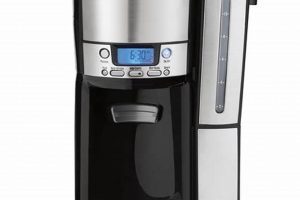
An automated coffee brewing device designed for operation using a 12-volt power source allows for the preparation of coffee in environments where standard AC power is unavailable. These devices are typically compact and engineered for mobility, enabling coffee preparation within vehicles or remote locations.
The appeal of such a device lies in its ability to provide a convenient source of freshly brewed coffee while traveling, camping, or during work activities in locations lacking conventional electrical outlets. This functionality enhances comfort and productivity in situations where access to typical amenities is limited. Historically, these appliances have gained popularity among long-haul drivers, outdoor enthusiasts, and those who work in mobile professions.
The subsequent sections will delve into the specific features, functionalities, potential applications, and considerations relevant to selecting and utilizing these portable brewing solutions, exploring the nuances of their operational capabilities and intended use cases.
Optimizing the Use of Portable Coffee Brewers
The following guidelines are intended to maximize the performance and lifespan of your 12-volt automated coffee brewing system.
Tip 1: Power Source Compatibility: Ensure the vehicle’s electrical system can consistently deliver the necessary amperage without compromising other vital functions. Regularly monitor the voltage to prevent undervoltage conditions that could damage the heating element.
Tip 2: Water Quality Considerations: Utilize filtered or distilled water to minimize mineral buildup within the heating chamber. Mineral deposits can reduce heating efficiency and ultimately lead to premature failure of the device.
Tip 3: Proper Grinding and Coffee Selection: Employ a medium-coarse grind to avoid over-extraction and sediment buildup. Experiment with different coffee roasts to find a flavor profile suited to the device’s brewing characteristics.
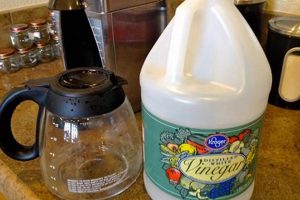
Tip 4: Cleaning and Maintenance: Regularly clean the brewing chamber, carafe, and filter basket after each use. Descale the unit monthly using a commercially available descaling solution or a mixture of vinegar and water.
Tip 5: Secure Mounting and Placement: Securely mount the brewer within the vehicle to prevent movement during transit. Choose a location that is away from direct sunlight and provides adequate ventilation.
Tip 6: Electrical Cord Management: Ensure the power cord is properly routed and secured to prevent damage or accidental disconnection. Avoid stretching or crimping the cord, as this can lead to short circuits.
Tip 7: Preheating (When Applicable): Some models benefit from a preheating cycle before brewing. Consult the manufacturer’s instructions to determine if preheating is recommended for optimal performance.
Adherence to these recommendations contributes to the longevity and consistent operation of your mobile coffee brewing setup, ensuring a reliable source of coffee while away from traditional amenities.
Subsequent sections will address common troubleshooting scenarios and advanced usage techniques.
1. Power Consumption

Power consumption is a critical factor in the operation of a 12V automated coffee brewing system. It dictates the demands placed on the vehicle’s electrical system and, consequently, influences brewing time and overall system efficiency.
- Wattage Rating and Amperage Draw
Each automated coffee maker has a wattage rating, indicating the amount of electrical power it consumes during operation. This wattage translates to an amperage draw on the 12-volt system. Exceeding the vehicle’s electrical system capacity can lead to blown fuses, battery drain, or damage to the alternator. For example, a 150-watt brewer will draw approximately 12.5 amps from a 12-volt source. This draw needs to be considered in relation to the vehicle’s electrical capacity and the simultaneous operation of other electrical devices.
- Impact on Battery Life
Prolonged use of a 12V coffee brewer can significantly deplete the vehicle’s battery, especially when the engine is not running. Deep-cycle batteries are often recommended for applications where extended operation without engine power is required. Understanding the brewer’s power consumption allows for accurate estimation of battery drain and proactive planning to avoid running the battery down to critical levels. The operational lifespan of the battery is reduced if it’s frequently depleted to a very low level.
- Efficiency of Heating Element
The efficiency of the heating element directly impacts the overall power consumption. A more efficient element will heat water faster and maintain temperature with less energy input. Inefficient heating elements waste energy, increasing battery drain and prolonging brewing times. Regularly cleaning the heating element to remove mineral buildup can help maintain its efficiency. Models employing insulated carafes can also contribute to reduced power consumption by minimizing heat loss.
- Inrush Current Considerations
Some 12V coffee makers may exhibit a high inrush currenta surge of electrical currentduring startup. This momentary surge can strain the vehicle’s electrical system, potentially causing voltage drops or activating protection circuits. Choosing a model with a soft-start feature can mitigate this issue. Understanding the inrush current requirements of a device is crucial for ensuring compatibility with the vehicle’s power supply.
The relationship between a 12V automated coffee maker and its power consumption is complex, encompassing wattage, amperage, battery impact, and heating element efficiency. Careful consideration of these factors is essential for selecting a compatible and efficient device, ensuring a reliable coffee brewing experience while minimizing strain on the vehicle’s electrical system.
2. Brewing Capacity

Brewing capacity, in the context of a 12V automated coffee maker, directly relates to the volume of coffee the appliance can produce in a single brewing cycle. This capacity is a critical specification impacting user convenience and suitability for different applications. Insufficient capacity necessitates frequent brewing cycles, which can be time-consuming and strain the vehicle’s electrical system. Conversely, excessive capacity results in unused coffee, leading to waste and potential maintenance issues if the unused portion remains in the machine for extended periods. For instance, a solo traveler might find a single-cup brewer adequate, whereas a construction crew sharing a vehicle may require a multi-cup model to meet their collective needs. Selecting a device with a brewing capacity aligned with typical usage patterns is paramount for operational efficiency and user satisfaction.
The interplay between brewing capacity and the appliance’s physical dimensions also warrants consideration. A larger brewing capacity generally necessitates a larger physical footprint, potentially impacting portability and ease of storage within a vehicle. Manufacturers often strive to balance brewing capacity with compactness, employing design strategies such as vertical integration of components or the use of lightweight materials. Furthermore, heating element design and power output influence the brewing time associated with different capacities. A larger capacity brewer with an underpowered heating element will exhibit extended brewing cycles, potentially negating the convenience factor. As a practical example, a 12V brewer claiming a 4-cup capacity but requiring 45 minutes for a full brew cycle may prove impractical for individuals seeking a quick coffee solution on the move.
In summary, the brewing capacity of a 12V automated coffee maker is not merely a quantitative specification but a determinant of user experience, power consumption, and overall practicality. Understanding the relationship between brewing capacity, physical dimensions, heating efficiency, and intended application allows for informed purchasing decisions and optimized usage. Challenges in selecting the ideal capacity often stem from variable usage patterns and the need to balance capacity with portability and power constraints. Ultimately, the optimal choice reflects a careful assessment of individual or group coffee consumption habits within the limitations of a 12V power environment.
3. Portability Factors
Portability constitutes a fundamental consideration in the design and selection of automated coffee makers intended for 12V operation. These devices are frequently utilized in mobile environments, necessitating compact dimensions, minimal weight, and robust construction to withstand the rigors of transportation and operation within confined spaces.
- Size and Dimensions
The physical size of the coffee maker directly impacts its suitability for use in vehicles or other confined locations. Excessive dimensions may preclude installation or impede access to controls. Compact designs maximize available space, facilitating storage and deployment. Dimensions should be balanced against brewing capacity and operational features. For example, a brewer designed for a single cup may prioritize minimal size, while a multi-cup model may necessitate a larger footprint.
- Weight Considerations
Weight significantly influences portability, particularly when the device is frequently transported. Lightweight materials and optimized construction techniques reduce overall weight, enhancing ease of handling and minimizing strain during installation. Excessive weight can also impact fuel efficiency in vehicles and complicate secure mounting. An optimal weight range balances durability with ease of transport.
- Durability and Construction
The construction materials and overall design contribute directly to the device’s ability to withstand the stresses of a mobile environment. Ruggedized housings, impact-resistant components, and secure connections are essential for preventing damage from vibration, temperature fluctuations, and accidental impacts. Robust construction ensures reliable operation and extends the service life of the appliance.
- Power Cord Management
The design and length of the power cord are critical aspects of portability. A retractable or easily storable cord minimizes clutter and prevents damage during transport. The cord length should be sufficient to reach a 12V power outlet without excessive stretching or entanglement. Durable insulation and secure connectors are essential for preventing electrical hazards and ensuring reliable power delivery.
These factors collectively define the portability characteristics of a 12V automated coffee maker. Optimizing these attributes enhances user convenience, extends the operational lifespan of the device, and facilitates its integration into diverse mobile environments. The interrelation between size, weight, durability, and power cord management dictates the overall practicality and suitability of these appliances for applications requiring mobility and robustness.
4. Durability Standards

The correlation between durability standards and automated coffee makers operating on a 12V system is direct and consequential. In the context of these appliances, durability is not merely a desirable attribute, but a critical performance parameter dictating operational lifespan and reliability, particularly when deployed in mobile environments. The absence of adherence to established durability standards directly contributes to premature failure, increased maintenance requirements, and potential safety hazards. For example, a 12V coffee maker lacking robust vibration resistance may suffer component damage when used in a vehicle traversing uneven terrain. Similarly, insufficient thermal protection can lead to overheating and subsequent malfunction. Adherence to recognized standards, such as those outlined by organizations like IEC or ASTM, ensures that these devices are engineered to withstand specific environmental stressors and operational demands, thereby mitigating the risk of failure and enhancing user safety.
Practical application of durability standards manifests in several critical areas of design and manufacturing. Material selection plays a pivotal role, with manufacturers opting for impact-resistant polymers and corrosion-resistant metals to withstand physical stresses and exposure to environmental elements. Component selection also reflects a focus on durability, with preference given to robust switches, relays, and heating elements capable of enduring repeated cycles of operation. Moreover, rigorous testing protocols are employed to simulate real-world operating conditions, including vibration, thermal cycling, and exposure to humidity and dust. These tests provide empirical validation of the design’s ability to meet specified durability requirements. Consider the example of a 12V coffee maker subjected to prolonged vibration testing; the results of this testing inform design modifications aimed at enhancing structural integrity and minimizing component fatigue.
In summary, durability standards are indispensable to the design and manufacture of reliable 12V automated coffee makers. Adherence to these standards mitigates the risks associated with operation in demanding environments, enhancing product longevity and user safety. Challenges in achieving robust durability often stem from cost constraints and the need to balance durability with portability and power efficiency. Nevertheless, prioritizing durability through rigorous design, material selection, and testing remains paramount for ensuring the long-term performance and suitability of these appliances in diverse applications.
5. Heating Efficiency

Heating efficiency is a primary determinant of performance in any automated coffee brewing device operating on a 12V power system. It directly influences brewing time, energy consumption, and the overall effectiveness of the coffee-making process. Low heating efficiency translates to prolonged brewing cycles, increased battery drain, and potentially suboptimal coffee extraction. Consider a scenario where two identical automated coffee makers, differing only in heating element design, are used under identical conditions. The device with a more efficient heating element will achieve the target brewing temperature faster, consume less power from the 12V source, and yield a more consistent brew quality. This difference in performance underscores the practical significance of heating efficiency in these appliances.
Achieving optimal heating efficiency necessitates careful consideration of several factors, including heating element material, design, and thermal insulation. The use of high-conductivity materials, such as certain alloys of aluminum or copper, facilitates rapid heat transfer to the water. Similarly, the heating element’s surface area and geometry influence its ability to effectively transfer heat. Effective thermal insulation minimizes heat loss from the brewing chamber, further enhancing energy efficiency. An example of this can be seen in brewers that utilize vacuum-insulated carafes, which maintain coffee temperature for extended periods with minimal energy input. Controlling scale buildup on the heating element’s surface is also crucial to maintaining long-term efficiency, as scale acts as an insulator, impeding heat transfer.
In conclusion, heating efficiency represents a pivotal performance parameter in 12V automated coffee makers, impacting brewing speed, energy consumption, and brew quality. Design considerations pertaining to heating element material, geometry, and thermal insulation are central to achieving high efficiency. Challenges in maintaining heating efficiency include scale buildup and balancing efficiency with other design constraints, such as cost and size. However, prioritizing heating efficiency is essential for delivering a reliable and satisfying coffee brewing experience in mobile and off-grid applications.
Frequently Asked Questions
The following questions address common inquiries and concerns related to automated coffee brewing devices designed for operation using a 12-volt power supply.
Question 1: What is the typical lifespan of a 12V automated coffee maker?
The operational lifespan of a 12V automated coffee maker varies depending on usage frequency, maintenance practices, and build quality. Under normal conditions, a well-maintained unit can be expected to function effectively for 2-5 years. Regular cleaning and descaling are crucial to prolonging its lifespan.
Question 2: Can a 12V automated coffee maker drain a vehicle’s battery?
Yes, prolonged use of a 12V automated coffee maker can drain a vehicle’s battery, particularly if the engine is not running. The rate of battery depletion depends on the device’s wattage and the battery’s capacity. It is recommended to operate the device while the engine is running or utilize a supplemental power source.
Question 3: What type of water is recommended for use in a 12V automated coffee maker?
Filtered or distilled water is recommended to minimize mineral buildup within the heating chamber and brewing components. Mineral deposits can reduce heating efficiency and potentially damage the device.
Question 4: Are 12V automated coffee makers safe to use in moving vehicles?
Safety depends on proper installation and operation. The device should be securely mounted to prevent movement during transit. Care should be taken to avoid spills or burns. It is advisable to refrain from operating the device while actively driving.
Question 5: What is the ideal coffee grind for use in a 12V automated coffee maker?
A medium-coarse grind is generally recommended to prevent over-extraction and sediment buildup. Fine grinds can clog the filter and result in a bitter taste.
Question 6: How frequently should a 12V automated coffee maker be cleaned?
The device should be cleaned after each use to remove coffee grounds and residue. Descaling should be performed monthly or as needed, depending on water quality and usage frequency.
Proper maintenance and adherence to operational guidelines are paramount for ensuring the longevity and safe operation of these devices.
The subsequent sections will explore common troubleshooting scenarios.
Concluding Remarks on Portable 12V Coffee Brewers
This discussion has extensively explored the features, benefits, and operational considerations surrounding the auto coffee maker 12v. Key points addressed encompass power consumption, brewing capacity, portability factors, durability standards, and heating efficiency. A thorough understanding of these aspects is paramount for selecting and utilizing these devices effectively.
As mobile lifestyles continue to evolve, the demand for reliable and convenient solutions for preparing coffee on the go will likely persist. Further research and development in materials science, heating technology, and power management may yield even more efficient and durable iterations of the auto coffee maker 12v, solidifying its role as a practical appliance for diverse applications. Continuous vigilance regarding safety protocols and maintenance best practices remains essential for responsible utilization of these devices.

![Best 12 Cup Programmable Coffee Maker [Guide & Reviews] | The Ultimate Coffee Guide: Types, Brewing Methods & Best Beans](https://deacoffee.com/wp-content/uploads/2026/04/th-268-300x200.jpg "Best 12 Cup Programmable Coffee Maker [Guide & Reviews] The Ultimate Coffee Guide: Types, Brewing Methods & Best Beans")