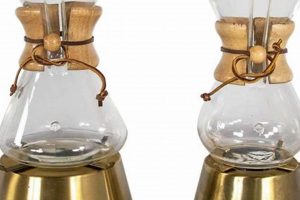
This brewing apparatus, with its distinctive hourglass shape and polished wood collar secured by a leather tie, produces clarified, sediment-free coffee. Designed for smaller batches, it yields a refined beverage experience suitable for individual enjoyment or sharing with a companion. The item employs specifically designed filters that contribute to a clean flavor profile.
Its significance stems from its ability to consistently deliver a smooth, nuanced cup, highlighting the delicate characteristics of the coffee beans. The pour-over method allows for precise control over the brewing process, enabling users to tailor their coffee to individual preferences. Its enduring popularity reflects a commitment to simplicity and quality, a philosophy embraced since its mid-20th century inception.
Understanding its operational features, ideal grind size, and optimal brewing ratios is essential for maximizing its capabilities. Furthermore, comparing its performance against alternative brewing methodologies provides a comprehensive perspective on its relative advantages and disadvantages. A discussion of proper cleaning and maintenance procedures ensures its longevity and consistent performance.
Optimizing Performance
Maximizing the potential of this coffee brewing instrument requires attention to detail and a consistent approach. The following techniques will ensure optimal extraction and flavor profiles.
Tip 1: Filter Preparation: Pre-wetting the filter thoroughly is crucial. This eliminates paper taste and ensures proper adhesion to the brewer’s walls. Use hot, filtered water, saturating the entire filter before discarding the rinse water.
Tip 2: Grind Size Consistency: A medium-coarse grind is generally recommended. Inconsistent grind size leads to uneven extraction, resulting in bitter or sour flavors. Invest in a quality burr grinder for optimal results.
Tip 3: Water Temperature Precision: Water temperature should be between 195-205F (90-96C). Lower temperatures result in under-extraction, while higher temperatures can scorch the coffee grounds, leading to bitterness. Use a thermometer for accurate temperature control.
Tip 4: Bloom Phase Implementation: Initially, saturate the coffee grounds with a small amount of hot water (approximately twice the weight of the coffee). Allow the coffee to “bloom” for 30-45 seconds. This process releases trapped carbon dioxide and enhances flavor development.
Tip 5: Pouring Technique Discipline: Pour water slowly and evenly over the coffee grounds, maintaining a consistent water level. Avoid pouring directly on the filter. A circular pouring pattern ensures uniform saturation.
Tip 6: Optimal Coffee-to-Water Ratio Adherence: A standard ratio is approximately 1:15 (coffee to water). Adjust the ratio to suit individual taste preferences, while remaining aware the ratio affects the strength.
Tip 7: Brewing Time Monitoring: The total brewing time should ideally be between 3-4 minutes. Adjust grind size based on the flow rate. Finer grinds slow down the extraction process, while coarser grinds accelerate it.
These strategies facilitate consistent and superior results from this brewing methodology. Adhering to these protocols can lead to a more refined and enjoyable coffee experience.
With a foundation of understanding established, the article will now proceed to discuss specific models and alternative brewing methods.
1. Brewing capacity

The brewing capacity, as it pertains to this pour-over device, defines its practical utility for specific consumption needs. The “3-cup” designation indicates the brewer’s intended yield, typically equating to approximately 15 ounces (444 milliliters) of finished coffee. This capacity is purposefully designed for single or dual servings, addressing the requirements of individuals or small households. Choosing the correctly sized brewing device significantly reduces waste and ensures the freshly brewed coffee is immediately consumed, mitigating the degradation of flavor associated with prolonged holding times. An undersized capacity necessitates multiple brewing cycles, while an oversized capacity results in brewing less than the optimal water volume, potentially leading to inconsistent extraction and sub-par coffee quality.
A real-life example illustrates this point: an individual consistently brewing only a single 8-ounce cup of coffee would find the designated capacity appropriately suited to their needs, whereas a two-person household consuming 12 ounces per person would require multiple brewing cycles, undermining the efficiency of the selected device. This constraint also highlights the potential advantage of offering varied size options within the Chemex product line, catering to a wider array of brewing volumes. The specified capacity directly affects the brewing parameters, including the ratio of coffee grounds to water, requiring precise calculations for ideal extraction.
Therefore, understanding the brewing capacity as an intrinsic component of this brewer is essential for informed purchase decisions and consistent results. Choosing the correct size aligns with desired consumption patterns, minimizing waste and ensuring the device is utilized within its intended operational parameters. Disregard for capacity results in either brewing insufficient quantities or engaging in repetitive brewing cycles. Capacity choice directly influences the brewing process, demanding accurate parameter adjustments for superior quality and consistency.
2. Filter paper
The filter paper functions as an integral component of this brewing device, directly influencing the final beverage characteristics. Its properties and interaction with the brewing process warrant detailed consideration.
- Thickness and Density
The thickness and density of the filter paper affect the flow rate of water through the coffee grounds and the retention of oils and sediments. Thicker filters impede flow and retain more oils, resulting in a cleaner, brighter cup. Conversely, thinner filters allow faster flow and less oil retention, producing a fuller-bodied but potentially less refined brew. Example: Some users prefer unbleached filters for perceived taste neutrality, despite potential variability in thickness.
- Material Composition
Chemex filters are typically made of a specific grade of paper that is heavier and more tightly woven than standard coffee filters. This material composition is designed to remove even the finest particles from the brewed coffee, contributing to the characteristic clarity. Different materials, such as cloth filters, offer alternative filtration characteristics, impacting the flavor profile. Example: Cloth filters often result in a more full-bodied cup due to greater oil passage.
- Folding Technique
The proper folding of the filter paper is crucial for ensuring a secure fit within the brewing device and preventing bypass, where water flows around the coffee grounds instead of through them. The standard folding technique creates a cone shape with multiple layers of paper on one side, providing added filtration. Incorrect folding can lead to inconsistent extraction and a less desirable final product. Example: Failure to properly seal the edges of the filter can lead to sediment in the coffee.
- Impact on Flavor Profile
The filter paper plays a substantial role in shaping the flavor profile of the brewed coffee. By removing oils and sediments, it emphasizes the acidity and brightness of the coffee beans, creating a clean and nuanced cup. This characteristic is highly valued by those who appreciate the subtle complexities of specialty coffee. Some users deliberately use different filter types to manipulate the flavor profile. Example: Using a metal filter in a different brewing device results in a fuller-bodied, more oily cup compared to the clear taste the paper filter achieves.
These facets collectively define the significant role filter paper plays in conjunction with the Chemex brewer. The proper selection, preparation, and understanding of its impact are crucial for achieving the desired brewing outcome. The filter papers effect emphasizes the importance of high-quality brewing method.
3. Glass construction
The glass construction is a defining characteristic of this pour-over coffee brewer, significantly influencing both its aesthetic appeal and functional performance. The material properties and design considerations inherent in its glass composition impact thermal stability, chemical inertness, and the overall brewing experience.
- Borosilicate Glass Composition
The primary material employed in construction is borosilicate glass, chosen for its high resistance to thermal shock. This resistance allows for the direct introduction of boiling water without risk of shattering or cracking. Example: Sudden temperature fluctuations, such as moving the hot brewer to a cold surface, are less likely to cause damage compared to standard glass. This composition ensures durability and longevity, essential for consistent brewing.
- Non-Porous Nature
The non-porous surface of the glass prevents the absorption of flavors and odors from previous brews. This inert quality maintains the purity of subsequent coffee preparations, preventing any cross-contamination of taste. Example: Unlike plastic or metal brewers, lingering flavors from strong, dark roasts will not affect the taste of a lighter, more delicate coffee brewed afterward. This ensures consistent flavor profiles with each use.
- Visual Monitoring of Brewing Process
The transparency afforded by the glass construction provides a clear visual of the brewing process. Observing the saturation of the coffee grounds and the evenness of the extraction allows for real-time adjustments to the pouring technique. Example: The user can visually identify channeling, where water bypasses the coffee grounds, and modify the pour to ensure uniform saturation. This visual feedback enhances control over the brewing process.
- Thermal Properties
While borosilicate glass offers thermal resistance, it is not an insulator. The relatively thin walls allow for heat loss during brewing, potentially impacting the water temperature and extraction. Preheating the brewer with hot water before brewing is recommended to mitigate this heat loss. Example: Ignoring preheating may result in a lower brewing temperature, leading to under-extraction and a sour taste. Preheating stabilizes the brewing temperature for optimal results.
These aspects of the glass construction collectively contribute to the brewing experience. The material’s properties impact durability, flavor neutrality, and the ability to monitor the brewing process. Awareness of these characteristics is crucial for maximizing the performance of this pour-over brewer, making it more than just a tool but an instrument for quality coffee.
4. Pour-over method

The pour-over method represents a manual coffee brewing technique, directly relevant to understanding the functionality and advantages of the featured apparatus. Its application requires a focused, controlled approach to water saturation and extraction, influencing the final beverage profile. The subsequent discussion elaborates on key facets inherent to the pour-over process within this specific brewing context.
- Controlled Water Flow
The pour-over method inherently demands precise control over the rate and pattern of water flow. This control allows the user to directly influence the saturation of the coffee grounds and the duration of the extraction process. For example, a slow, circular pour ensures uniform saturation, preventing channeling and promoting even extraction. In the context of the apparatus, this control optimizes the coffee’s flavor nuances, emphasizing clarity and minimizing bitterness.
- Grind Size Dependency
The optimal grind size is inextricably linked to the pour-over method’s success. A medium-coarse grind is generally recommended to provide adequate resistance to water flow, ensuring sufficient contact time for extraction without over-extraction leading to bitterness. An improperly sized grind results in either under-extracted, sour coffee or over-extracted, bitter coffee. Example: Experimenting with grind size allows the user to fine-tune the brewing parameters to suit their coffee bean and personal preference.
- Water Temperature Influence
Water temperature is a critical variable affecting the pour-over extraction process. The ideal temperature range, typically between 195-205F (90-96C), facilitates optimal solubilization of the coffee’s desirable compounds. Lower temperatures result in under-extraction, while higher temperatures can scorch the coffee grounds, producing undesirable flavors. Maintaining temperature control is paramount for repeatable, consistent brewing. Example: Utilizing a temperature-controlled kettle ensures the water is consistently within the ideal range, minimizing brewing variables.
- Bloom Phase Significance
The bloom phase, a pre-infusion step where a small amount of hot water saturates the coffee grounds, is integral to the pour-over method. This phase allows for the release of trapped carbon dioxide, preparing the coffee grounds for optimal extraction. Neglecting the bloom phase can result in uneven extraction and a less flavorful cup. Example: Observing the bloom visually confirms the coffee grounds are properly saturated and ready for the main brewing process. This visual confirmation is a critical aspect of the pour-over method.
These interdependent aspects of the pour-over method collectively contribute to the specialized results attainable with the apparatus. Understanding these variables empowers the user to consistently produce a refined and flavorful coffee beverage. The method’s inherent control aligns with the brewer’s design, facilitating a high degree of personalization and precision in the brewing process.
5. Cleaning ease

The attribute of “cleaning ease” significantly contributes to the overall user experience of the brewing device. Its simple design and material properties directly impact the efficiency and convenience of post-brewing maintenance, influencing long-term usability.
- Simple Disassembly
The apparatus comprises a single, seamless glass vessel, eliminating complex disassembly procedures typically associated with multi-component brewing systems. This design reduces the number of parts requiring individual cleaning, streamlining the maintenance process. For example, compared to espresso machines with intricate internal components, the brewer requires minimal disassembly, saving time and effort.
- Smooth Glass Surface
The non-porous, smooth surface of the borosilicate glass facilitates effortless removal of coffee residue and oils. These residues, if left unattended, can accumulate and impart unwanted flavors to subsequent brews. The smooth surface allows for easy wiping and rinsing, preventing the build-up of such contaminants. For example, simply rinsing the brewer under warm water is often sufficient to remove residual coffee grounds after brewing.
- Dishwasher Compatibility (with caveats)
While the manufacturer recommends hand washing, the brewing vessel is generally considered dishwasher-safe. However, the wooden collar and leather tie must be removed prior to placing it in the dishwasher to prevent damage. This optional dishwasher compatibility provides added convenience for users who prefer automated cleaning solutions. For example, users can opt for dishwasher cleaning during busy periods, ensuring the brewer remains clean without requiring manual effort.
- Minimal Residue Retention
The design of the brewing device minimizes areas where coffee residue can accumulate and become difficult to remove. The lack of intricate crevices or hard-to-reach corners simplifies cleaning, reducing the risk of bacterial growth and flavor contamination. For example, unlike some brewing devices with complex filter baskets, the brewers conical shape allows for easy visual inspection and cleaning of the entire interior surface.
These aspects of cleaning ease, stemming from the design and materials used, contribute to the device’s overall appeal. The simplified maintenance routine promotes frequent cleaning, ensuring consistent coffee quality and extending the brewer’s lifespan. This user-friendly cleaning process complements the device’s manual brewing nature, highlighting its focus on simplicity and quality in all aspects of coffee preparation.
6. Coffee quality

Coffee quality, in the context of the 3-cup pour-over brewer, signifies the attributes of the final brewed beverage. This encompasses a spectrum of sensory characteristics, influenced by both the equipment and the brewing technique employed. Understanding the variables that affect coffee quality is essential for optimizing the user experience and maximizing the potential of this brewing method.
- Extraction Uniformity
The brewing method facilitates a high degree of control over the extraction process, directly impacting the consistency and balance of the final cup. Uniform extraction ensures that all desirable compounds are solubilized from the coffee grounds, while minimizing the extraction of undesirable bitter or sour elements. For example, a properly executed pour-over, using the brewer, will yield a beverage with a balanced profile, showcasing the inherent characteristics of the coffee beans. In contrast, uneven extraction leads to unbalanced flavors and diminished overall quality.
- Sediment Reduction
The designated filter paper plays a critical role in minimizing sediment in the brewed coffee. The filter’s density and construction effectively trap fine particles, resulting in a clarified beverage with enhanced clarity and mouthfeel. The absence of sediment allows for a cleaner taste, enabling the appreciation of subtle nuances within the coffee’s flavor profile. For example, compared to brewing methods that utilize metal filters, the method achieves a notably cleaner cup due to the paper filter’s superior sediment retention.
- Aromatic Expression
The pour-over brewing method, when performed with the brewer, allows for heightened aromatic expression. The controlled water flow and precise extraction facilitate the release and preservation of volatile aromatic compounds, contributing to a more complex and engaging sensory experience. The brewed coffee exhibits a more pronounced aroma, enhancing the overall perception of quality and flavor. For example, coffee brewed with the pour-over method often exhibits a brighter and more nuanced aroma compared to coffee brewed using automated drip machines.
- Temperature Stability
Maintaining appropriate water temperature throughout the brewing process is essential for optimal extraction and flavor development. The borosilicate glass construction, while offering thermal resistance, necessitates careful monitoring and preheating to minimize heat loss during brewing. Temperature fluctuations can negatively impact the coffee’s flavor profile, leading to under-extraction or over-extraction. For example, preheating the brewer with hot water before brewing helps to stabilize the temperature, contributing to a more consistent and flavorful cup.
These interconnected facets underscore the relationship between the brewing device and the ultimate coffee quality. The brewing method, in conjunction with the equipment’s design and material properties, significantly influences the extraction, clarity, aroma, and temperature stability of the brewed beverage. A thorough understanding of these variables empowers the user to consistently achieve a high-quality cup of coffee, showcasing the true potential of this brewing apparatus.
Frequently Asked Questions
This section addresses common inquiries regarding the operation, maintenance, and optimal utilization of the 3-cup pour-over brewer.
Question 1: What is the ideal coffee-to-water ratio for the apparatus?
The recommended ratio is generally 1:15, meaning one gram of coffee for every fifteen grams of water. However, users are encouraged to adjust this ratio based on individual taste preferences and the characteristics of the coffee beans being used. A coarser grind and a shorter brewing time may necessitate a slightly higher coffee-to-water ratio, while a finer grind and longer brewing time may require a lower ratio.
Question 2: How does the filter paper contribute to the overall coffee quality?
The filter paper removes sediments and oils from the brewed coffee, resulting in a clarified beverage with a clean taste and enhanced clarity. The thickness and density of the filter paper influence the flow rate and the level of sediment retention. The use of designated filter papers is highly recommended to achieve optimal results.
Question 3: What is the optimal water temperature for brewing with this method?
The ideal water temperature range is between 195-205F (90-96C). This temperature range facilitates optimal extraction of desirable compounds from the coffee grounds without scorching or under-extracting. A temperature-controlled kettle is recommended to maintain precise water temperature throughout the brewing process.
Question 4: How should the brewer be cleaned to maintain optimal performance?
The brewer should be rinsed with warm water immediately after each use to remove coffee residue. A mild detergent can be used for more thorough cleaning. The brewer is dishwasher-safe, provided the wooden collar and leather tie are removed beforehand. Regular cleaning prevents the accumulation of oils and sediments that can negatively impact future brews.
Question 5: What grind size is most suitable for the pour-over brewing method?
A medium-coarse grind is generally recommended. The grind size should be adjusted based on the flow rate of water through the coffee grounds. A grind that is too fine will impede flow, leading to over-extraction and bitterness. A grind that is too coarse will result in rapid flow and under-extraction.
Question 6: Is preheating the brewer necessary before brewing?
Preheating the brewer with hot water is highly recommended. The borosilicate glass is not an insulator, and preheating minimizes heat loss during the brewing process, contributing to greater temperature stability and improved extraction.
These FAQs provide a comprehensive overview of essential considerations for utilizing the 3-cup pour-over brewing device. Adhering to these guidelines will contribute to consistently high-quality coffee brewing.
With these frequently asked questions addressed, the article will now delve into a comparative analysis with alternative brewing methods.
Final Assessment
This exposition has detailed the nuanced characteristics of the brewing device, encompassing its operational features, material composition, and the critical parameters influencing the final beverage. The assessment has covered grind size optimization, water temperature considerations, cleaning protocols, and the significance of proper filtration. These factors collectively determine the efficacy of the 3-cup pour-over brewer in delivering a consistent and quality coffee experience.
The findings underscore the importance of informed utilization and diligent maintenance to maximize the equipment’s potential. Its continued relevance within the specialty coffee community hinges on the user’s understanding and application of these principles. Further exploration into advanced brewing techniques and comparative analyses with alternative methodologies remains essential for ongoing refinement within the field.

![Best 12 Cup Programmable Coffee Maker [Guide & Reviews] | The Ultimate Coffee Guide: Types, Brewing Methods & Best Beans](https://deacoffee.com/wp-content/uploads/2026/04/th-268-300x200.jpg "Best 12 Cup Programmable Coffee Maker [Guide & Reviews] The Ultimate Coffee Guide: Types, Brewing Methods & Best Beans")