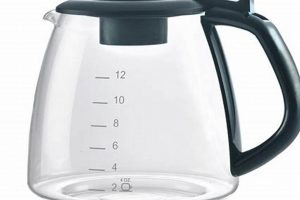
These receptacles, crafted from transparent material, are designed for serving hot beverages. The manufacturing process typically involves shaping molten silicate using specialized molds, resulting in a durable and aesthetically pleasing product intended for repeated use. Examples include various sizes and designs, often featuring handles for convenient handling of heated liquids.
Their prevalence stems from the inert nature of the material, preventing flavor alteration and facilitating easy cleaning. Historically, glass has been favored for its ability to showcase the beverage and its resistance to absorbing odors or staining. This ensures a consistent and enjoyable drinking experience, appealing to both domestic and commercial users.
The subsequent sections will delve into specific aspects such as material composition, design variations, thermal properties, cleaning recommendations, and market availability for these widely used items.
Maximizing the Longevity and Utility of Glass Beverage Containers
This section provides practical advice for maintaining and utilizing glass coffee receptacles to ensure optimal performance and extended lifespan.
Tip 1: Temperature Gradation: Rapid temperature changes can induce thermal stress, potentially leading to fracture. Preheating the container with warm water before pouring in hot liquid can mitigate this risk.
Tip 2: Gentle Handling During Cleaning: Avoid abrasive scouring pads or harsh chemicals, which can scratch the surface and diminish clarity. Use a soft sponge and mild detergent for washing.
Tip 3: Proper Storage Techniques: When storing, prevent direct contact between vessels to avoid chipping or breakage. Consider using dividers or protective padding, especially for stacked items.
Tip 4: Careful Dishwasher Placement: If using a dishwasher, ensure the item is securely positioned to prevent it from knocking against other items during the cycle. Top-rack placement is generally recommended.
Tip 5: Avoid Impact with Hard Surfaces: Glass, while durable, is susceptible to damage from impact. Exercise caution when placing containers on countertops or other hard surfaces.
Tip 6: Regular Inspection for Damage: Periodically inspect for chips, cracks, or other signs of wear. Discard any item that exhibits structural compromise to prevent potential injury.
Adhering to these guidelines will contribute to the prolonged use and continued enjoyment of these everyday items.
The following section will conclude the article with a summation of the discussed points.
1. Material Transparency

Material transparency, a defining characteristic of glass coffee receptacles, directly influences the user’s sensory experience and practical utility. The translucent nature of the material provides a clear view of the beverage, allowing for visual assessment of color, consistency, and fill level. This visual feedback is crucial for both aesthetic appreciation and functional monitoring, contributing to an enhanced perception of quality and control over the drinking experience. For example, the ability to observe crema formation on espresso or the steeping process of tea relies entirely on the transparency of the glass.
Furthermore, material transparency facilitates easier cleaning and hygiene maintenance. Residue buildup, stains, or any foreign particles are readily visible, prompting thorough cleaning practices. This is particularly significant in commercial settings, where hygiene standards are paramount. For instance, a transparent container allows staff to quickly identify and address any potential contamination, ensuring compliance with health regulations and maintaining customer trust. The absence of opacity also prevents the concealment of micro-cracks or damage that could harbor bacteria, thus promoting safer usage.
In summary, material transparency in glass coffee receptacles is not merely an aesthetic feature but a functional attribute that contributes significantly to user experience, hygiene maintenance, and safety. The ability to visually monitor the beverage and assess cleanliness enhances both the appreciation and practical utility, while potential issues and damages are easier to identify. Its importance extends from individual consumer satisfaction to upholding stringent hygiene standards in commercial environments.
2. Thermal Resistance
Thermal resistance, defined as the ability of a material to withstand rapid temperature changes without structural failure, is a critical performance characteristic for glass beverage containers. The following points delineate key aspects of thermal resistance as it pertains to these vessels.
- Resistance to Thermal Shock
Glass, inherently susceptible to thermal shock, requires specific treatments or compositions to enhance its resilience to abrupt temperature fluctuations. The introduction of borosilicate glass, for instance, improves thermal shock resistance compared to standard soda-lime glass, making it suitable for applications involving hot liquids followed by immediate cooling. The ability to withstand thermal shock minimizes the risk of cracking or shattering when exposed to boiling coffee or sudden contact with cold water.
- Impact of Wall Thickness
The thickness of the glass walls directly influences thermal resistance. Thicker walls provide greater insulation, reducing the rate of heat transfer and minimizing temperature gradients within the glass. This contributes to a more gradual temperature change, lessening the likelihood of thermal stress. However, excessively thick walls can also increase the weight of the container, impacting user ergonomics.
- Influence of Design Features
Certain design elements can mitigate the effects of thermal stress. Rounded corners, for example, reduce stress concentration points, enhancing the overall structural integrity of the container. Conversely, sharp angles or abrupt changes in wall thickness can create weak points that are prone to cracking when subjected to thermal stress. Designs that incorporate gradual transitions in thickness tend to exhibit better thermal resistance.
- Preheating and Tempering Processes
Manufacturing processes such as tempering involve controlled heating and cooling cycles that induce compressive stress on the surface of the glass. This compressive stress counteracts tensile stress generated during thermal expansion, significantly improving the container’s resistance to thermal shock and impact. Preheating, done by the user, such as running warm tap water prior to pouring the coffee.
The considerations mentioned above are essential in selecting and handling glass beverage containers. Understanding the interplay between material composition, design features, and manufacturing processes provides the user with knowledge to maximize product lifespan and reduce the risk of failure due to thermal stress, thereby optimizing the overall drinking experience.
3. Design Variety

The significance of design variety in silicate-based hot beverage receptacles is multifaceted, impacting both aesthetic appeal and functional suitability. The availability of diverse designs addresses varied consumer preferences and specific application requirements. The causal relationship between design elements and consumer choice is evident in purchasing decisions, where aesthetic alignment often plays a crucial role. For example, ribbed designs may enhance grip and provide thermal insulation, while minimalist designs prioritize visual clarity and stackability. The importance of design variety as a component is amplified by the diverse usage scenarios these containers encounter, ranging from formal dining settings to casual office environments. The influence of design on the perceived value and utility of the beverage receptacle is a tangible consequence of this interplay.
Further analysis reveals practical applications of design variety in brand differentiation and marketing strategies. Companies leverage unique shapes, patterns, and handle designs to establish brand recognition and appeal to specific target demographics. For instance, a coffee shop chain might utilize a signature container design to reinforce brand identity and enhance customer loyalty. Functionally, variations in rim shape influence the drinking experience, while differing base designs impact stability and resistance to tipping. The interplay between form and function underscores the importance of considering both aesthetic and ergonomic factors when selecting a suitable glass coffee receptacle.
In conclusion, design variety in silicate-based hot beverage receptacles is more than a superficial consideration; it is a crucial element impacting consumer choice, brand identity, and functional performance. Understanding the nuanced relationship between design elements and user needs allows for informed selection and utilization, maximizing satisfaction and efficiency. While challenges exist in balancing aesthetic appeal with practical functionality, the ongoing evolution of design underscores its continued relevance in the realm of hot beverage service.
4. Volume Capacity

Volume capacity, a primary determinant of suitability, defines the quantity of liquid a drinking vessel can contain. In the context of silicate-based coffee receptacles, this characteristic governs portion size and influences the overall user experience, as well as impacting the practical use in professional settings.
- Standardized Serving Sizes
Specific volume capacities align with established serving sizes for various coffee preparations. For example, a demitasse typically holds 2-3 ounces for espresso, while a standard coffee cup accommodates 8-12 ounces. These standards ensure consistency and predictability in both home and commercial beverage service, and Libbey’s offerings usually follow these industry guidelines.
- Impact on Thermal Retention
The volume of liquid directly affects the rate of temperature loss. Larger volumes retain heat longer due to a greater thermal mass, while smaller volumes cool more quickly. This consideration is particularly relevant when selecting a vessel for leisurely sipping versus immediate consumption.
- Influence on Beverage Aesthetics
Volume capacity impacts the visual presentation of the beverage. An appropriately sized receptacle showcases the coffee’s crema, layering, or artistic designs, enhancing the overall aesthetic appeal. Conversely, an inadequately sized vessel may obscure these visual elements, detracting from the experience.
- Commercial Considerations
In commercial settings, volume capacity is crucial for inventory management and cost control. Standardized sizes facilitate portioning, reducing waste and ensuring consistent product delivery. Furthermore, specific volume requirements may dictate selection based on the needs of automated brewing systems or dispensing equipment.
The interplay between volume capacity, thermal properties, aesthetic considerations, and operational efficiency underscores the importance of careful selection. Optimizing this characteristic enhances user satisfaction and contributes to successful beverage service in diverse contexts.
5. Handle Ergonomics

Handle ergonomics, pertaining to the design of a cup’s handle for optimal comfort and functionality, significantly influences the user’s experience with silicate-based hot beverage receptacles. An appropriately designed handle facilitates secure grip, reduces strain, and minimizes the risk of spills, thereby enhancing safety and usability.
- Grip Security and Stability
The primary role of the handle is to provide a secure and stable grip, preventing slippage even when the container is filled with a hot liquid. Handle design considers factors such as curvature, texture, and finger clearance to ensure a comfortable and reliable hold. Insufficient grip security can lead to accidental spills and potential burns, highlighting the importance of ergonomic design. For instance, handles with deep finger grooves or non-slip coatings offer enhanced grip security compared to smooth, straight handles.
- Weight Distribution and Balance
Handle placement and design directly impact the weight distribution and balance of the receptacle when held. A well-positioned handle ensures that the center of gravity remains within a comfortable range, minimizing strain on the wrist and forearm. Imbalanced weight distribution can lead to fatigue and increase the likelihood of spills. Handles that are too small or positioned too high can create awkward angles, exacerbating these issues, whereas handles that are thoughtfully-placed make them easier to carry.
- Thermal Insulation Properties
The handle also serves as a thermal barrier, preventing heat transfer from the hot liquid to the user’s hand. Materials with low thermal conductivity, such as certain plastics or air gaps, are often incorporated into handle designs to reduce the risk of burns. Insufficient thermal insulation can render the container uncomfortable or even unsafe to hold. For example, handles with hollow cores or wrapped in insulating materials effectively minimize heat transfer compared to solid metal handles.
- Material and Structural Durability
The handle’s material composition and structural integrity determine its ability to withstand repeated use and exposure to various environmental conditions. Handles must be durable enough to support the weight of the filled receptacle without cracking, bending, or detaching. Material selection considers factors such as impact resistance, temperature stability, and chemical inertness. Weak or poorly constructed handles can compromise the container’s overall lifespan and pose a safety risk.
These facets of handle ergonomics, when effectively integrated into the design, contribute to a superior user experience with silicate-based hot beverage receptacles. Considering the interplay of grip security, weight distribution, thermal insulation, and structural durability allows for informed selection and utilization, maximizing satisfaction and minimizing potential hazards.
6. Cleaning Ease

Cleaning ease represents a significant consideration in the selection and maintenance of silicate-based coffee receptacles. The inherent properties of the material and design influence the efficiency with which these items can be sanitized, impacting hygiene, longevity, and overall user satisfaction.
- Surface Smoothness and Porosity
The non-porous nature of glass prevents the absorption of coffee oils and residues, simplifying cleaning procedures. Smooth surfaces minimize the adherence of particulate matter, facilitating effortless removal of stains and deposits. In contrast, porous materials require more aggressive cleaning methods, which can damage the surface and shorten the lifespan of the item. Example: glass with a matte finish is harder to clean.
- Chemical Resistance
Glass exhibits high resistance to chemical degradation from commonly used cleaning agents, including detergents, sanitizers, and descalers. This allows for the use of effective cleaning solutions without compromising the integrity or appearance of the receptacle. Unlike some plastics, glass does not readily absorb odors or flavors from cleaning products, preserving the taste neutrality of subsequent beverages. Improper use of chemicals can cause the glass to dull over time.
- Dishwasher Compatibility
The ability to withstand high temperatures and exposure to harsh detergents renders many glass coffee receptacles dishwasher-safe, streamlining the cleaning process. Automated dishwashing provides consistent and thorough sanitization, reducing the risk of bacterial contamination. However, repeated dishwasher cycles can etch the surface of some types of glass, leading to clouding or weakening over time. It is recommended to place on the top rack if possible.
- Design Simplicity and Accessibility
Receptacles with simple designs, devoid of intricate crevices or narrow openings, are inherently easier to clean. Accessible surfaces allow for effective scrubbing and rinsing, ensuring the removal of all residual contaminants. Complex designs may require specialized cleaning tools or techniques to reach difficult-to-access areas. A cup with a wide mouth is easier to clean than one with a narrow opening.
These facets of cleaning ease collectively contribute to the practical value and sustained appeal of silicate-based coffee receptacles. The ease of maintenance promotes hygiene, extends product lifespan, and enhances the overall user experience, further solidifying the materials suitability for use in both domestic and commercial settings. Selecting items that facilitate easy cleaning practices promotes sanitary conditions in commercial usage.
7. Durability

Durability, the capacity to withstand wear, pressure, or damage, is a crucial attribute of silicate-based coffee receptacles. This property directly influences the lifespan, cost-effectiveness, and safety of these everyday items. The material composition and manufacturing processes employed in their creation exert a significant impact on their overall resistance to breakage and degradation. Instances of premature failure due to inadequate durability result in increased replacement costs and potential injury from shattered glass, underscoring the importance of selecting receptacles designed for sustained use. Certain processes such as tempering strengthen the overall structure to increase durability of the glass.
The practical significance of durability extends to both domestic and commercial environments. In homes, durable coffee receptacles can withstand frequent use, dishwashing cycles, and minor impacts without succumbing to damage, offering long-term value and convenience. In high-traffic commercial settings, such as restaurants and cafes, the ability to withstand constant handling, rigorous cleaning, and potential mishandling is paramount. Failure to provide adequate durability translates to increased replacement frequency, higher operational costs, and a greater risk of accidents. The material choice and thickness factor into the overall durability.
In summary, durability is not merely a desirable feature but a fundamental requirement for silicate-based coffee receptacles. The selection of appropriate materials and robust manufacturing techniques directly translates to extended product lifespan, reduced operational costs, and enhanced user safety. The assessment of durability requires consideration of both material properties and intended usage scenarios, ensuring that the chosen receptacles are fit for purpose and capable of withstanding the demands of their environment. Libbey glass products provide different levels of durability based on the cost and use of the product.
Frequently Asked Questions About Silicate Coffee Receptacles
This section addresses common inquiries and misconceptions surrounding silicate-based coffee receptacles, providing clear and concise answers based on factual information.
Question 1: Are all silicate coffee receptacles heat-resistant?
No, not all silicate formulations exhibit equal heat resistance. Borosilicate glass offers superior thermal shock resistance compared to soda-lime glass. The specific composition dictates the receptacle’s ability to withstand rapid temperature changes without fracturing.
Question 2: Do colored or decorated silicate coffee receptacles pose a health risk?
The potential for health risks depends on the materials used in the coloring or decoration process. Lead-based paints or glazes can leach harmful substances into the beverage. Reputable manufacturers adhere to safety standards to prevent such contamination. Verify compliance with relevant regulations before use.
Question 3: How should silicate coffee receptacles be cleaned to prevent clouding?
Avoid abrasive cleaning agents and scouring pads, which can scratch the surface and diminish clarity. Use mild detergents and soft sponges. Hard water deposits can contribute to clouding; vinegar or commercially available descalers can remove these deposits.
Question 4: Are silicate coffee receptacles suitable for microwave use?
Microwave compatibility depends on the receptacle’s design and material composition. Metallic trim or coatings can cause arcing and damage the microwave. Check the manufacturer’s instructions for specific guidance.
Question 5: Can silicate coffee receptacles be recycled?
Most silicate glass is recyclable, but local recycling programs may have specific requirements. Certain types of glass, such as lead crystal or borosilicate glass, may not be accepted in standard recycling streams. Consult local waste management guidelines for proper disposal.
Question 6: What factors influence the price of silicate coffee receptacles?
Price is influenced by factors such as material composition, manufacturing process, design complexity, brand reputation, and origin. Receptacles made from premium materials or featuring intricate designs typically command higher prices.
This FAQ section provides a foundation for informed decision-making regarding silicate coffee receptacles, promoting safe and effective usage.
The following section concludes the article with a summary of key concepts.
Conclusion
The preceding exploration detailed varied aspects of libbey glass coffee cups, encompassing material properties, design considerations, usage guidelines, cleaning protocols, and durability factors. Each element contributes to the overall performance and lifespan of these items, impacting user experience and operational efficiency in both domestic and commercial settings.
The informed selection and responsible use of libbey glass coffee cups are essential for maximizing their value and minimizing potential risks. A comprehensive understanding of their attributes allows for optimized performance and promotes both economic sustainability and user safety. Continued advancements in material science and manufacturing processes hold promise for further enhancing the performance and durability of these widely used beverage receptacles.