



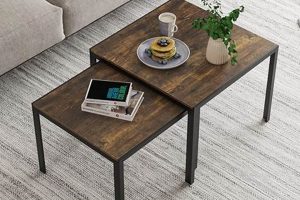
The practice of styling horizontal surfaces with carefully selected volumes is a design element used to enhance the aesthetic appeal of living spaces. These curated collections can act as focal points, injecting personality and visual interest into an area. For example, a stack of oversized art monographs placed on a central table surface can serve as both a conversation starter and a reflection of the homeowner’s artistic interests.
Strategically incorporating printed media into interior design offers several advantages. It provides an opportunity to showcase individual tastes, add color and texture, and elevate the overall sophistication of a room. Historically, the arrangement of books has been a symbol of intellect and refinement, contributing to a sense of cultured elegance within a home.
The following sections will delve into specific considerations for selecting appropriate titles, arranging them artfully, and complementing them with other decorative objects to achieve a harmonious and impactful display.
Enhancing Interior Aesthetics
This section outlines practical strategies for leveraging visual elements to augment the ambiance of a room. Proper execution transforms a utilitarian surface into a curated reflection of personal style and sophistication.
Tip 1: Curate Content Alignment: Selection of printed material should reflect the occupant’s interests, hobbies, or professional expertise. Employ titles related to art, travel, design, or specific areas of study to create a meaningful and engaging display.
Tip 2: Prioritize Visual Harmony: Consider the color palette of the room when selecting volumes. Choose covers that complement or contrast with existing decor to achieve a balanced and visually appealing arrangement.
Tip 3: Vary Heights and Orientations: Employ stacks of varying heights to create visual interest. Alternate between horizontal and vertical orientations to break up the monotony and add dynamism to the arrangement.
Tip 4: Incorporate Decorative Objects: Introduce small sculptures, candles, or plants to complement the selected titles. These objects add depth and texture, enhancing the overall aesthetic appeal.
Tip 5: Maintain Proportion and Scale: Ensure that the size of the arrangement is proportionate to the table’s dimensions. Overcrowding or undersizing can detract from the visual impact.
Tip 6: Rotate and Re-arrange Periodically: Refresh the display regularly by rotating the selected titles or decorative objects. This keeps the arrangement visually stimulating and prevents stagnation.
Tip 7: Consider Cover Material and Texture: Think about the tactile feel and visual appeal of different cover materials like linen, leather, or matte paper. These details contribute to the overall richness of the arrangement.
Strategic implementation of these tips yields an engaging and visually enriching focal point within a living space, reflecting individual taste and enhancing the overall design aesthetic.
The subsequent sections will elaborate on techniques for integrating these displays within broader interior design schemes, maximizing their impact and ensuring cohesive visual harmony.
1. Aesthetics

The selection and arrangement of horizontal surface books are intrinsically linked to overall aesthetics. The visual impact of these items significantly influences the perceived atmosphere and stylistic coherence of an interior space. Careful consideration of cover designs, color palettes, and overall physical dimensions is paramount to achieving a harmonious and visually pleasing result. Disregard for these elements can lead to a discordant and unappealing display.
Aesthetics, in this context, functions as a controlling factor. The colors, textures, and sizes of books chosen can either enhance or detract from the established aesthetic of a room. For example, a minimalist, monochrome space might benefit from the inclusion of large-format photography books with stark black and white covers, reinforcing the clean lines and uncluttered feel. Conversely, introducing brightly colored or overly ornate volumes into such a space could disrupt its intended aesthetic.
The appreciation of aesthetics is integral to successful surface styling with books. Failure to consider this aspect results in an arrangement that lacks visual appeal and potentially clashes with the surrounding environment. Understanding the symbiotic relationship between the chosen volumes and the pre-existing aesthetic of the space is vital for achieving the desired impact. A mindful approach to color, texture, and scale ensures the resulting display complements and enhances the overall design.
2. Thematics

The selection of books for prominent display is intrinsically linked to thematics, dictating the narrative and intellectual identity projected by the space. A causal relationship exists between the subject matter of the books and the perceived interests or expertise of the inhabitant. Thematic coherence ensures that the books, as decorative objects, contribute meaningfully to the overall ambiance rather than serving as mere ornamentation. The absence of thematic consideration diminishes the intellectual depth of the display, reducing it to a purely superficial exercise. For example, a collection focused on mid-century modern architecture placed within a correspondingly designed space enhances the room’s character, while a random assortment of unrelated titles would lack such impact.
The practical significance of thematic unity extends beyond aesthetic considerations. A curated collection can stimulate conversation, reflect professional pursuits, or serve as a source of inspiration. Libraries dedicated to culinary arts, for instance, signal a passion for gastronomy, while collections of historical texts may indicate an interest in academic pursuits. Real-world examples of successful implementations often reveal a clear thematic intent, where volumes are carefully selected to create a specific mood or communicate a particular message about the owner’s values and interests. This intentionality is what transforms an arrangement from a simple display of books into a compelling form of self-expression.
In summary, thematics provides the intellectual foundation for effective surface styling with books. Prioritizing subject matter alignment ensures the selection functions as more than mere decoration; it becomes an extension of the individual’s persona and enhances the room’s narrative. The challenge lies in striking a balance between personal expression and aesthetic cohesion, ultimately creating an environment that is both visually appealing and intellectually stimulating. Thematic clarity bridges the gap between decoration and meaningful design, enriching the overall living experience.
3. Arrangement

The strategic arrangement of printed volumes constitutes a fundamental aspect of enhancing surface aesthetics. Compositional considerations directly impact the visual appeal and perceived sophistication of such displays.
- Stacking and Layering
Stacking printed volumes horizontally and vertically introduces visual variety and dimensionality. Layering techniques can involve alternating the orientations of spines, creating dynamic contrasts that draw the eye. For instance, a base stack of horizontally aligned, larger format books can support a smaller stack of vertically oriented volumes, punctuated by a decorative object. Improper stacking can lead to instability and a cluttered appearance, undermining the intended aesthetic.
- Color Coordination
The manipulation of color palettes within a book arrangement can significantly influence its perceived harmony or discordance. Grouping volumes by color creates a visually cohesive effect, particularly when aligned with the room’s overall color scheme. A monochromatic arrangement, for example, can impart a sense of minimalist elegance. Conversely, an intentional juxtaposition of contrasting colors can inject vibrancy and energy into the display. Inconsistent color choices can lead to visual fragmentation and detract from the arrangement’s impact.
- Proportional Balance
Maintaining proportional balance between the size of the arrangement and the surface area is critical for visual equilibrium. Overcrowding a small table with an excessive number of books creates a sense of visual congestion, while undersizing the arrangement on a large table results in a visually underwhelming effect. Establishing an appropriate scale ensures the arrangement complements the surrounding space without overpowering it. A carefully considered proportional relationship contributes to a harmonious and visually pleasing composition.
- Integration of Decorative Objects
The incorporation of complementary decorative objects alongside printed volumes enhances the arrangement’s textural and visual complexity. Integrating items such as sculptures, candles, or natural elements introduces additional layers of interest. These objects should be selected to align with the thematic and aesthetic considerations of the books themselves. A thoughtfully curated selection of decorative complements elevates the arrangement beyond a mere display of books, transforming it into a cohesive and visually engaging vignette. Inappropriate object selection can disrupt the arrangement’s overall harmony and coherence.
The strategic arrangement of printed volumes, when executed with careful consideration of stacking, color coordination, proportional balance, and complementary objects, elevates the display from a mere collection of books to a sophisticated and visually compelling design element. A deliberate approach to arrangement transforms a utilitarian surface into a curated reflection of personal style and aesthetic sensibility.
4. Proportion

Proportion serves as a foundational principle in surface styling with printed volumes, governing the harmonious relationship between the objects themselves, the table, and the surrounding environment. Neglecting proportional considerations can lead to visual imbalance, diminishing the overall impact of the display.
- Scale of Volumes to Table Dimensions
The physical dimensions of the books selected must correspond appropriately to the size of the surface they occupy. Employing oversized volumes on a diminutive surface creates a sense of crowding and visual overwhelm. Conversely, undersized books on a substantial table may appear insignificant and lacking in visual presence. The selection process must account for the table’s dimensions, ensuring a balanced and visually pleasing arrangement. For instance, a large coffee table benefits from the inclusion of sizable art monographs, while a smaller table is better suited to a collection of more modestly sized novels or travel guides.
- Height of Stacks and Surrounding Furniture
The height of stacked books should complement the height of surrounding furniture, such as sofas, chairs, or side tables. Excessively tall stacks can obstruct sightlines and create a visual barrier, disrupting the flow of the space. Conversely, stacks that are too low may become visually lost and fail to contribute meaningfully to the overall design. Maintaining a proportional relationship between the height of the stacks and the height of adjacent furniture ensures visual harmony and prevents the arrangement from feeling either intrusive or insignificant. An example includes maintaining stack height below the seat height of nearby chairs to preserve visual access.
- Balance between Horizontal and Vertical Elements
Proportion also extends to the balance between horizontal and vertical elements within the arrangement. Predominantly horizontal stacks may appear static and lacking in visual interest, while an overabundance of vertically oriented volumes can feel cluttered and disorganized. A strategic combination of horizontal stacks and vertical placements creates a dynamic and visually engaging composition. For example, alternating between short, horizontal stacks and single, vertically positioned books can introduce visual rhythm and prevent the arrangement from becoming monotonous.
- Visual Weight and Spacing
The distribution of visual weight and spacing plays a crucial role in maintaining proportional balance. Heavily textured or brightly colored books possess greater visual weight and should be strategically positioned to prevent the arrangement from feeling lopsided or unbalanced. Conversely, lighter colored or more minimalist volumes have less visual weight and can be used to create negative space and visual breathing room. Intentional spacing between books or stacks allows the eye to rest and prevents the arrangement from feeling cluttered or overwhelming. Consider strategically placing a smaller, lighter volume near a larger, darker one to balance the visual weight and enhance the overall proportion of the arrangement.
In conclusion, proportional considerations are integral to the successful implementation of surface styling with printed volumes. Attention to scale, height, balance, and visual weight ensures the arrangement complements the surrounding environment, enhances the room’s aesthetic appeal, and avoids visual disharmony. These factors transform a haphazard collection of books into a thoughtfully curated and visually impactful design element.
5. Complements

The strategic inclusion of complementary objects alongside printed volumes serves as a crucial element in elevating a surface display from a simple collection of books to a curated and visually compelling vignette. These objects enhance the arrangements aesthetic depth, textural complexity, and thematic coherence.
- Thematic Reinforcement
Objects selected should resonate with the overarching theme established by the chosen books. A collection of travel guides, for example, might be complemented by a vintage globe, antique compass, or miniature replica of a landmark. These items reinforce the theme, adding layers of context and visual interest. Failure to maintain thematic consistency dilutes the impact of the arrangement, resulting in a disjointed and uninspired display. Real-world examples demonstrate how thematic complements can transform a simple collection into a rich and evocative tableau.
- Textural Contrast
Incorporating objects with varying textures adds tactile interest to the arrangement. Smooth, polished stones can juxtapose the rough texture of linen-bound books, while metallic accents provide a visual counterpoint to matte paper covers. The strategic use of texture prevents the arrangement from becoming visually monotonous, stimulating the senses and drawing the eye. Textural contrast can be achieved through the inclusion of natural elements, such as dried flowers or driftwood, or man-made objects, such as ceramic figurines or glass paperweights. The deliberate mixing of textures enhances the overall sophistication and visual appeal of the display.
- Color Harmony and Accentuation
Complementary objects can be strategically selected to either harmonize with or accentuate the color palette of the books. A monochromatic arrangement of neutral-toned books might benefit from the inclusion of a brightly colored object that serves as a focal point, drawing attention to the display. Alternatively, objects with colors that complement the dominant hues of the books can create a sense of visual cohesion. Color harmony and accentuation can be achieved through the careful selection of vases, candles, or small pieces of art. The strategic use of color enhances the arrangement’s visual impact and contributes to the overall aesthetic appeal of the space.
- Scale and Proportion
The size and scale of complementary objects must be carefully considered in relation to the size of the books and the surface area of the table. Overly large objects can overwhelm the arrangement and detract from the visual impact of the books, while undersized objects may become visually lost and fail to contribute meaningfully to the overall design. Maintaining a proportional relationship between the size of the objects, the size of the books, and the dimensions of the table ensures visual harmony and prevents the arrangement from feeling unbalanced or cluttered. Miniature sculptures, small candles, or delicate floral arrangements are often well-suited to complement a collection of books, provided they are appropriately scaled to the surrounding elements.
The careful selection and integration of complementary objects are paramount to elevating a surface display with printed volumes from a mere collection to a curated and visually engaging composition. By considering thematic resonance, textural contrast, color harmony, and proportional balance, the arrangement becomes a reflection of personal style, intellectual curiosity, and aesthetic sensibility, contributing significantly to the overall ambiance of the space. The strategic deployment of complements transforms a functional surface into a captivating focal point, enhancing the visual narrative and enriching the living experience.
6. Maintenance
Consistent attention to the condition and arrangement of printed volumes and associated decorative objects is crucial to preserving their aesthetic contribution to an interior space. Neglecting maintenance diminishes the visual impact and undermines the perceived sophistication of such displays. The following outlines key considerations for effective upkeep.
- Dust Removal and Surface Cleaning
Regular removal of dust and debris from book covers and surrounding surfaces is essential for maintaining visual clarity and preventing damage. Accumulated dust obscures cover designs and can contribute to the degradation of materials over time. Gently wiping surfaces with a soft, dry cloth or using a specialized book duster prevents the build-up of particulate matter. For example, linen-bound volumes are particularly susceptible to dust accumulation and require frequent cleaning to retain their aesthetic appeal. Consistent surface cleaning preserves the integrity of the books and enhances the overall visual appeal of the arrangement.
- Rotation and Re-arrangement for Visual Dynamism
Periodic rotation and re-arrangement of books and complementary objects maintain visual interest and prevent stagnation. Sticking to a static arrangement for an extended period results in a loss of novelty and can render the display visually uninspired. Periodically swapping out volumes, rearranging stacks, or introducing new decorative objects injects dynamism into the arrangement. For example, seasonally rotating volumes based on color palettes or thematic relevance keeps the display fresh and engaging. Regular rotation ensures that the display remains a compelling focal point within the interior space.
- Preservation of Book Condition
Protecting printed volumes from environmental factors such as direct sunlight, humidity, and extreme temperatures is crucial for preserving their physical condition. Prolonged exposure to direct sunlight causes fading and discoloration of covers, while high humidity promotes the growth of mold and mildew. Maintaining stable environmental conditions prevents damage and extends the lifespan of the books. Consider using book covers or protective sleeves to shield valuable or delicate volumes from environmental hazards. Proper preservation ensures that the books retain their aesthetic appeal and structural integrity over time.
- Object Re-alignment and Stability Checks
Regularly checking the alignment and stability of books and complementary objects prevents accidental damage and maintains the intended visual composition. Books that are leaning or objects that are precariously positioned detract from the overall aesthetic and pose a potential safety hazard. Periodically adjusting the arrangement ensures that all elements are properly aligned and securely positioned. For example, ensuring that stacks of books are stable and that decorative objects are placed on level surfaces prevents them from toppling or shifting. Consistent re-alignment maintains the intended visual composition and minimizes the risk of damage or injury.
In conclusion, consistent maintenance is indispensable for preserving the aesthetic contribution of decorated surfaces displaying printed volumes. Regular cleaning, rotation, preservation, and re-alignment collectively ensure that the arrangement remains a visually compelling and sophisticated element within the interior space, reflecting attention to detail and a commitment to aesthetic excellence.
Frequently Asked Questions
This section addresses common inquiries regarding the selection, arrangement, and maintenance of printed volumes used as decorative elements within interior spaces.
Question 1: What constitutes an appropriate subject matter for books utilized in surface styling?
Subject matter should align with the interests, expertise, or lifestyle of the inhabitant. Volumes pertaining to art, travel, design, history, or other areas of personal relevance are generally well-suited for this purpose.
Question 2: How does one determine the optimal number of books for a surface display?
The quantity of books should correspond to the size of the surface and the desired aesthetic. Overcrowding creates visual clutter, while insufficient volumes may appear underwhelming. Proportion and balance are key considerations.
Question 3: What are the best practices for arranging volumes of varying sizes and shapes?
Varying heights and orientations enhances visual interest. Stacking some volumes horizontally and others vertically, alternating between different sizes, and incorporating decorative objects can create a dynamic composition.
Question 4: Is it permissible to utilize books with damaged or worn covers in a surface display?
While books with character can add a certain charm, significantly damaged or excessively worn volumes may detract from the overall aesthetic. Discretion and judgment are advised.
Question 5: How frequently should the arrangement of books and decorative objects be altered?
Periodic rotation and re-arrangement maintain visual dynamism and prevent stagnation. The frequency of alteration depends on personal preference, but seasonal changes or significant life events can serve as suitable prompts.
Question 6: What are the primary concerns for maintaining the condition of books utilized in a surface display?
Protecting books from direct sunlight, excessive humidity, and dust accumulation is essential for preserving their physical integrity and aesthetic appeal. Regular cleaning and proper storage practices are recommended.
In summary, successful surface styling with printed volumes requires careful consideration of subject matter, quantity, arrangement, condition, and maintenance practices. These elements collectively contribute to a visually compelling and intellectually stimulating display.
The subsequent section will provide a comprehensive checklist to ensure effective implementation of the principles outlined above.
Decorating Coffee Table Books
The preceding discourse has explored the multifaceted nature of decorating coffee table books as an element of interior design. From thematic coherence and proportional balance to the strategic use of complementary objects and diligent maintenance, successful implementation requires a thoughtful and informed approach. The aesthetic impact of these curated displays extends beyond mere ornamentation, serving as a reflection of personal identity and intellectual interests.
Effective application of these principles requires careful consideration and consistent effort, the potential to transform a utilitarian surface into a sophisticated focal point remains substantial. Continued exploration and refinement of these techniques will undoubtedly yield increasingly innovative and visually compelling expressions of individual style.


![Best Ski Coffee Table Books [For Mountain Lovers] | The Ultimate Coffee Guide: Types, Brewing Methods & Best Beans](https://deacoffee.com/wp-content/uploads/2026/04/th-195-300x200.jpg "Best Ski Coffee Table Books [For Mountain Lovers] The Ultimate Coffee Guide: Types, Brewing Methods & Best Beans")